Dishwasher detergent is far more aggressive than washing up liquid. It is strongly alkaline, mildly abrasive and used at high temperature with prolonged exposure. That combination is ideal for a plate and destructive to a number of common kitchen items.
What is damaged by the detergent?
- Aluminium, including many pans, baking trays and moka pots. Alkaline detergent reacts with aluminium and leaves it pitted, dull and grey.
- Cast iron, which loses its seasoning and rusts immediately.
- Copper and brass, which discolour permanently.
- Anodised aluminium, where the coating is stripped.
- Pewter and some silver, which tarnish or corrode.
What about wood?
Nothing wooden should go in a dishwasher. Chopping boards warp, crack and split. Wooden spoons and handles dry out and fail. The combination of prolonged soaking and high heat is exactly what timber cannot take.
Wash wooden items by hand in warm soapy water, rinse and dry immediately, and oil boards occasionally.
What about knives?
Good kitchen knives should be washed by hand. The detergent dulls the edge, the heat can affect the temper, and knives knocking against other items in a basket chip the blade. Wooden and composite handles suffer as well.
Cheap stainless cutlery is generally fine. A carbon steel or Japanese knife is not, and neither is anything with a riveted wooden handle.
What about non-stick pans?
Most manufacturers now state their pans are dishwasher safe, and most cooks find the coating lasts noticeably longer if they are washed by hand. Repeated dishwasher cycles dull the surface and shorten the useful life.
Given how quickly non-stick washes by hand, it is an easy habit to keep.
What about glass and china?
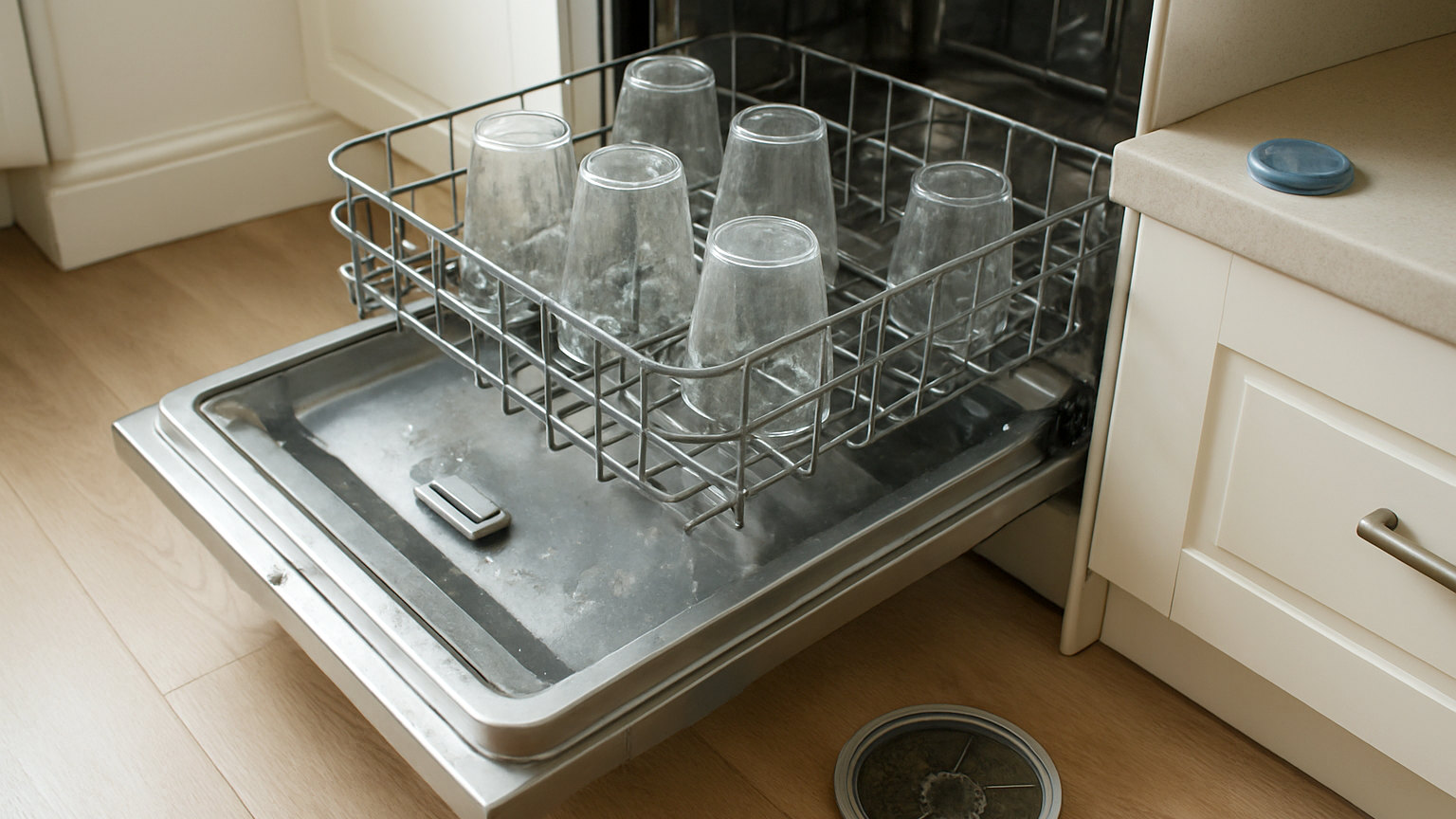
Everyday toughened glassware is fine. Thin, old, hand blown and lead crystal glass should be washed by hand, since it etches, and crystal in particular can cloud permanently after a few cycles.
China with gold, silver or hand painted decoration should not go in, since the decoration is applied over the glaze and will be worn away. Anything antique or with a crazed glaze should also be kept out.
What else should be kept out?
- Insulated flasks and travel mugs, where water gets into the vacuum seal.
- Cheese graters and fine sieves, which are better cleaned immediately by hand.
- Anything with a printed label or transfer.
- Melamine and thin plastics, which warp and craze.
- Sharp items pointing upwards, for safety.
- Cast iron pans, pizza stones and unglazed ceramics, which absorb detergent.
What is generally fine?
Stainless steel, toughened glass, everyday china and stoneware, most modern plastics on the top rack, silicone, and enamelled cast iron where the manufacturer permits it. Oven shelves, if they fit and the manual allows, though they often do not.
How do you tell?
Look for a dishwasher safe symbol, usually plates and water droplets, on the base of the item. Where there is no marking and the item is aluminium, wooden, painted or valuable, wash it by hand.
Manufacturers occasionally mark items as dishwasher safe when hand washing will still make them last longer, which is worth bearing in mind for anything expensive.
What about baking trays and roasting tins?
Aluminium trays should be kept out entirely, since they pit and go grey within a few cycles. Steel and enamelled tins are usually fine, though anything with baked on grease needs soaking first because a dishwasher will not shift it. Silicone bakeware washes well and often comes out with an oily film, which is a characteristic of the material rather than a fault.
Can damage be reversed?
Rarely. Pitted aluminium, etched crystal and worn gold decoration are all permanent. Cast iron that has lost its seasoning can be scrubbed, dried and re-seasoned, which is the one common exception. For everything else the useful response is to keep the remaining items out.
Why is the top rack safer?
Because it runs cooler and is further from the heating element in the base. Plastics that would warp on the bottom rack usually survive on the top, and delicate items are less exposed to the direct spray. Where you are unsure about an item and hand washing is impractical, the top rack on a lower temperature programme is the sensible compromise.