Fridge layout is usually treated as a matter of preference and it is really a food safety question. A fridge has distinct temperature zones, and some foods need the coldest part while others need to be kept away from anything below them. Getting the arrangement right also happens to keep the fridge much cleaner.
What goes where?
- Bottom shelf – raw meat, poultry and fish, in sealed containers or on a plate. The coldest part, and nothing can drip onto food below.
- Middle shelves – dairy, eggs, cooked meats and leftovers.
- Top shelf – ready to eat food, leftovers in sealed containers and anything that needs no further cooking.
- Salad drawers – fruit and vegetables, ideally kept separate from each other.
- Door racks – the warmest part. Condiments, jams, juice and drinks.
Why does raw meat go at the bottom?
Because if it leaks, nothing below it is contaminated. A drip of raw chicken juice onto a bowl of salad is a genuine risk, since neither will be cooked before it is eaten. It is the single most important storage rule in a fridge.
Keep it in a sealed container or on a plate with a lip, and never above anything ready to eat.
Should milk go in the door?
Ideally not. The door is the warmest part of the fridge and the temperature there fluctuates every time it is opened. Milk, and anything else that spoils quickly, keeps better on a middle shelf.
It is a habit rather than a design intention, and most fridges have a door rack sized for a milk bottle, which does not help.
What about eggs?
UK guidance is to keep eggs refrigerated at a consistent temperature, which means a shelf rather than the door where the temperature swings. Keep them in their box, which protects them and carries the date.
How does layout keep it cleaner?
Because the two things that make a fridge dirty are drips and forgotten items. Sealed containers stop the drips. A designated place for leftovers, checked weekly, stops the forgetting.
Putting newer items behind older ones means things get used rather than pushed to the back, which is where most mouldy containers are eventually found.
What else helps?
- Use clear containers so you can see what is in them.
- Label leftovers with the date.
- Keep a small tray or box for items to use first.
- Line the salad drawers with paper towel and change it weekly.
- Wipe jars and bottles before they go back in.
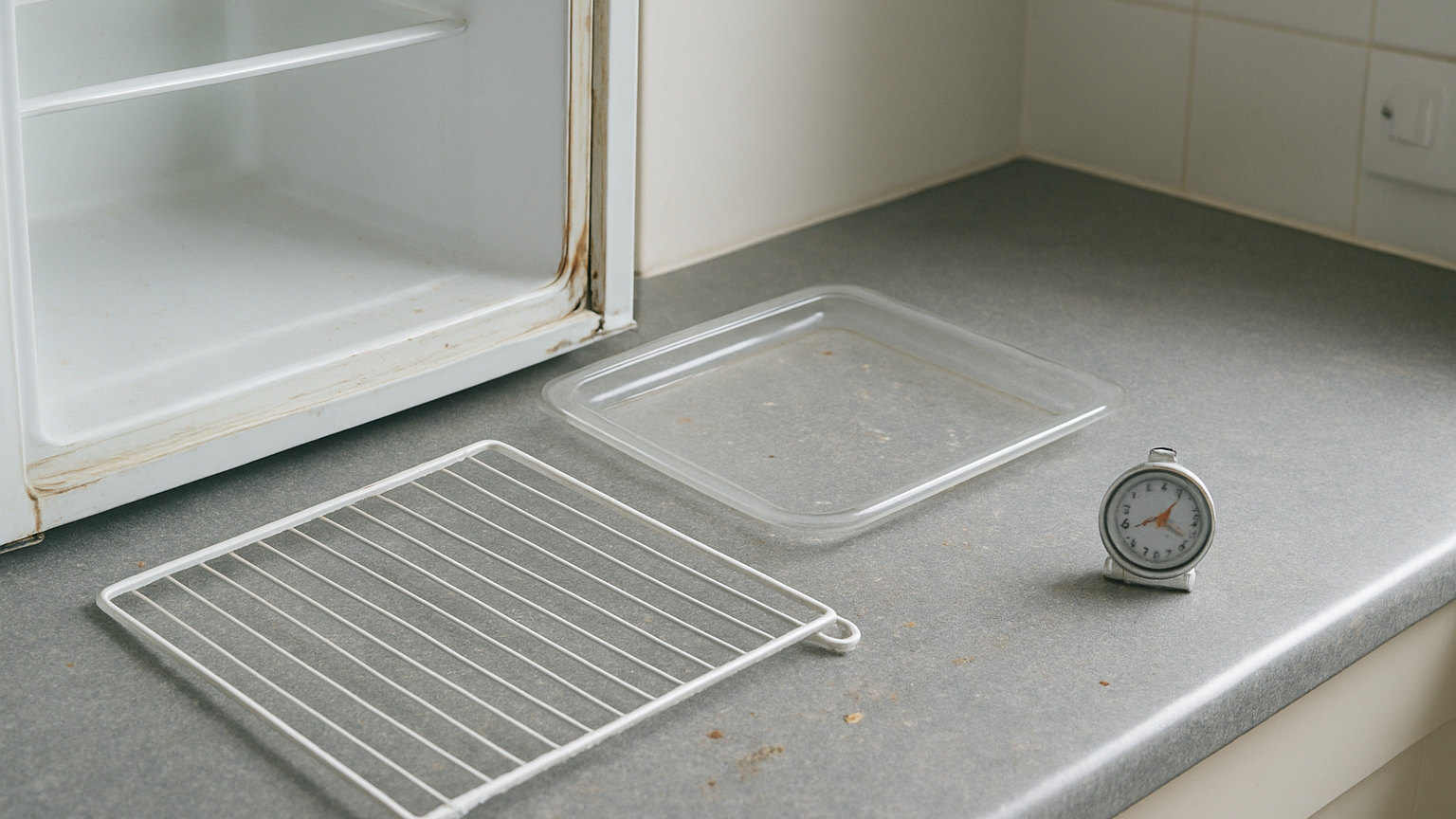
- Use a plastic tray under raw meat, which can be washed rather than the shelf.
Can you overfill a fridge?
Yes, and it causes real problems. Air needs to circulate for the fridge to hold an even temperature, and packing it tightly creates warm spots. Blocking the vents at the back, which is easy to do with a tall container, prevents the cold air reaching the front.
A fridge that is reasonably full holds temperature better than an empty one and worse than an overstuffed one, so there is a sensible middle.
What does not need refrigerating?
Bananas, unripe fruit, onions, garlic, potatoes and most bread, all of which do better at room temperature. Tomatoes lose flavour in a fridge. Taking these out frees space and reduces the clutter that makes a fridge hard to keep clean.
Once cut, most of them do need refrigerating, in a sealed container.
Do the drawer humidity sliders do anything?
They do, and they are almost universally ignored. The slider opens or closes a vent, changing how much moisture escapes from the drawer. A closed vent holds humidity, which suits leafy vegetables that wilt. An open vent lets moisture out, which suits fruit that rots in damp conditions. Setting one drawer each way, and keeping fruit and vegetables separate, noticeably extends how long both last.
Why keep fruit and vegetables apart?
Because many fruits release ethylene as they ripen, and that gas accelerates ripening and spoilage in anything stored with it. Apples, pears and bananas are strong producers; leafy greens, broccoli and cucumbers are particularly sensitive to it. Two drawers, one for each, costs nothing and reduces waste.