A washing machine is a heavy rotating mass, a water system and a heating element in one box. Most of what shortens their life is avoidable: overloading, never cleaning the filter, leaving them unlevel, and failing to notice a symptom until it becomes a failure.
What is the monthly routine?
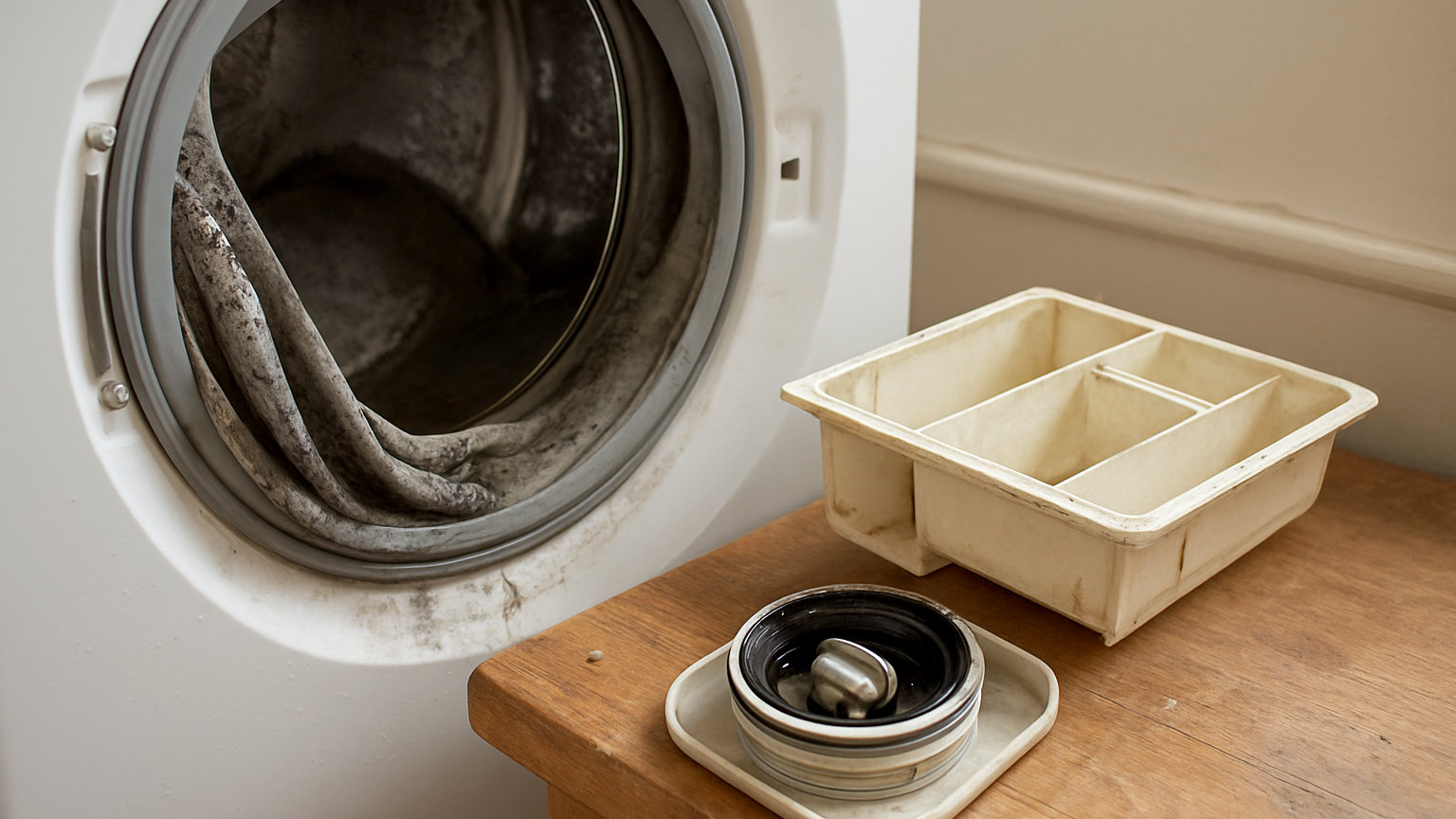
- Clean the door seal fold and dry it.
- Remove and wash the detergent drawer and clean the housing behind it.
- Run an empty cycle at 90 degrees with a double dose of powder detergent.
- Wipe the door glass and the exterior.
Fifteen minutes of work plus the cycle, and it prevents the smell and the residue problems entirely.
What is the quarterly routine?
Clean the pump filter, draining it into a shallow tray with towels down. In a hard water area, make one of the quarterly maintenance cycles a citric acid descale instead of a detergent one.
What is the annual routine?
- Pull the machine out and clean behind and underneath.
- Check both fill hoses for bulging, cracking and corrosion at the fittings.
- Check the drain hose for kinks, splits and sagging loops.
- Check the isolating valves still turn.
- Check the machine is level and does not rock.
- Look for any sign of a slow leak on the floor.
Fill hoses are widely recommended for replacement every five years or so. They are a few pounds and a burst one under mains pressure floods a room.
What shortens a machine life most?
Overloading, which stresses the bearings and the suspension and is the single most common cause of premature failure. A drum that is packed tight cannot balance during a spin, and the load repeatedly slamming against the casing wears everything.
Leave a hand span of space at the top of the drum. Wash heavy items such as duvets at a launderette rather than forcing them into a domestic machine.
Why does levelling matter?
An unlevel machine rocks during a spin, which walks it across the floor, damages the suspension and accelerates bearing wear. The feet screw in and out with a locking nut.
Adjust until it does not rock at all when pushed at opposite corners, then tighten the locking nuts.
Also check that transit bolts were removed at installation if the machine is fairly new, since leaving them in destroys the suspension within a few cycles.
What symptoms should you act on?
- A rumbling or grinding noise during the spin, which usually means bearings.
- The drum moving more than a few millimetres when you push it up and down by hand.
- Water on the floor, however small.
- Cold washes or a failure to heat, which points to the element.
- Repeated error codes.
- A burning smell, which means switching off at the wall and calling someone.
Bearing noise in particular gets worse gradually and then fails suddenly, often taking the drum with it. Acting early sometimes makes the difference between a repair and a replacement.
What about the detergent side?
Use the correct dose rather than more, since excess detergent contributes to biofilm and blockages. Use powder at least some of the time for the oxygen bleach. Reduce or drop fabric conditioner, which coats the interior.
What is the realistic lifespan?
Roughly seven to twelve years for a domestic machine used a few times a week, with well maintained examples going considerably longer. The main failures are bearings, the pump, the heating element and the control board, and the first three are frequently economic to repair on a machine that has been looked after.
Is a repair worth it?
It depends on the fault and the age. A pump, a heating element, a door seal or a set of hoses are usually straightforward and inexpensive relative to a replacement machine. Bearings on an older machine, or a control board, frequently cost enough that replacement makes more sense, particularly on models where the drum is sealed and cannot be split.