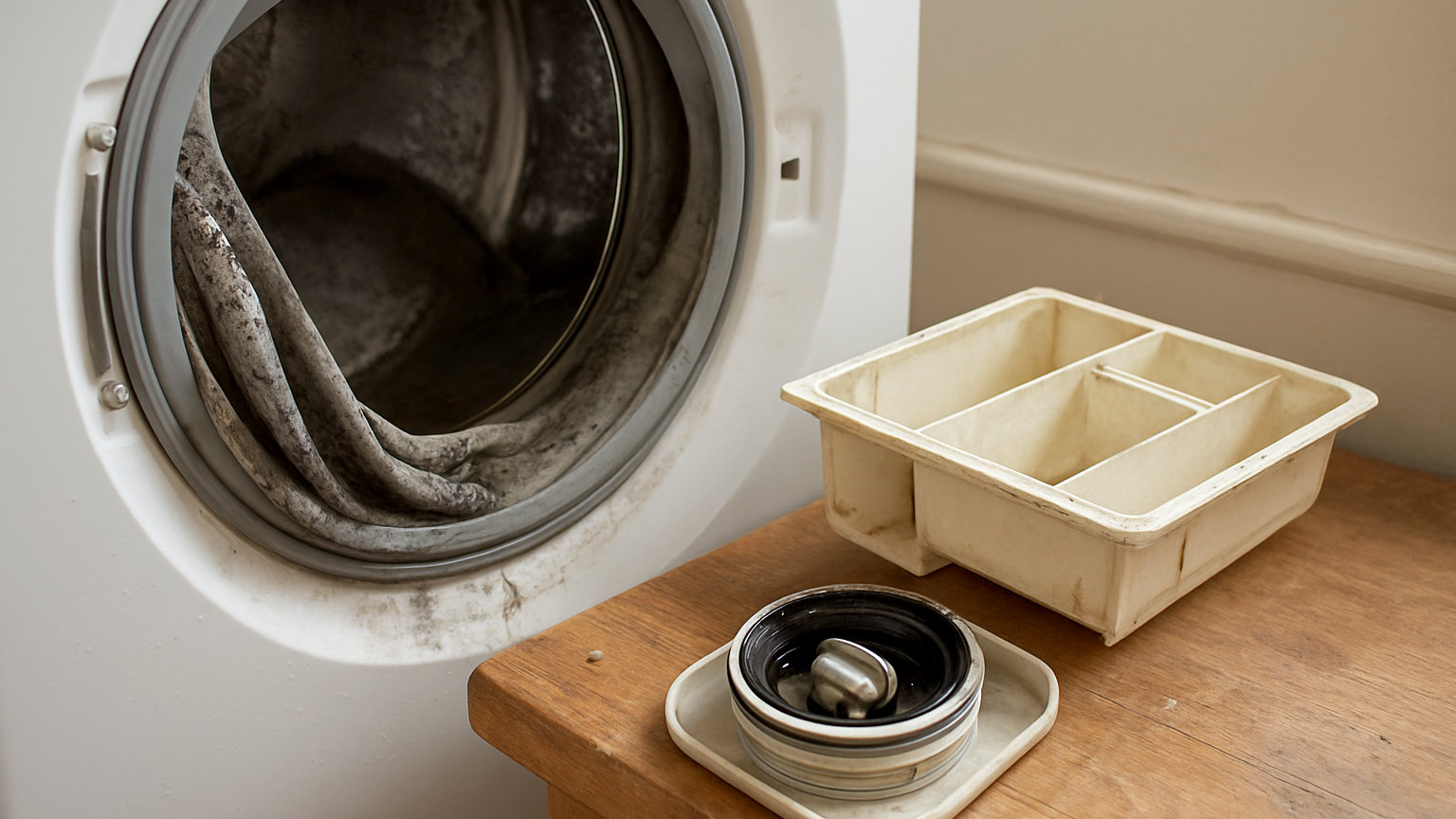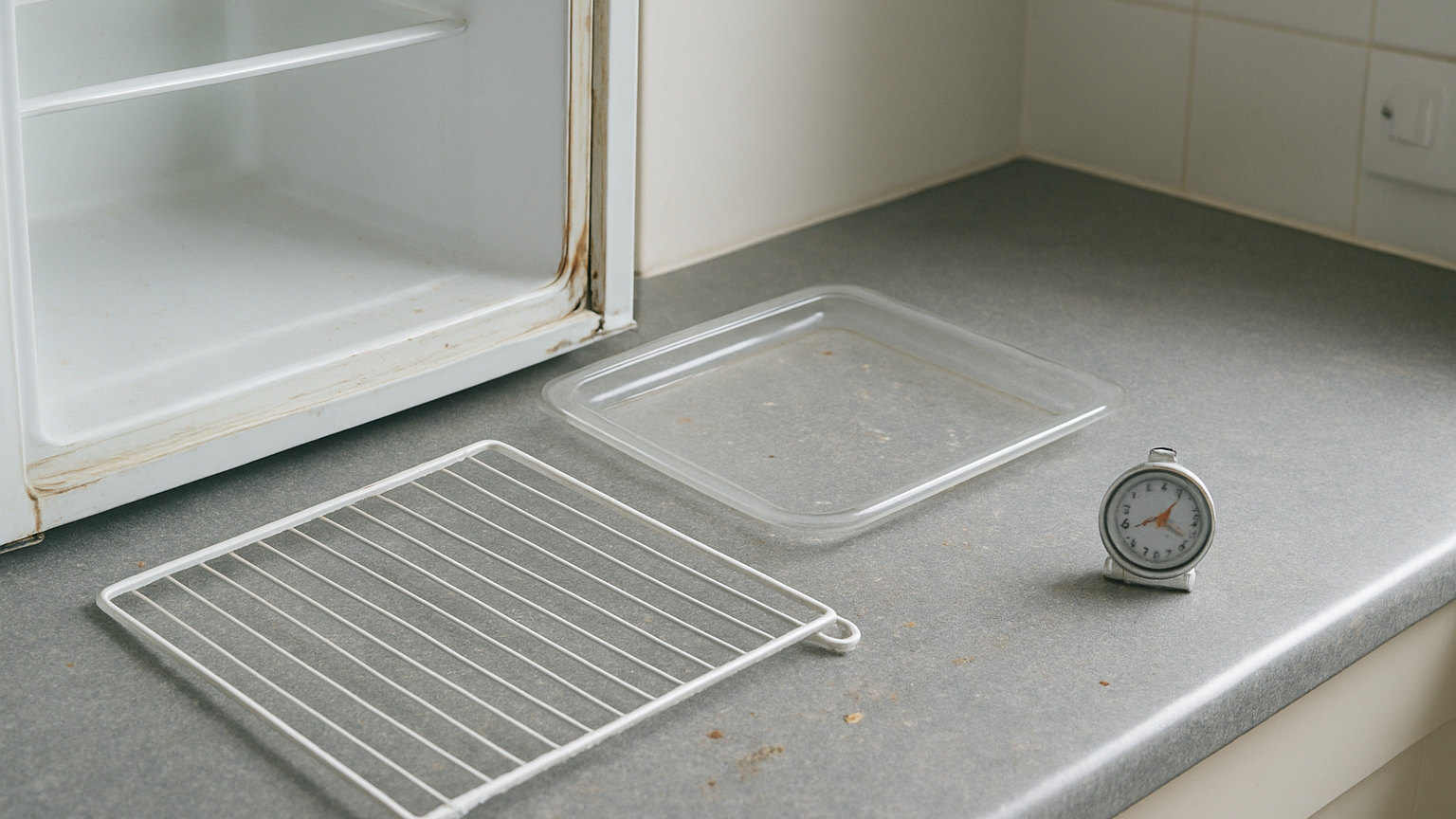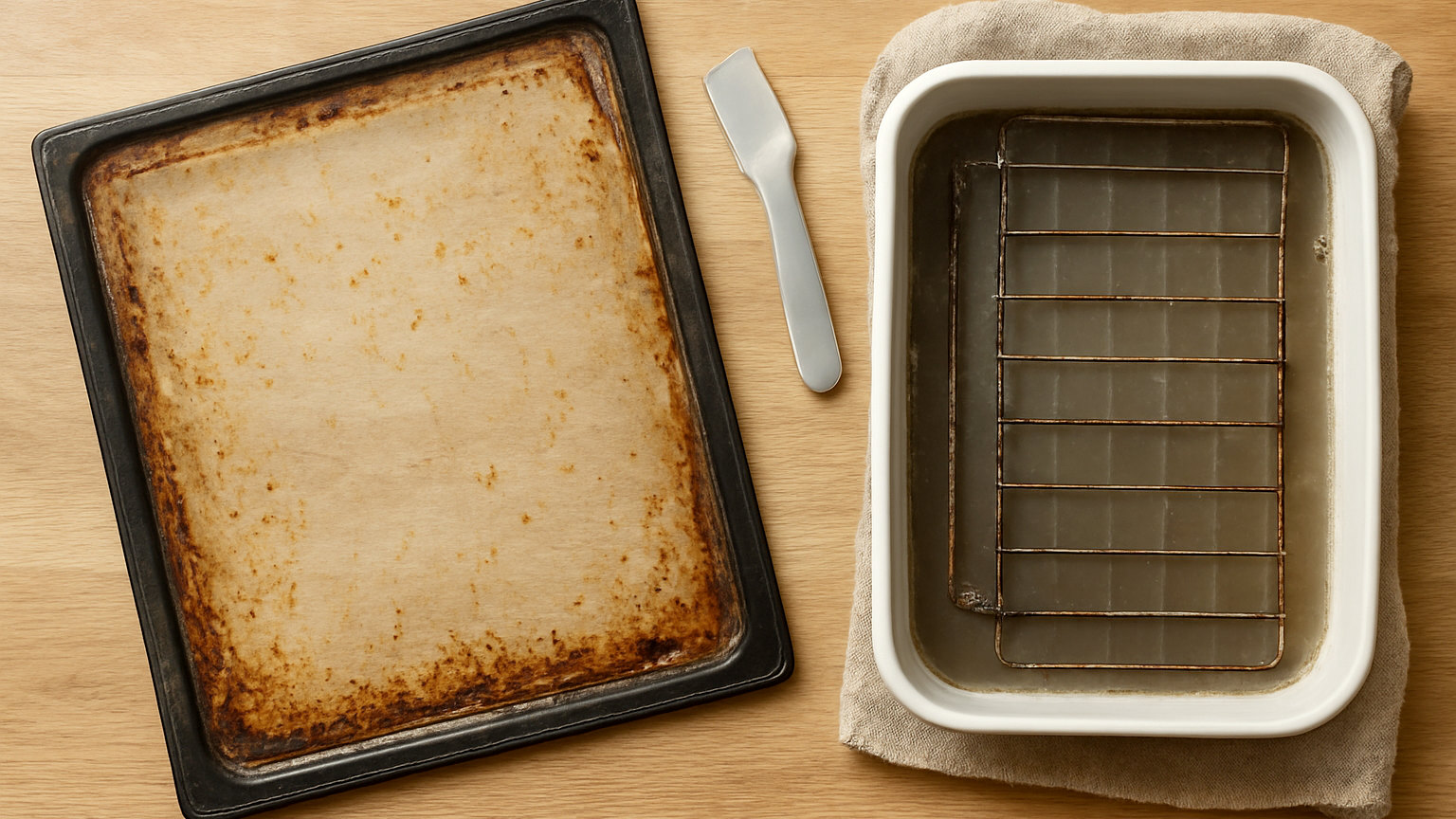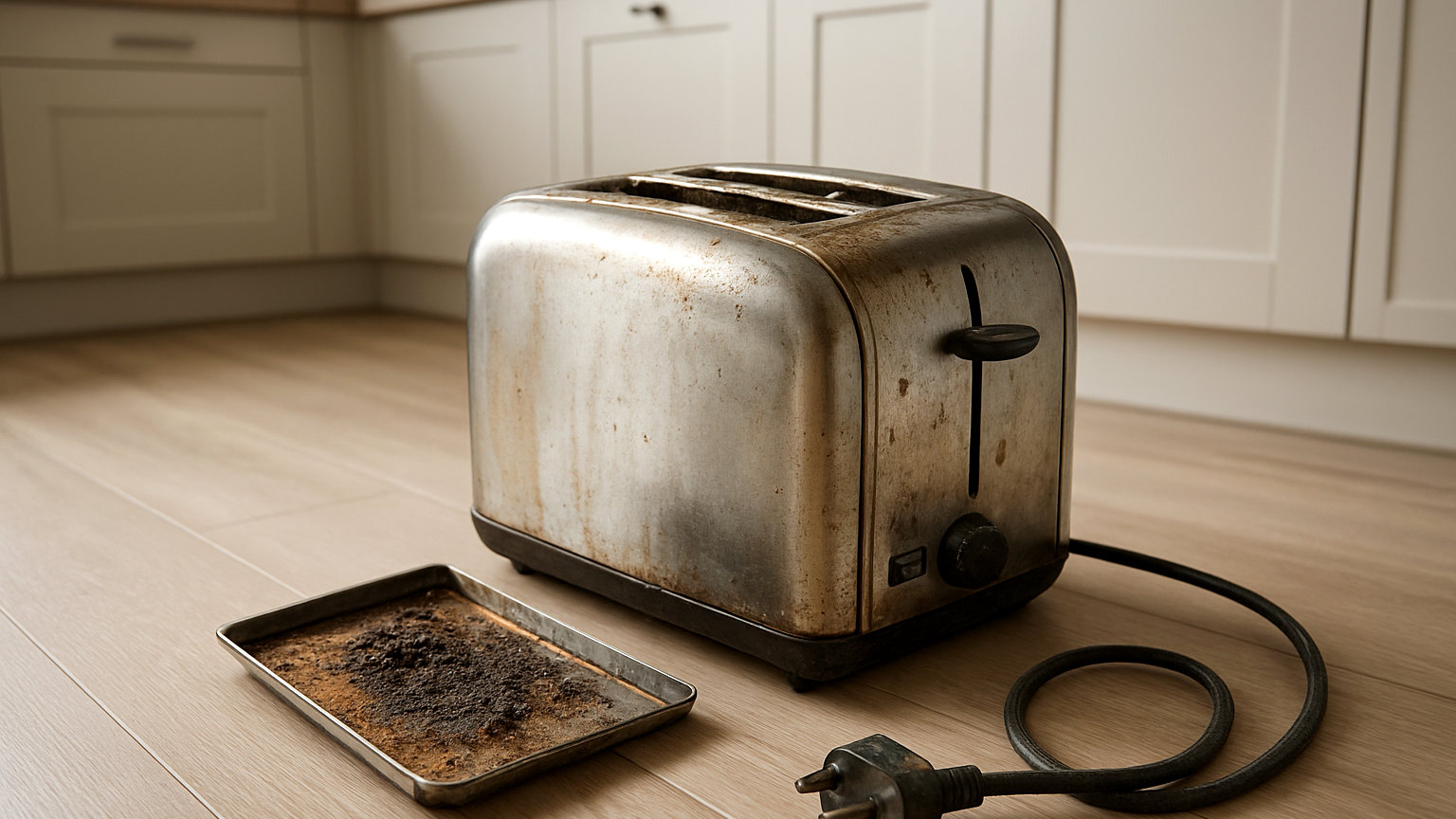
Every appliance in a kitchen collects a film of airborne cooking grease combined with dust. It builds slowly enough that people stop noticing, and it shows most on cords, on the sides of appliances and on anything near a hob. Ordinary wiping smears it; a degreaser removes it.
What are the safety rules?
- Unplug the appliance before cleaning any part of it.
- Never immerse anything containing a motor, an element or electrical contacts.
- Apply liquid to the cloth, never to the appliance.
- Wring the cloth out so it is damp rather than wet.
- Keep liquid away from vents, switches, sockets and plugs.
- Dry everything before plugging it back in.
What removes the greasy film?
Warm water with a few drops of washing up liquid, on a well wrung cloth, is the everyday answer and works because washing up liquid is a degreaser.
For a heavier build up, a solution of white vinegar in warm water, or a kitchen degreaser sprayed onto the cloth. Leave it in contact for a few seconds rather than wiping immediately, since dwell time does the work.
Finish with a clean damp cloth and then a dry one, or the residue attracts dust again quickly.
How do you clean the cord?
With the appliance unplugged, run a damp soapy cloth along the whole length of the cord, working from the appliance towards the plug. Cords collect grease heavily and are almost never cleaned.
Check the cord as you go for nicks, splits, kinks and any hardening or discolouration near the appliance end, which is where flexing causes damage. Check the plug for scorching around the pins.
Do not wrap a cord tightly around a hot appliance for storage, which breaks the conductors over time.
What about stainless steel?
Wipe in the direction of the grain with a damp soapy cloth, rinse with a clean damp cloth and buff dry with a microfibre cloth. A little white vinegar on the cloth deals with fingerprints and water marks.
A stainless steel cleaner or a small amount of baby oil on a cloth leaves a finish that resists marking, applied very sparingly.
What about plastic and painted finishes?
Warm soapy water and a soft cloth. Avoid solvents, abrasive pads and anything alcohol based on printed markings, which will wear away.
White plastic that has yellowed with age and heat cannot usually be restored. Some people have success with hydrogen peroxide and sunlight, and it is unpredictable and can be uneven.
What about the vents?
Many small appliances have ventilation slots that block with greasy dust, which makes them run hotter. Brush them with a dry soft brush or use a vacuum crevice tool, and never push anything into them or spray liquid at them.
What about the worktop underneath?
Move appliances when cleaning rather than wiping around them. The ring of grime under a kettle or a toaster is one of the most visible things in a kitchen and takes seconds once the appliance is lifted.
Check the feet of the appliance too, which collect a sticky deposit.
How often?
Wipe appliance exteriors weekly with the rest of the kitchen. Do the cords and the vents every few months, and use the same occasion to check the cord and plug condition, which is worth more than the cleaning itself.
What should make you stop using an appliance?
A cord with any exposed conductor, a plug that is warm in use or scorched around the pins, a socket that sparks, or a casing with a crack that could let water or fingers in. None of these is a cleaning problem and all of them are found while cleaning, which is a good argument for doing it.
What about appliances near the hob?
These collect grease far faster and need wiping more often, since a film of cooking fat on a warm casing bakes on and becomes progressively harder to remove. Moving a kettle or a toaster a little further from the hob reduces the problem considerably and is worth doing when a kitchen is rearranged.