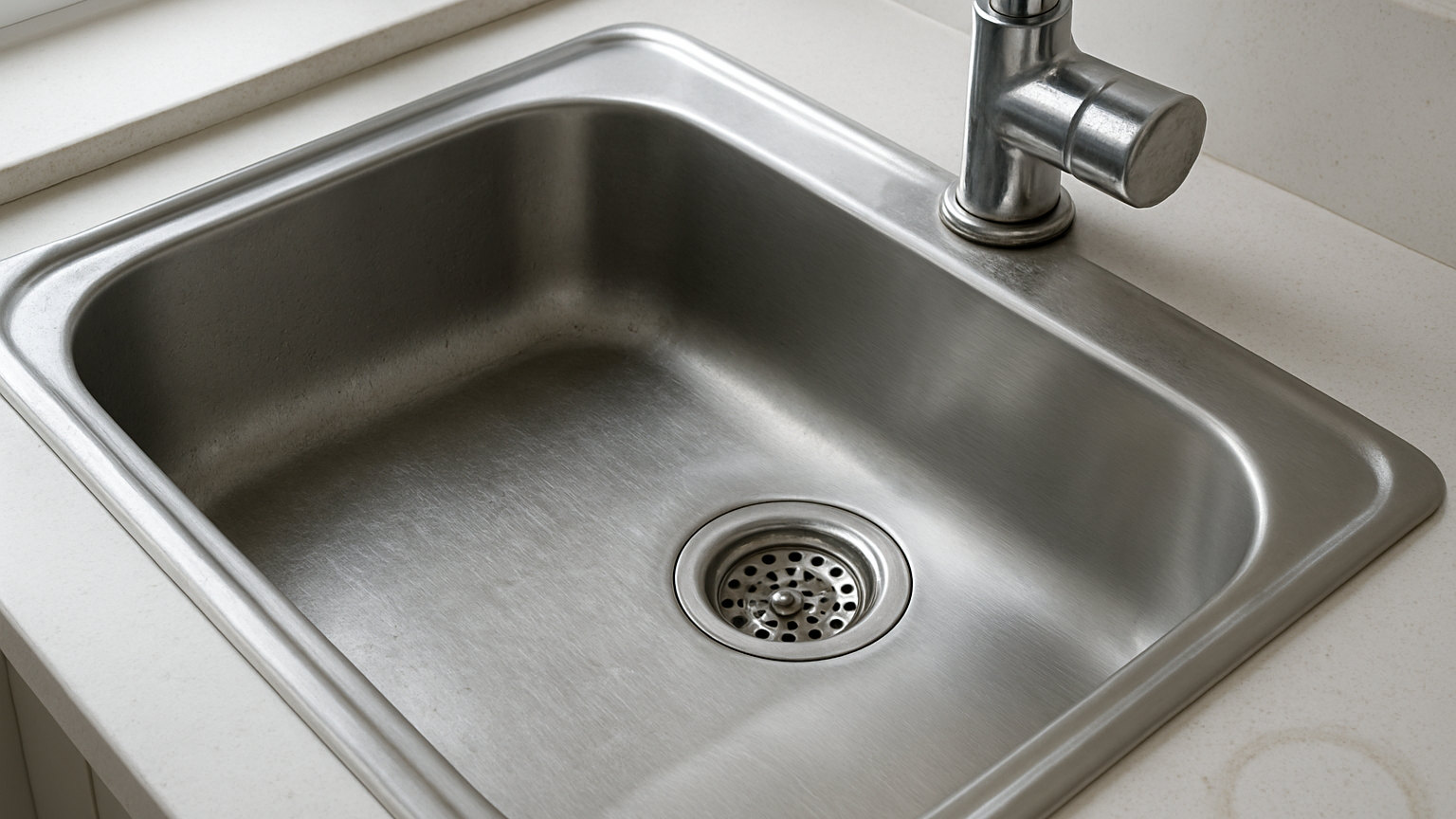
Stainless steel resists corrosion because of a thin invisible chromium oxide layer on its surface. Damage that layer with an abrasive or leave something corrosive sitting on it, and the steel underneath becomes vulnerable. Most of what looks like staining on a kitchen sink is either mineral deposit or fine scratching.
What is the daily routine?
- Rinse the sink after use, particularly after anything acidic or salty.
- Wipe with a cloth and a little washing up liquid.
- Rinse again with clean water.
- Dry with a soft cloth, which is the step that prevents water marks.
Drying is what keeps a stainless sink looking good. Left to air dry in a hard water area, it develops a film of mineral deposit within days.
Why does the grain matter?
Stainless steel has a directional finish, visible as fine lines. Cleaning along those lines hides any marks you make; cleaning across them shows every stroke and leaves a dull patch.
Work along the grain with anything abrasive, including a non-scratch pad and a cream cleaner.
How do you deal with a dull or marked sink?
A cream cleaner applied with a damp non-scratch pad, worked along the grain, then rinsed and dried. It contains a mild abrasive and lifts limescale, tea staining and general dullness.
A paste of bicarbonate of soda does much the same and is gentler. For a heavier deposit, apply and leave it for fifteen minutes before working it.
Finish by buffing dry with a microfibre cloth, which makes a substantial difference to the appearance.
What causes rust spots?
Almost never the sink itself. The usual causes are iron particles left by a steel wool pad, a cast iron pan left standing in the sink, a tin can left on the drainer, or iron in the water supply.
Those particles rust and stain the surface. They come off with a cream cleaner or a bicarbonate paste, worked along the grain.
A proprietary stainless steel cleaner deals with anything stubborn, and repeated rust in the same place means something metal is being left there.
What should never be used?
- Steel wool and wire scourers, which scratch and leave iron particles that rust.
- Bleach, particularly left standing, which pits stainless steel.
- Strong acid cleaners left in contact, including some limescale removers.
- Salt left sitting in the bowl, which is corrosive over time.
- Silver dip and oven cleaner, both of which damage the finish.
Rinse the sink after using any bleach based product elsewhere in the kitchen.
How do you remove limescale?
White vinegar or a citric acid solution, applied on a cloth or kitchen paper laid over the deposit for fifteen minutes, then rinsed thoroughly.
Do not leave acid sitting on stainless steel for hours, and never use an acid product after bleach without rinsing thoroughly in between, since the combination releases chlorine gas.
What gives the best shine?
After cleaning and drying, a few drops of baby oil or olive oil on a soft cloth, buffed over the surface and then wiped off with a dry cloth. It fills the microscopic texture and leaves a noticeably better finish that also resists water marks.
Use very little, and wipe off any excess, since an oily sink is unpleasant.
What about the plughole and the overflow?
Both collect a greasy film that causes smells. Scrub the strainer and the visible part of the waste with an old toothbrush, and flush the overflow with hot water and soda crystals occasionally.
How do you avoid scratches?
Use a sink protector mat or a rack, avoid dropping cutlery into an empty bowl, and never use the sink as a chopping surface. Fine scratches are inevitable over years and a cream cleaner blends them into the grain.
Does the grade of steel matter?
It does. Better sinks use a higher chromium and nickel grade, often marked as 18/10 or 304, which resists corrosion noticeably better than cheaper grades. A thicker gauge also dents less and is quieter. None of it removes the need for the basic care, and a good sink forgives more.