Steam cleaners are effective on tiles and grout and they are frequently oversold. Steam removes dirt, grease and surface residue very well. It does not remove staining that has soaked into the grout, and on older or damaged grout the pressure can dislodge material that was holding on.
What does steam actually do?
It delivers heat and moisture under pressure, which softens and lifts dirt from a surface and from the pores of a porous material. It also kills most bacteria and surface mould on contact.
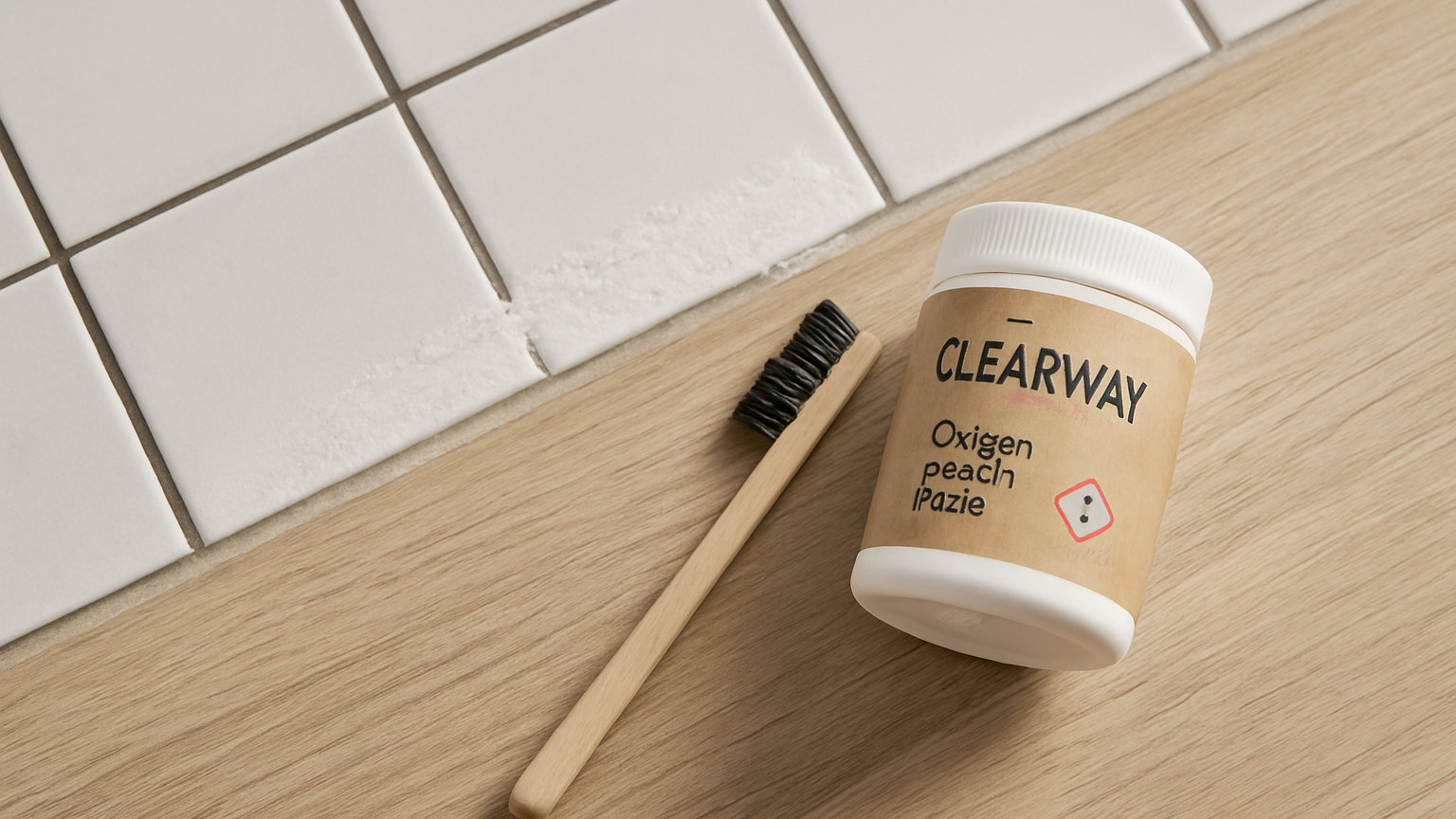
What it cannot do is bleach. Discolouration that has stained the grout itself needs an oxidising agent such as oxygen bleach, and no amount of steam will change it.
What is it good for?
- General grime and grease in kitchen grout.
- Soap scum and body oils in a bathroom.
- Textured and anti slip tiles, where it penetrates the surface.
- Surface mould on grout and silicone.
- Cleaning without chemicals, which suits households that prefer that.
- Loosening dirt before a chemical treatment, which works well as a combination.
What is it not good for?
Set in staining, which needs oxygen bleach. Limescale, which needs acid. And restoring grout that has discoloured over years, which needs a colourant rather than cleaning.
People who buy a steam cleaner expecting grey grout to come back white are usually disappointed, and the grout was stained rather than dirty.
How do you use one on grout?
- Sweep or vacuum first, since steam turns loose dirt into a slurry.
- Fit the narrow nozzle with a brush attachment.
- Work along one grout line at a time, slowly.
- Keep the nozzle moving rather than holding it in one place.
- Wipe the loosened dirt away immediately with a cloth before it dries back.
- Work in small sections and finish each one before moving on.
The wiping is essential. Steam lifts the dirt onto the surface and if it is left it simply settles back.
Where should it not be used?
- Natural stone, where heat and moisture can damage the surface and the sealer.
- Loose, cracked or crumbling grout, which the pressure will worsen.
- Silicone sealant, which steam can soften and lift.
- Unsealed or damaged tiles, where moisture gets behind them.
- Laminate or wooden floors adjoining a tiled area.
Test in an inconspicuous area first, and if grout crumbles under the steam, stop.
Does it remove the sealer?
It can, over time. Repeated steam cleaning degrades a penetrating grout sealer, so a sealed floor cleaned regularly with steam will need resealing sooner. Use the water test afterwards to check.
That is a reasonable trade for a once or twice yearly deep clean, and less so for weekly use.
What about handheld versus cylinder models?
Handheld steamers are adequate for a bathroom wall or a small area and run out of water quickly. A cylinder model with a larger tank and a proper brush attachment is far better for a tiled floor, and the difference in usable working time is considerable.
Is it worth buying one?
For a house with a lot of tiling, textured floors or a wet room, yes, and it will be used often enough to justify itself. For occasional bathroom grout, an oxygen bleach solution and a stiff brush achieve as much for a fraction of the cost and take up no cupboard space.
The strongest case is for households that want to avoid chemical cleaners, where it genuinely does a job nothing else does.
What is the best combination?
Steam to lift the dirt, then oxygen bleach for the staining, then seal once dry. That sequence deals with both problems, which neither approach does alone.
What about the water used?
In a hard water area, tap water scales the boiler and the nozzle over time. Most manufacturers recommend distilled or filtered water for that reason, and a machine run on hard tap water will eventually block. Check the manual, since some models tolerate it.