The space behind a washing machine collects dust, lint, spilled detergent and whatever has fallen down the back. It is also where every connection is: two fill hoses, a drain hose and the electrical supply. Cleaning back there is a reasonable excuse to check all of them, and the check matters more than the cleaning.
How do you move it safely?
- Turn off the water at the isolating valves, usually blue and red taps behind the machine.
- Switch off and unplug at the socket.
- Make sure the drum is empty and the filter has been drained recently.
- Protect the floor with hardboard or appliance sliders, since a washing machine is heavy enough to mark vinyl and laminate.
- Walk it out gently, rocking side to side, keeping it upright.
- Watch the hoses, which have limited length and are easily pulled off.
A washing machine full of water is extremely heavy. Never try to move one mid cycle.
What should you check on the hoses?
- The fill hoses, for bulging, cracking, perishing or corrosion at the fittings. These are under mains pressure and a burst one floods a room.
- The connections, for damp, crusting or a slow weep.
- The drain hose, for kinks, splits and sagging loops that hold water.
- How far the drain hose goes into the standpipe, which should be around ten centimetres, not pushed right down.
- The isolating valves, which seize if never used.
Fill hoses are a wear item and are widely recommended to be replaced every five years or so. They are inexpensive and a burst one is not.
Why does the drain hose position matter?
If it is pushed too far into the standpipe it can siphon, which means the machine drains continuously as it fills and never heats properly. If it sags into a loop it holds stagnant water and smells. If it is higher than the manufacturer specifies the pump struggles.
The manual gives a maximum and minimum height, and it is worth checking against.
What is the cleaning part?
Vacuum the floor and the wall with a crevice tool, then wash the floor with hot soapy water. Wipe the back of the machine, which collects greasy dust, and the sides, which are never cleaned.
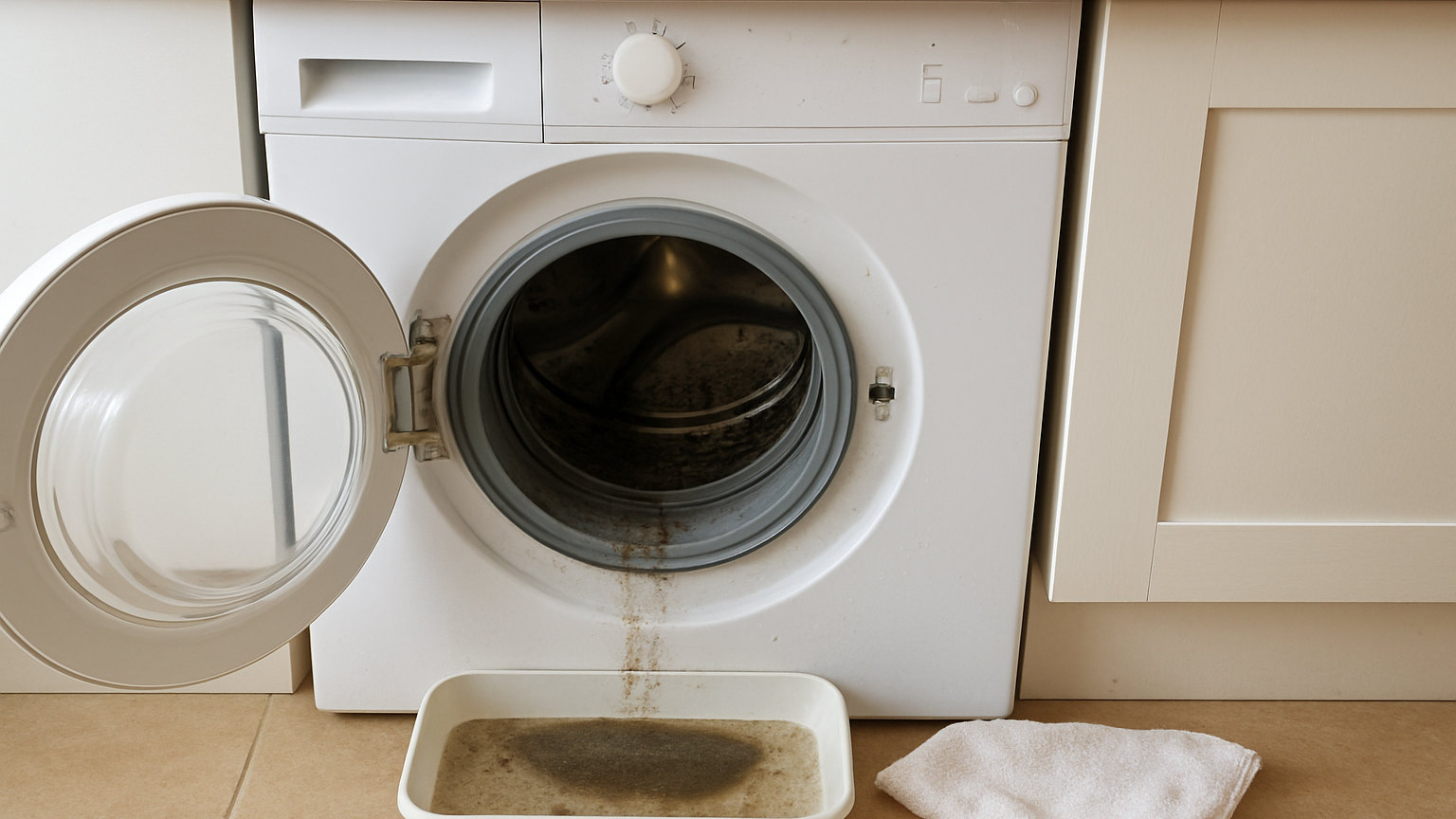
Check for any sign of a past or current leak: staining on the floor, a tide mark on the skirting, or damp on the wall.
Why does levelling matter?
Because an unlevel machine walks across the floor during a spin, vibrates loudly, and wears its bearings faster. The feet screw in and out and there is usually a locking nut.
Adjust until the machine does not rock at all when pushed at opposite corners, then tighten the locking nuts. Check with a spirit level if you have one.
Also check the transit bolts have been removed if the machine is fairly new, since leaving them in destroys the suspension.
What about the floor underneath?
Usually the least accessible and the most likely to hide a slow leak. Feel it with a hand, look for staining, and check whether the floor covering has lifted or discoloured.
A damp patch under a washing machine is worth investigating properly rather than drying and forgetting, since it is coming from somewhere.
How often should this be done?
Once or twice a year, and the hose check on the same schedule. It takes twenty minutes and it is the only opportunity most people get to spot a failing hose before it fails.
What should you do before pushing it back?
Turn the water back on and check the connections for leaks with the machine still accessible. Run a short rinse cycle and watch. Then push it back, leaving a small gap so the hoses are not crushed against the wall.
What about an integrated machine?
These are considerably harder to move, since the cabinet door is fixed to the appliance and the machine is usually screwed or bracketed to the adjacent units. The hoses and the connections still need checking, and it is a reasonable job to combine with any service visit rather than attempting annually.