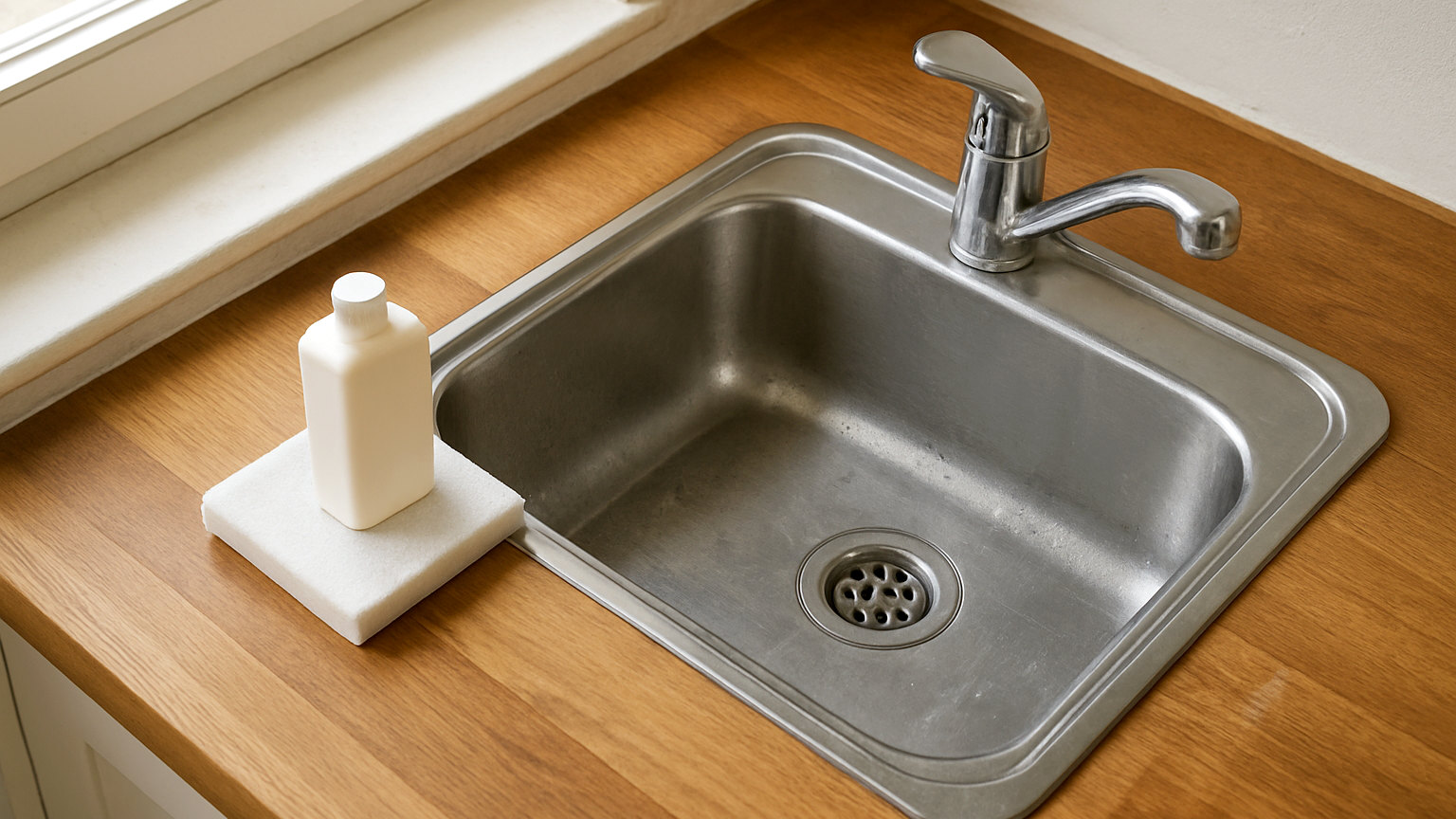
Ceramic and composite sinks are both tough and both marked by the wrong products. They also suffer from two very different problems that get confused with staining: grey marks on ceramic that are metal transfer rather than damage, and a general dullness on composite that is mineral film rather than wear.
How do you clean a ceramic sink?
- Rinse and wipe after use with a cloth and washing up liquid.
- For marks, apply a cream cleaner with a damp non-scratch pad.
- Leave it for a few minutes on anything stubborn.
- Rinse thoroughly and dry with a soft cloth.
Ceramic is a glazed surface, so nothing penetrates unless the glaze is damaged or crazed. Almost everything on it is sitting on top.
What are the grey marks?
Metal transfer. A pan base, a cutlery item or a tin dragged across a glazed surface leaves a deposit of metal, exactly as a pencil leaves graphite on paper. They look like scratches and they are not.
A cream cleaner removes them completely, worked with a damp pad. For heavier marks, a specialist ceramic sink cleaner or a gentle use of a melamine sponge will clear them.
The marks return because the cause continues, so a sink protector mat is the real fix.
How do you deal with tea and coffee staining?
On ceramic, a cream cleaner usually lifts it. For anything set in, lay kitchen paper soaked in a dilute bleach solution over the stain for fifteen to twenty minutes, then rinse very thoroughly.
Do not leave bleach in a ceramic sink for hours, and never use it alongside an acidic cleaner.
How do you clean a composite sink?
Composite sinks are a mix of stone dust and resin, usually granite or quartz composite. They are hard and resistant to heat and scratching, and they are more porous than they look at the surface.
Wash with warm soapy water daily and dry. For a build up, use a cream cleaner suitable for composite or a paste of bicarbonate of soda, worked with a soft brush.
Why does composite go dull?
Usually a film of limescale, soap residue and detergent, particularly in hard water. It shows most on black and dark composite sinks, which develop a chalky white haze.
Treat it with a solution of white vinegar left for a few minutes, then rinse and dry. Repeat weekly in a hard water area.
Afterwards, a few drops of olive or baby oil buffed over the surface restores the depth of colour considerably and helps water bead off. It needs redoing every few weeks.
What damages each surface?
- Ceramic – impact, which chips the glaze. Abrasive powders, which dull it. Heavy items dropped into the bowl.
- Composite – very hot pans, which can mark the resin. Strong acids and alkalis. Bleach left standing, which discolours it. Abrasive pads, which dull the finish.
- Both – drain cleaner splashed on the surface.
Can a chipped ceramic sink be repaired?
Small chips can be filled with a ceramic repair kit, and the colour match is rarely perfect. Left untreated, a chip in a cast iron or fireclay sink lets water reach the body beneath, which then discolours around the chip.
Repair kits are inexpensive and worth using early.
What about the sink surround?
The sealant line where the sink meets the worktop collects water and grows mould on both types. Wipe it dry after use, clean it weekly, and check it is intact, since water getting under a sink into a laminate worktop causes swelling that cannot be repaired.
Do they scratch?
Ceramic resists scratching well because the glaze is hard, and it chips instead when something heavy is dropped. Composite is highly scratch resistant and dulls if cleaned with abrasives. On both, the marks people call scratches are usually metal transfer or surface film, so try a cream cleaner before assuming damage.
What about draining boards?
The moulded draining area holds water longer than the bowl and shows limescale first, particularly on dark composite. Wipe it dry after washing up along with everything else, and give it the vinegar treatment weekly in a hard water area.