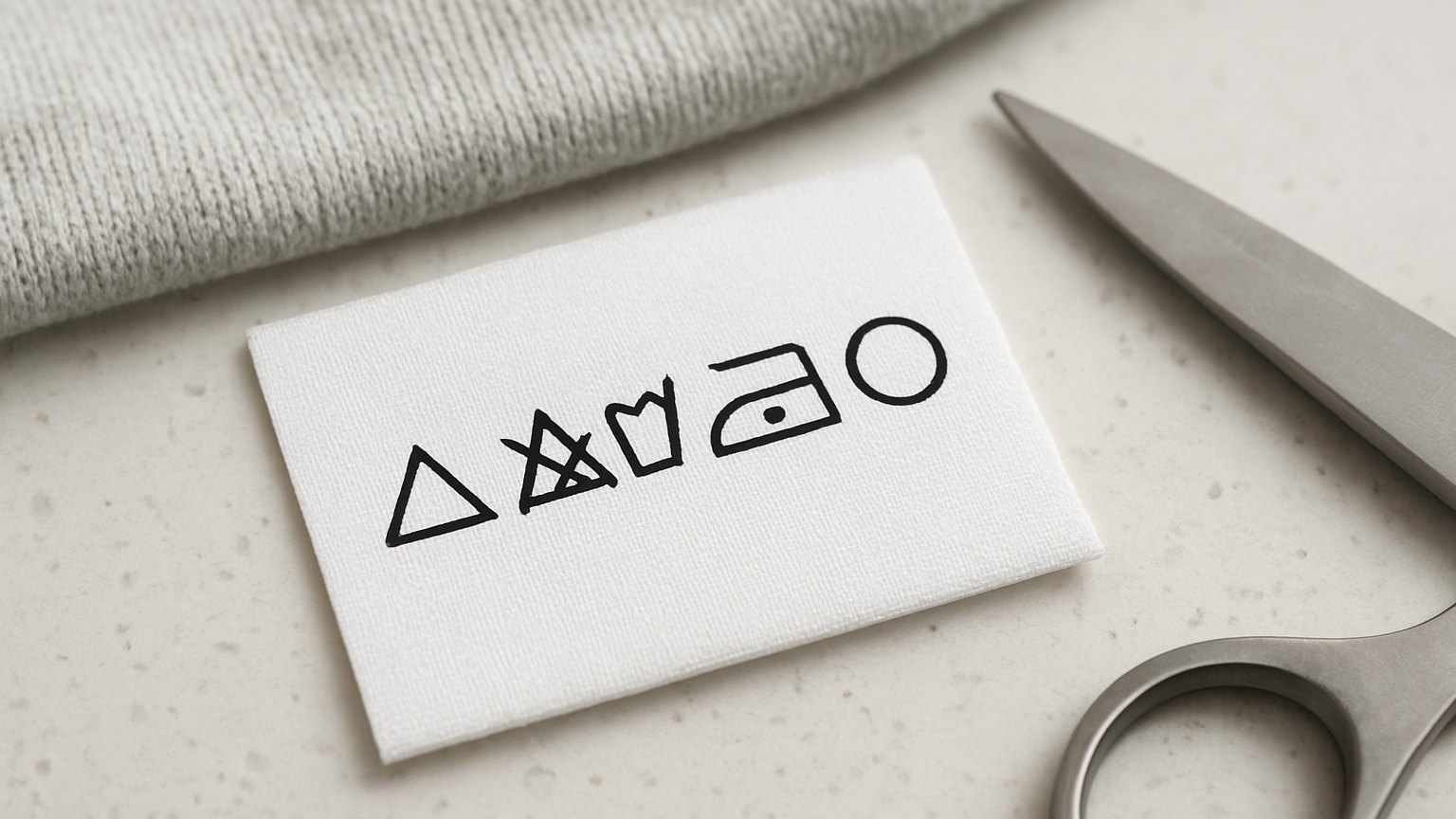
Bleaching is covered by a triangle, and there are only three variations. The distinction that matters is between an empty triangle, which permits any bleach, and one containing two diagonal lines, which permits oxygen bleach but not chlorine. That difference decides what stain removers you can safely reach for.
What are the three symbols?
- An empty triangle – any bleach may be used, including chlorine bleach. Usually only on pure white cotton and linen.
- A triangle with two diagonal lines inside – non-chlorine bleach only. Oxygen based products are permitted; chlorine bleach is not.
- A crossed out triangle – do not bleach at all, by any method.
The two diagonal lines are easy to miss and they change the instruction completely. A triangle with lines in it is not a permission to use household bleach.
Why does the distinction matter?
Because chlorine bleach and oxygen bleach do quite different things. Chlorine bleach is aggressive, works cold, removes colour and weakens fibres with repeated use. Oxygen bleach releases hydrogen peroxide, works slowly and needs warmth, is safe on most colours, and does not damage cotton in the same way.
Chlorine bleach will destroy wool and silk, damage elastane, and turn some synthetics yellow. That is why the empty triangle is so rare on modern clothing, where almost everything contains some blend or stretch fibre.
Where does oxygen bleach actually appear?
In almost every powder detergent, and in most whites and stain remover powders sold as laundry boosters. That means a garment marked with the crossed out triangle should not be washed in a standard powder detergent, since the powder contains oxygen bleach.
This catches people out regularly. A crossed out triangle on a dark or delicate item means using a colour or delicates liquid rather than any powder.
What does a crossed out triangle appear on?
Wool and silk, both protein fibres damaged by any bleach. Most coloured and printed garments. Anything with a special finish or coating. Elastane blends. And many items where the manufacturer has judged the dye insufficiently stable.
It is the most common of the three symbols on modern clothing by a considerable margin.
Does it cover stain removers?
It covers the bleaching action, which is what most stain removers rely on. A pen or spray stain remover containing an oxidising agent falls under the same restriction as a bleach, and using one on a crossed out triangle garment risks a pale patch.
Enzyme based stain removers and plain detergent are not bleaches and are not covered by the triangle, though enzymes should still be kept away from wool and silk.
How should bleach be used where it is permitted?
- Dilute it properly and never apply it directly to fabric, which causes holes.
- Add it to the water before the clothes go in, or use the bleach compartment of the drawer.
- Keep contact time short rather than soaking for hours.
- Rinse thoroughly, with an extra rinse cycle.
- Ventilate the room and never mix it with any other product.
What is the safer default?
Oxygen bleach as a warm soak, which handles almost everything chlorine bleach is used for domestically. It lifts greying and yellowing on white cotton, removes tea, coffee and wine marks, and is safe on the great majority of fabrics that carry the two line triangle.
Chlorine bleach is best reserved for disinfecting cloths and tea towels and for the occasional emergency on pure white cotton.
What if the symbol is missing?
Treat it as crossed out. Bleaching is the one process where the downside of guessing wrong is immediate and permanent, and almost nothing in a normal wardrobe needs chlorine bleach. If a white cotton item genuinely needs whitening, an oxygen soak will do the job without needing the label to authorise it.
Does sunlight count as bleaching?
Not for the purposes of the symbol, though it has a genuine bleaching effect on cotton. Drying whites in direct sun lifts yellowing effectively and costs nothing, and no label prohibits it. The one caution is that ultraviolet light fades dye and degrades elastic, so it belongs on whites rather than on colours.