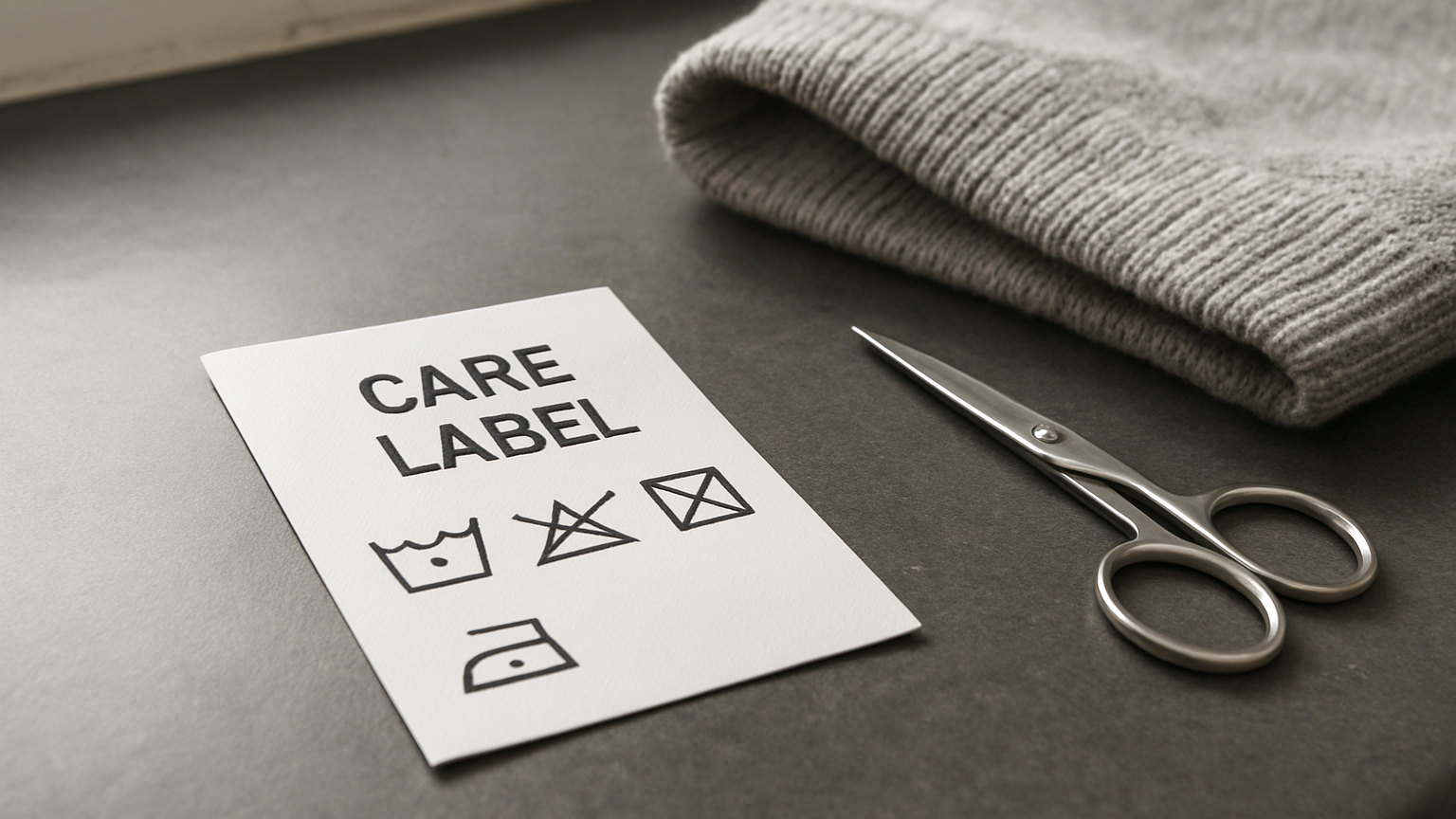
Drying instructions all use a square. A circle inside the square refers to a tumble dryer; lines inside the square refer to natural drying. They are two separate families of instruction, and a label may show one, the other or both.
What do the tumble dryer symbols mean?
- A circle in a square – tumble drying is permitted.
- One dot in the circle – low heat.
- Two dots – medium or normal heat.
- Three dots – high heat.
- A filled or blacked out circle – tumble dry with no heat, on an air cycle.
- Bars underneath the square – a gentle or delicate drying cycle.
- A cross through the whole symbol – do not tumble dry at all.
The crossed out symbol is the one to take seriously. It appears on wool, on anything with significant elastane content, on structured items and on garments with prints or coatings, all of which are damaged by heat and tumbling in ways that cannot be reversed.
What do the lines inside the square mean?
These indicate natural drying, and the orientation and number of lines tell you the method.
- A single vertical line – hang to dry on a line.
- Two vertical lines – drip dry. Hang without spinning, so the weight of the water pulls creases out.
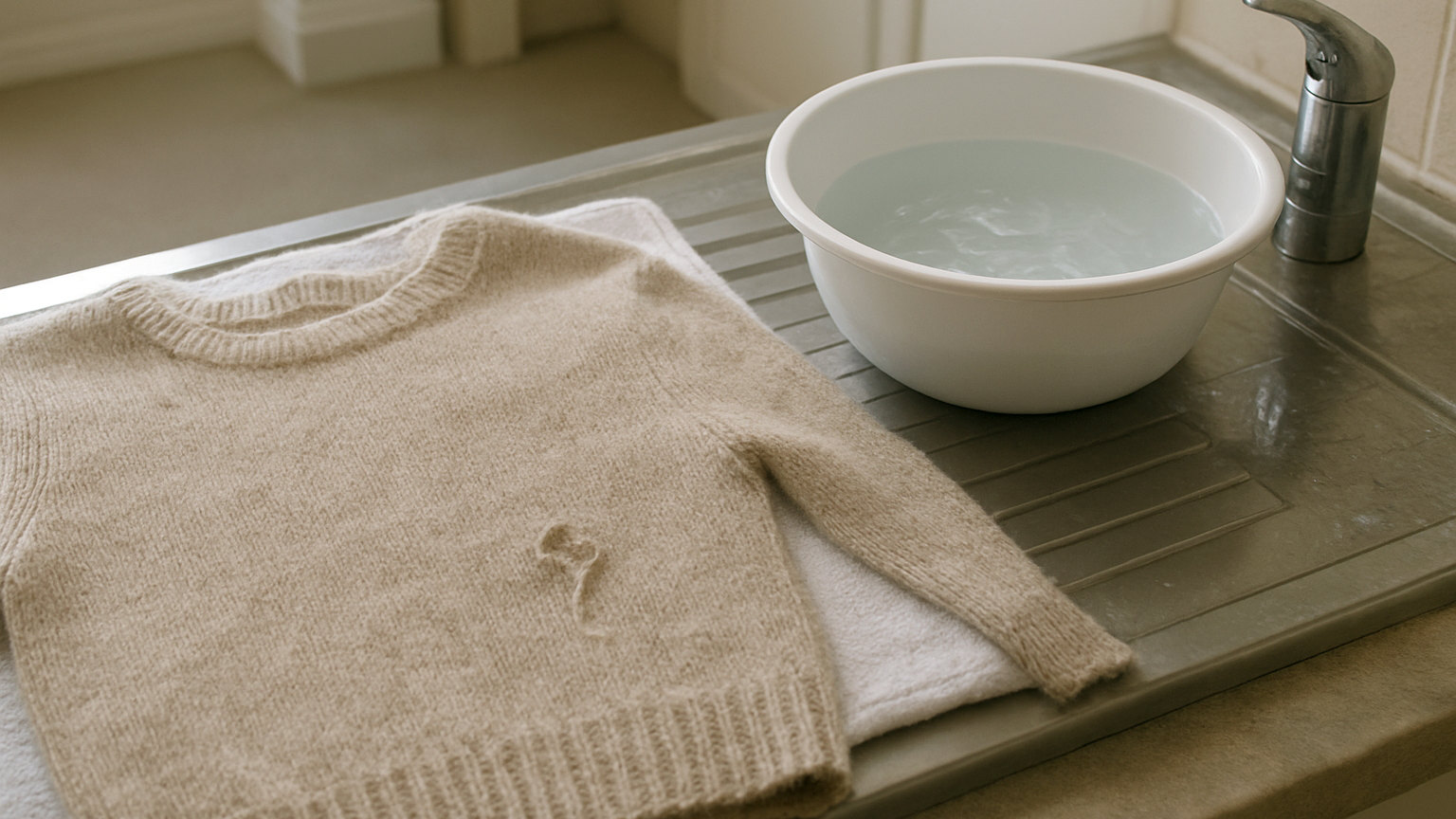
- A single horizontal line – dry flat. This is the one that matters for knitwear.
- A diagonal line across the top left corner – dry in the shade, away from direct sunlight.
A horizontal line combined with a diagonal corner line means dry flat and out of the sun, which is the standard instruction for wool and cashmere.
Why does dry flat matter so much?
Because wet knitwear is heavy relative to its own strength. Hanging a saturated jumper means the weight of the water pulls down through the knit, stretching the body and the shoulders permanently. A flat surface supports the whole garment evenly.
It is the single most consequential drying instruction on a label, and the one most often ignored because it is inconvenient.
What does drip dry mean in practice?
Hang the item without spinning it, or with the lightest spin available, so that water runs out of the fabric under gravity. The weight pulls creases out as it dries, which is why the instruction appears on shirts and on fabrics that crease badly.
It takes considerably longer than drying a spun garment, and it is worth putting a towel underneath.
Why does shade drying appear on some labels?
Because ultraviolet light fades dye and degrades fibres. It appears on dark and brightly coloured items, on silk, and on anything where colour retention matters. Drying such items inside out achieves much the same protection if shade is not available.
What if there is no drying symbol at all?
Take your lead from the fibre content and the wash symbol. Anything knitted should be dried flat regardless of whether the label says so. Anything containing elastane should not be tumble dried. Cotton and linen with a 40 or 60 wash symbol will usually tumble dry safely on a medium heat.
When unsure, hang or lay flat. Air drying is never the thing that ruins a garment.
Does a permitted tumble dry mean it is a good idea?
Not necessarily. The symbol states what the fabric will survive, not what is best for it. A cotton t-shirt marked with two dots will tolerate medium heat and will still shrink slightly, fade faster and pill more than the same shirt air dried.
Using the lowest heat that works, and taking items out slightly damp, is kinder than the label requires and costs nothing.
Why do drying symbols matter more than the others?
Because drying is where most irreversible damage happens. A wash at slightly the wrong temperature usually causes gradual wear; a hot tumble dry can shrink a jumper two sizes or destroy the elastane in a pair of leggings in a single cycle. Of all five symbols on a care label, the drying square is the one worth reading twice.