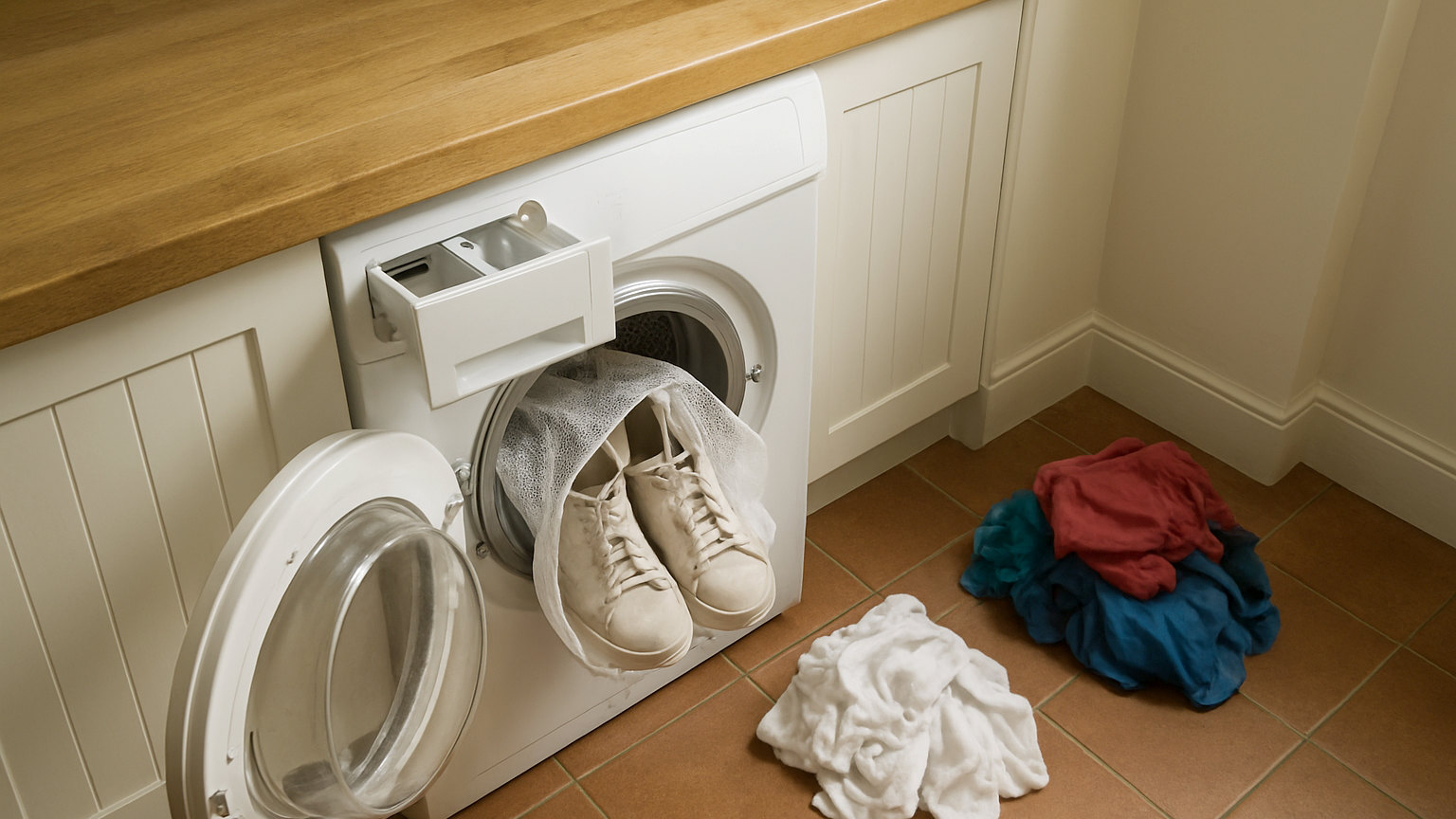
Mesh laundry bags do three things, and only one of them is obvious. They stop delicate items being snagged by zips, hooks and studs on other garments. They keep small items together so nothing is lost. And they stop small or thin items being drawn into the door seal or the drain pump, which is a genuine cause of machine faults.
What do they protect against?
- Snagging, where a zip, a hook or a velcro strip catches lace or fine knit and tears it.
- Tangling, particularly of bra straps, tights and drawstrings.
- Abrasion, since the bag puts a layer between a delicate garment and everything else in the drum.
- Distortion, because a structured bag helps moulded cups and shaped items keep their form.
- Loss, since socks and small items come out of the machine together.
- Machine damage, from thin items working past the seal or blocking the pump.
Which items benefit most?
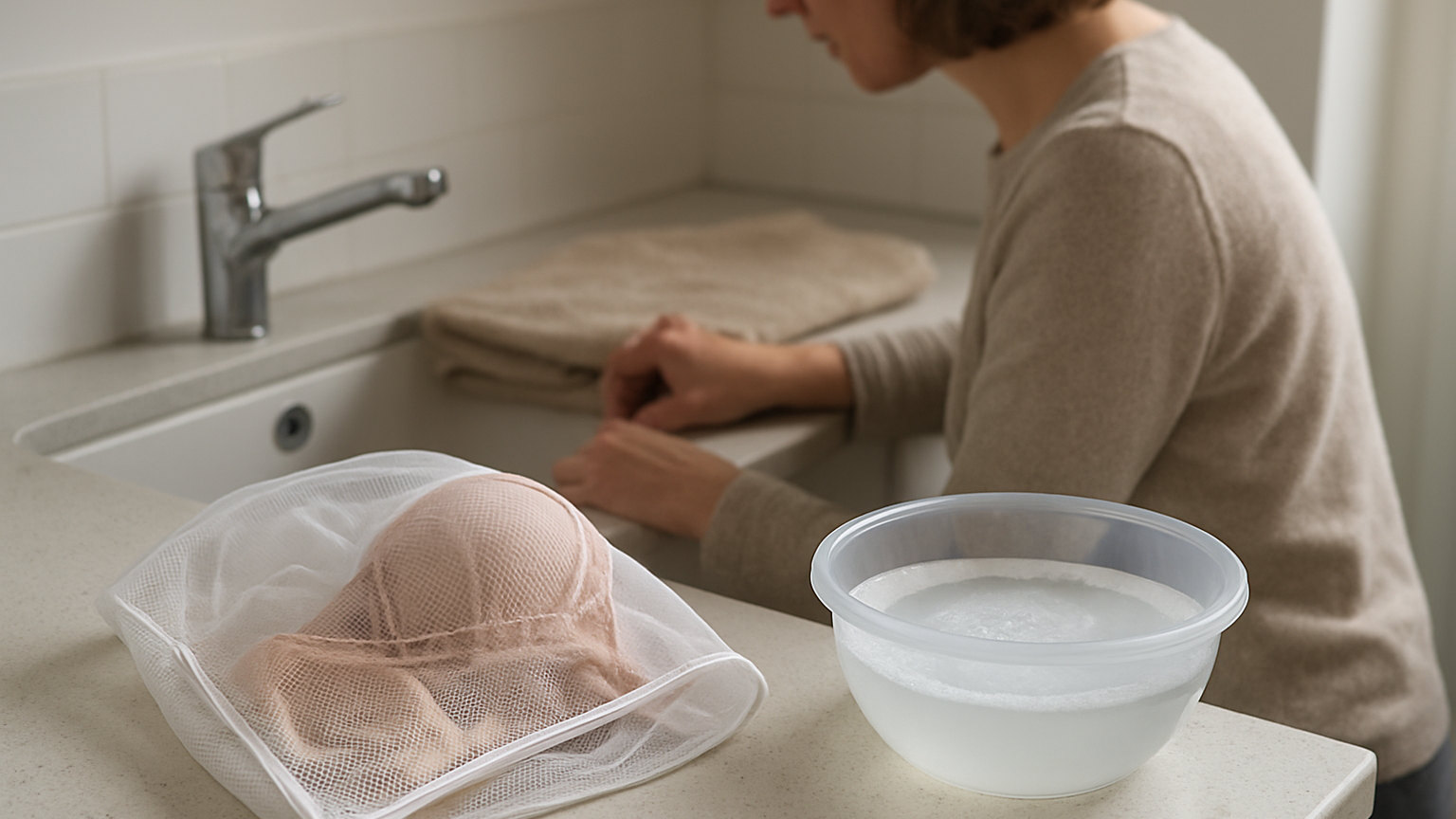
Bras, comfortably first, where the bag protects the garment and protects everything else from the hooks. Tights and hosiery, which tangle and ladder. Lace and fine knits. Socks, purely so they arrive together. Anything with long ties or straps. Baby clothes with poppers and mittens. And anything with velcro, which is best bagged for the sake of the rest of the load.
How full should a bag be?
Roughly half, and never packed. The whole point is that water and detergent circulate freely through the mesh and around each item. A bag stuffed tight becomes a solid mass that does not get properly washed or rinsed, and the contents come out no cleaner than they went in.
Use several small bags rather than one large one, and put like with like.
Does the mesh size matter?
Yes. A fine mesh gives the most protection and the least water flow, which suits very delicate items washed alone. A coarser mesh allows better cleaning and is right for socks, underwear and general use.
The zip matters too. A bag with an exposed metal zip pull defeats the purpose, so look for one with a covered zip or a flap that folds over it.
Do they reduce how well things get washed?
Slightly, and it is a reasonable trade. Items in a bag get less mechanical agitation, which is exactly what you want for delicates and exactly what you do not want for heavily soiled items. Do not bag anything genuinely dirty, and pre-treat any marks before the garment goes in.
Are there alternatives?
A pillowcase tied at the neck works, and a zipped pillow protector works better. Both restrict water flow more than a proper mesh bag, so they are a substitute rather than an equal.
For bras specifically, structured ball shaped bags hold the cups in shape and are more effective than a flat bag, though they take up more room in the drum.
Do they help with microfibre shedding?
Bags designed to capture microfibres from synthetic clothing are a different product altogether, built with a much finer structure intended to trap the tiny fibres released during washing so they do not enter the water supply. Ordinary mesh laundry bags do not do this at all, and the two are easily confused because they look similar on a shelf.
How should they be looked after?
Turn them inside out occasionally and check the seams, since a bag with a hole lets exactly the item you were protecting escape. Leave them open to dry rather than putting them away damp. Replace them when the mesh thins or the zip fails, which it will before the bag itself wears out.
Are they worth buying?
For very little money they prevent a specific and common set of laundry losses, and a set of three or four in different sizes covers a whole household indefinitely. The strongest single argument is the bras: a bag costs a small fraction of what a bra does, and it roughly doubles how long one survives regular machine washing.