A surprising proportion of the damage to good clothing happens while it is hanging in a wardrobe doing nothing. Knitwear stretches under its own weight, moths find the wool, sunlight fades the shoulders, and garments put away with invisible body oils in them develop yellow marks over a winter.
What should be folded rather than hung?
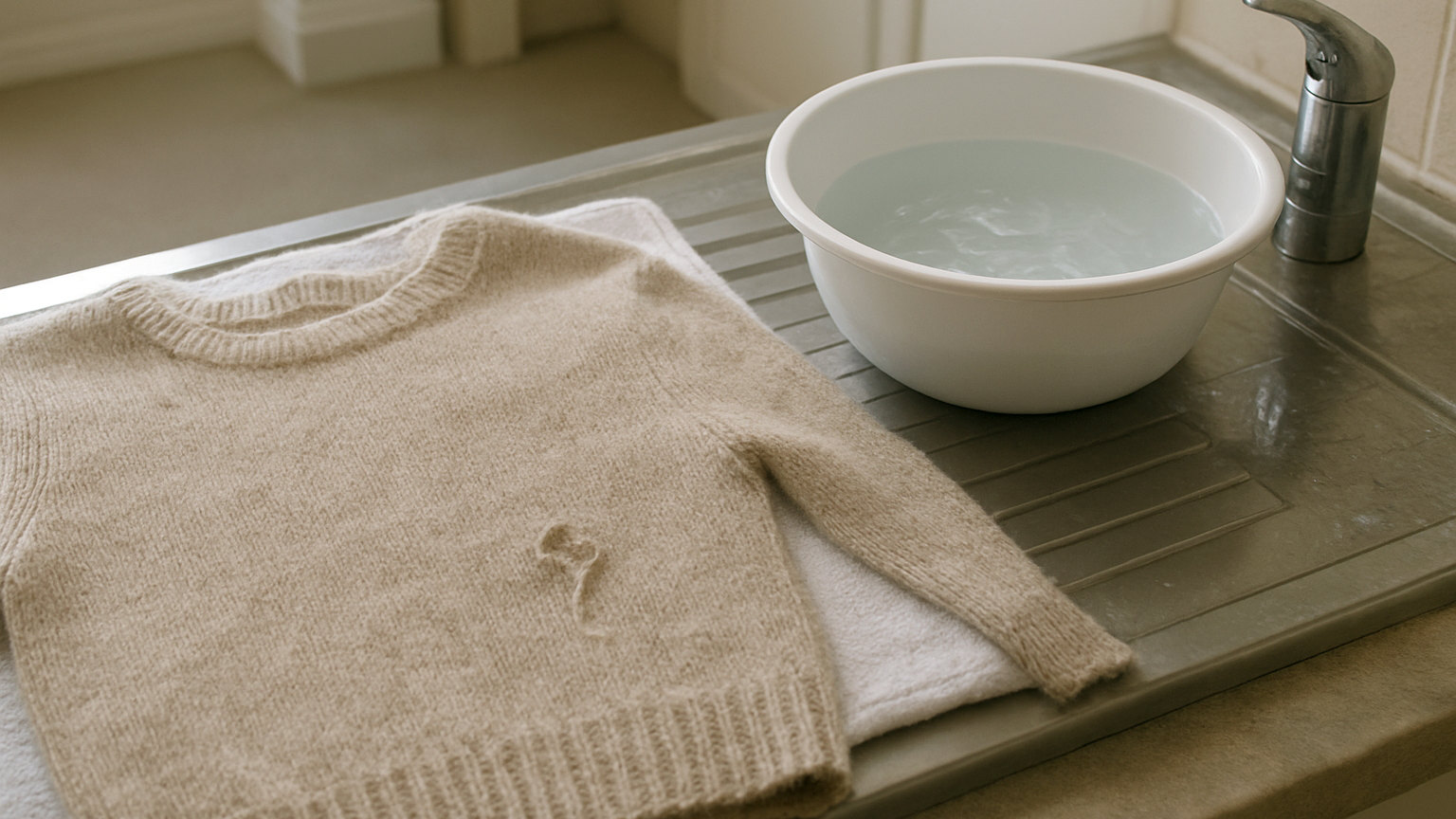
Anything knitted. Jumpers, cardigans, fine knits and jersey all stretch when hung, developing longer bodies and distinct bumps at the shoulders where the hanger sits. Those bumps do not press out.
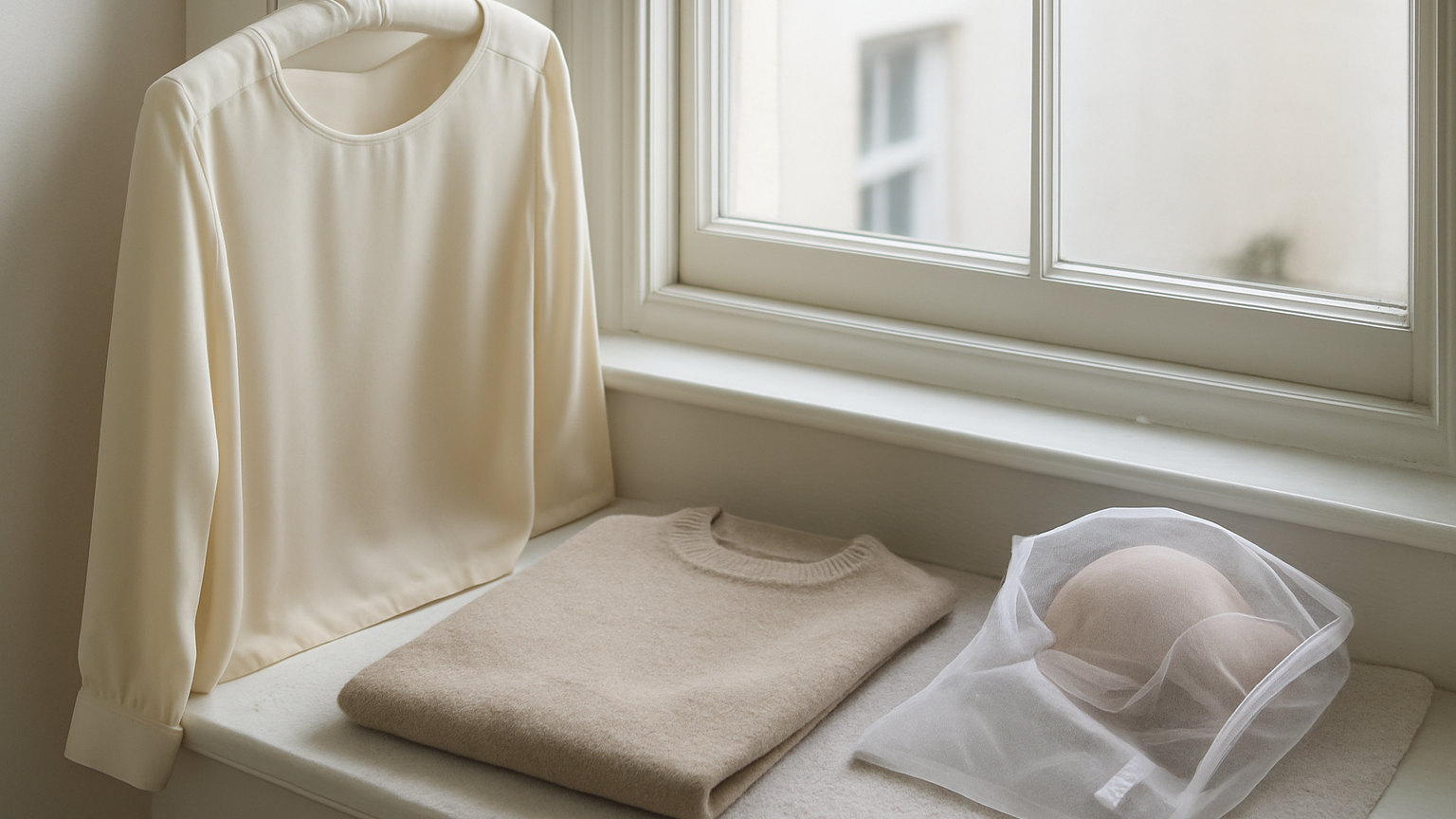
Fold knitwear flat in a drawer or on a shelf, with the heaviest items at the bottom of the pile. Fold along the existing seams where possible rather than creating new crease lines.
What should be hung?
Woven garments that hold their shape: shirts, blouses, dresses, trousers, jackets and coats. Use wide shaped hangers for anything tailored, and padded hangers for silk and fine fabrics, since a thin wire hanger leaves a mark at each shoulder that is difficult to remove.
Leave space between garments. A crowded rail creases everything, traps moisture and makes it impossible to see what you own, which is how clothes end up unworn for years.
Why does everything need to be clean before storage?
Because invisible residues cause visible damage over time. Body oils oxidise and yellow, which is why a white shirt put away in October comes out in March with clear underarm marks. Food traces and perspiration attract moths, which are drawn to soiled wool far more than to clean wool.
Anything going into long term storage should be freshly laundered or dry cleaned, and completely dry before it is packed.
How do you protect against moths?
- Store natural fibres clean, which removes most of the attraction.
- Use sealed boxes or zipped bags for anything going away for a season.
- Vacuum the wardrobe and the floor beneath it regularly, since eggs and larvae sit in the dust.
- Use cedar or lavender as a deterrent, and sand cedar blocks lightly every few months to keep them releasing oil.
- Check in spring, when adults emerge, looking for small holes and fine webbing.
- Freeze affected items for 72 hours, or wash at 60 degrees, if you find an infestation.
What kind of container should be used?
Breathable rather than airtight for anything stored in a normal room. Cotton garment bags and fabric storage boxes allow moisture to escape. Plastic vacuum bags are useful for bulky items and are a poor idea for wool and silk over long periods, since compression damages the fibres and trapped moisture has nowhere to go.
Avoid cardboard boxes in direct contact with fabric, since the acids in cardboard cause yellowing. Acid free tissue between layers is worth using for anything valuable.
Does light matter?
Considerably. Ultraviolet light fades dye and weakens fibres, and a wardrobe by a sunny window or an open rail in a bright room will fade the shoulders of everything on it within a couple of years. Silk is particularly vulnerable.
Store clothing in a dark or dim space, and if you use an open rail, keep it out of direct light.
What about humidity?
Aim for a dry, stable, cool space. Damp encourages mould and mildew, which stains fabric permanently and produces a musty smell that is very hard to remove. Lofts and garages are usually poor choices for this reason, as are wardrobes against cold external walls.
Leave a small gap behind a wardrobe on an external wall so air can circulate, and put a moisture absorber inside if the space is prone to damp.
What is the seasonal routine?
Twice a year, when the weather turns. Wash or clean everything that is going away, check each item for damage and note anything needing repair, pack it properly in labelled containers, and vacuum out the space it came from. It takes an afternoon and prevents most of the losses that otherwise happen quietly over six months in a cupboard.