Wool shrinks because of agitation, not because of water. The fibres are covered in microscopic overlapping scales, and when heat, moisture and movement come together those scales open, ratchet past each other and lock. The result is felting, and it is permanent. Everything about washing wool follows from avoiding that combination.
Is hand washing safer than a machine?
Often not. A modern wool or hand wash cycle rocks the drum gently, uses plenty of water and barely spins, which is precisely what wool needs. A person washing by hand who rubs, swirls and wrings the garment is applying far more agitation than the machine would.
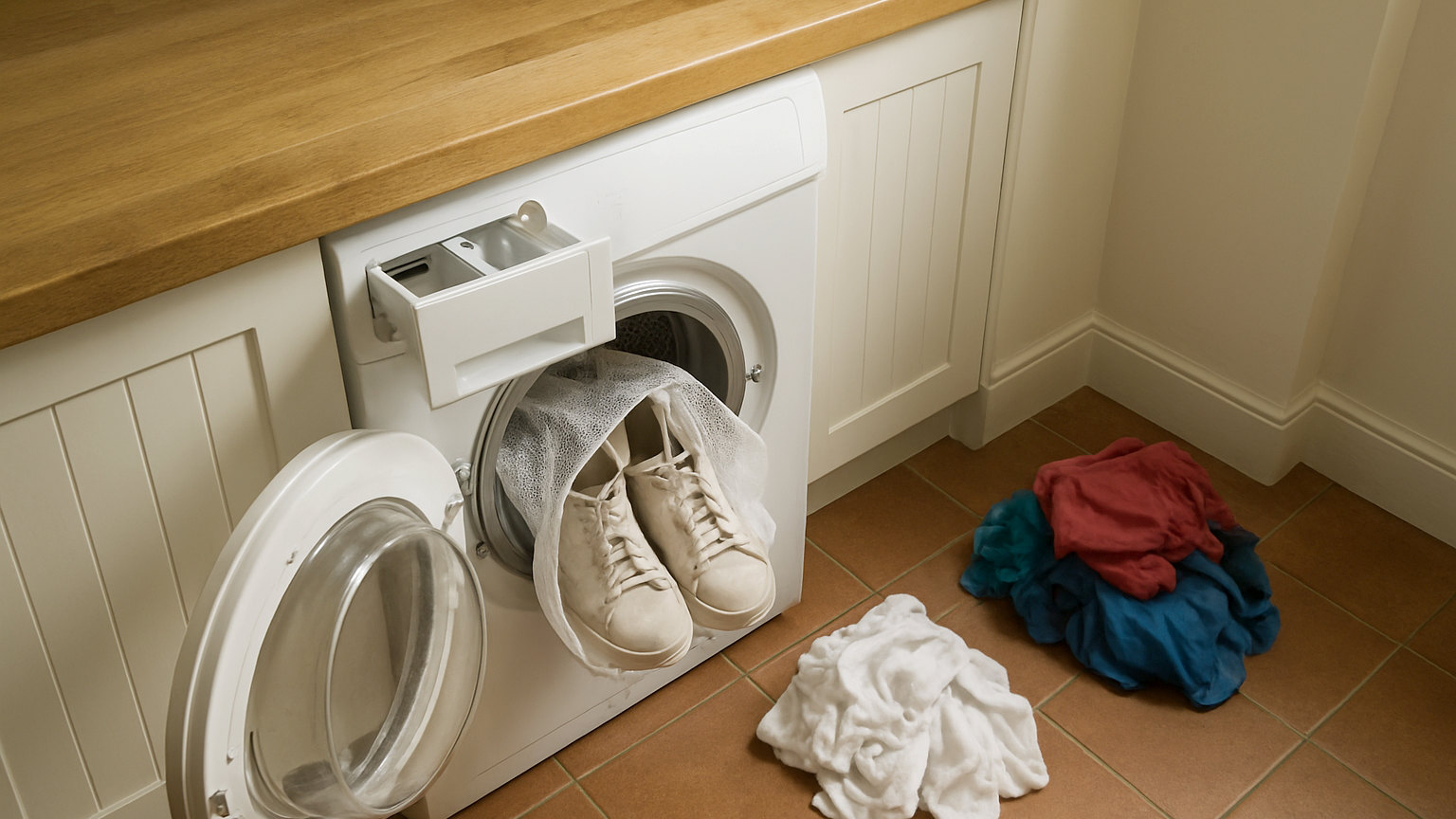
If your machine has a wool cycle and the label permits machine washing, use it. Reserve hand washing for items where the label demands it or where you are not prepared to risk being wrong.
What detergent should you use?
A wool detergent, which is pH neutral or slightly acidic and contains no enzymes. This matters more than most people realise. Biological detergents contain proteases that break down protein, and wool is a protein fibre, so a biological detergent will slowly digest the garment itself.
Avoid alkaline products, oxygen bleach and anything with optical brighteners. Use less than you think you need, since wool holds detergent stubbornly and residue makes it feel harsh.
What is the hand washing method?
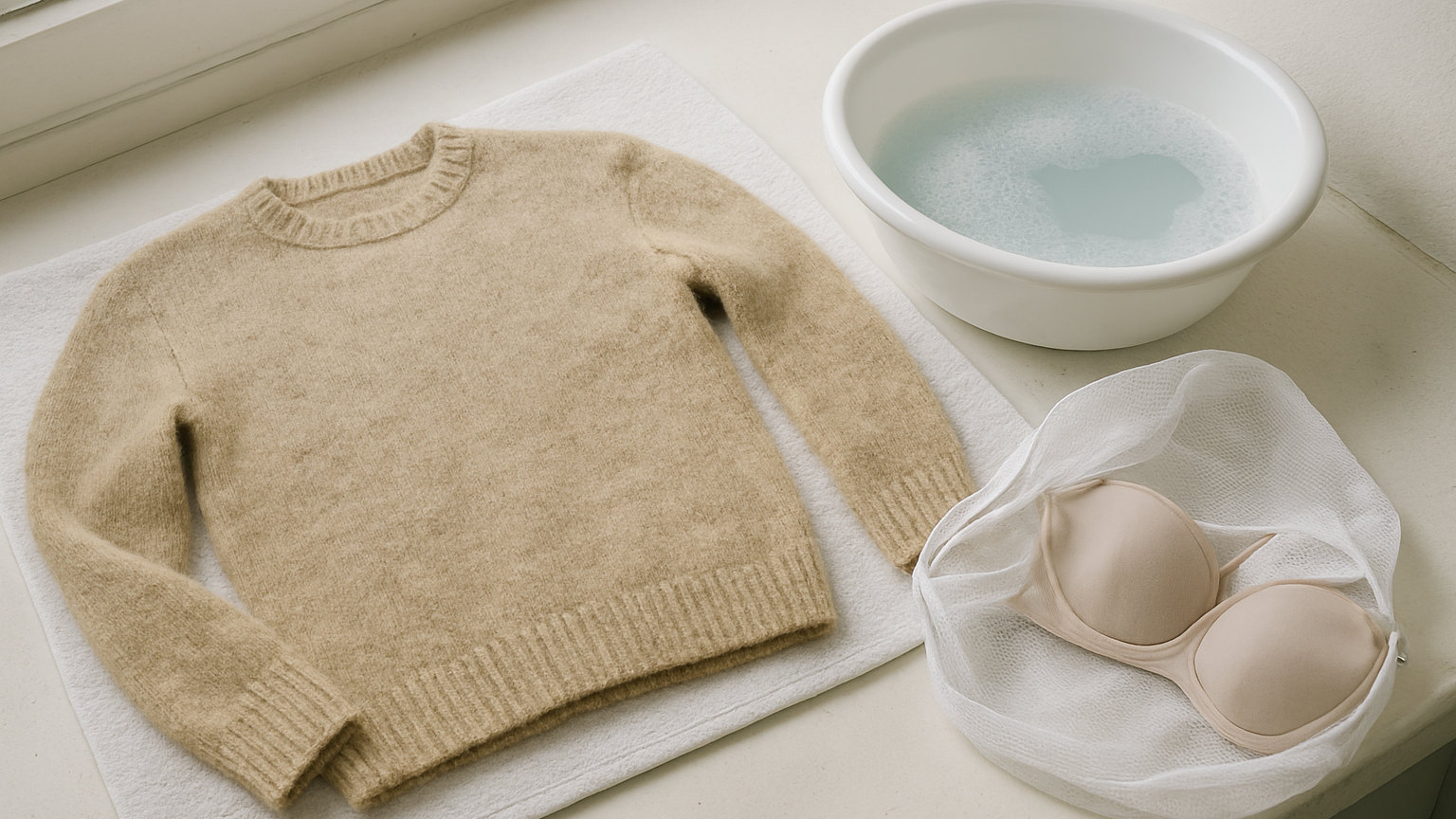
- Fill a clean basin with cool or lukewarm water, no warmer than hand temperature.
- Mix the detergent into the water fully before the garment goes in.
- Submerge the item and press it gently under the water. Leave it to soak for ten minutes.
- Squeeze the water through the fabric by opening and closing your hands. Do not rub, twist or wring.
- Drain, refill with water at the same temperature, and squeeze through again until no suds remain.
- Lift the garment supporting its full weight so it does not stretch.
Why does the temperature need to stay constant?
Because a sudden change shocks the fibre and encourages the scales to lock. Washing in warm water and rinsing under a cold tap is a common way to shrink a jumper that was otherwise handled correctly. Keep the wash and rinse water within a few degrees of each other.
How do you get the water out?
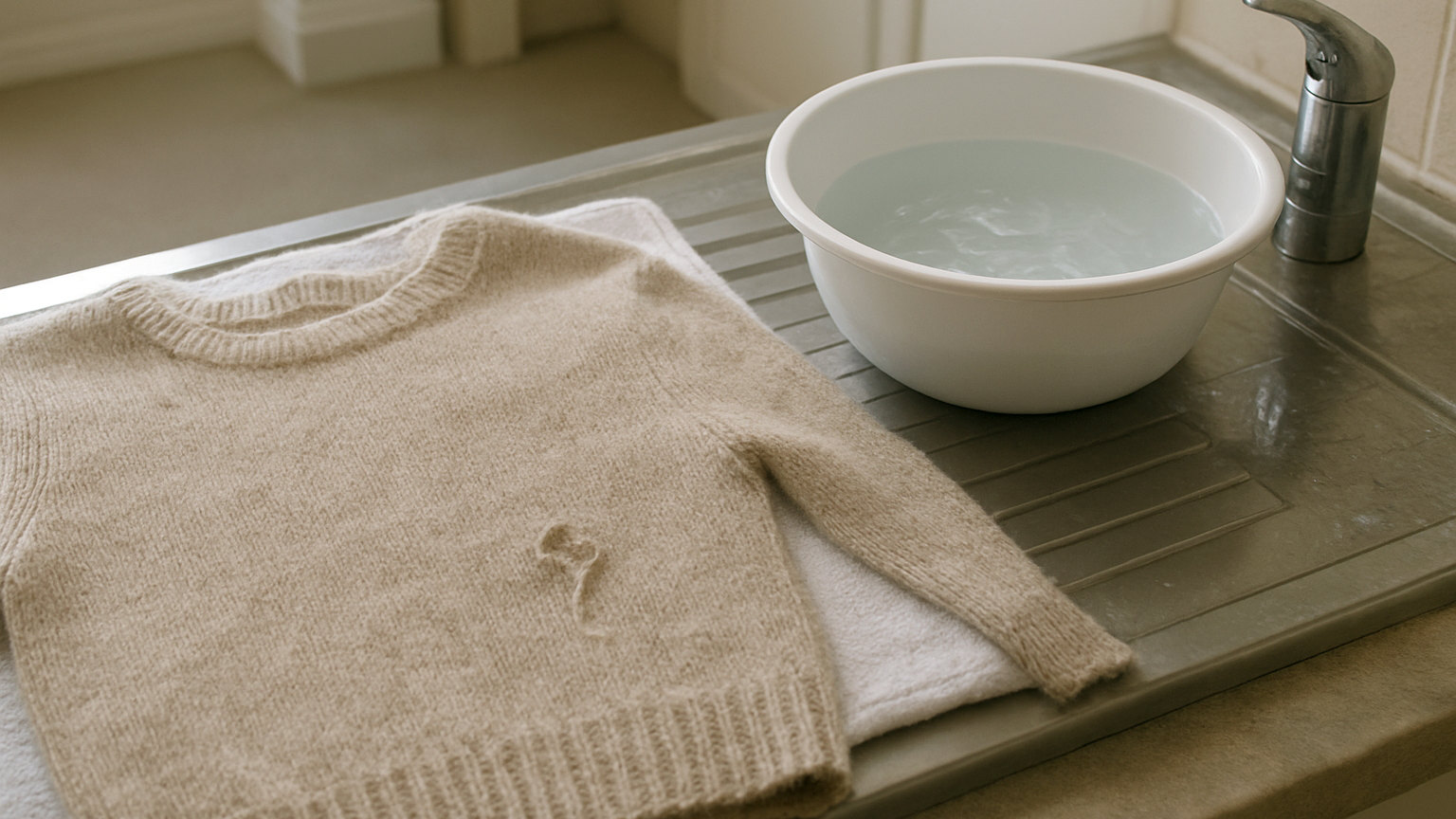
Never by wringing. Lay the garment flat on a large dry towel, roll the towel up with the jumper inside, and press firmly along the roll or kneel on it. The towel absorbs a remarkable amount. Unroll, move to a second dry towel and repeat if it is still heavy.
For machine washed wool, a short slow spin is acceptable since the machine is designed for it.
How should it be dried?
Flat, always. A wet wool jumper hung on a line or a hanger stretches under the weight of the water and never recovers. Lay it on a towel or a mesh rack, reshape it by hand to its original dimensions while damp, and turn it over halfway through.
Keep it away from direct sunlight and radiators, both of which make wool brittle and can shrink it further. Expect a day or two, and do not put it away until it is completely dry.
How often does wool need washing?
Far less often than most clothing. Wool resists odour naturally and is self cleaning to a degree, so a jumper worn over another layer can go five or six wears. Airing it overnight near an open window deals with most of what would otherwise prompt a wash.
Spot cleaning a single mark is preferable to washing the whole garment.
What about bobbling?
Pilling is normal on wool and cashmere, particularly in the first few wears as short fibres work loose. It is not a sign of poor quality, though loosely spun yarn pills more. Remove pills with a fabric comb or a battery shaver, working gently over a flat surface, and the garment improves rather than deteriorates over time.