Line drying is free, uses no energy, is gentler on fabric than a dryer and leaves clothes smelling better than anything in a bottle. It has two genuine drawbacks: strong sunlight fades dark colours, and in a hard water area cotton dries stiff. Both are manageable once you know why they happen.
How should items be hung?
By the strongest part of the garment, and in a way that lets gravity pull the creases out.
- Shirts and dresses – on hangers, hung from the line, so the shoulders keep their shape and the fabric hangs straight.
- Trousers and jeans – by the waistband from the belt loops, or folded over the line at the waistband, which opens the thickest part to the air.
- T-shirts – by the hem rather than the shoulders, so pegs do not leave bumps in the shoulder line.
- Towels and sheets – along the long edge, spread as wide as the line allows.
- Socks – in pairs by the toe, which is quicker to unpeg and keeps them together.
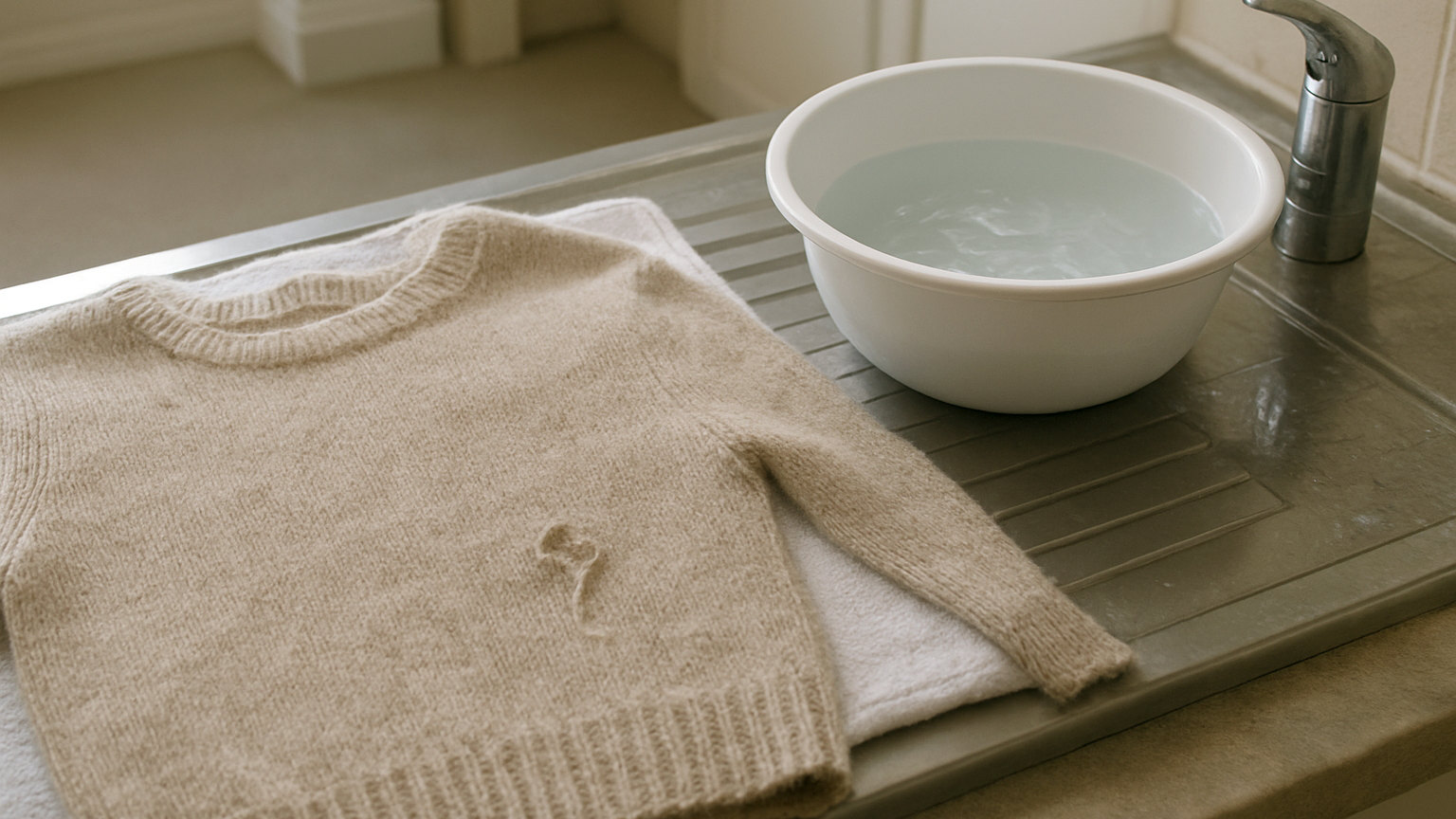
- Knitwear – never hung. Dry flat, or the weight of the water stretches it permanently.
Why do dark clothes fade outside?
Ultraviolet light breaks down dye molecules, and the effect is cumulative. A black t-shirt dried in full summer sun repeatedly will grey noticeably within a season.
Turn dark and brightly coloured items inside out before hanging, which puts the inner face in the light instead. Dry darks in the shade or on an overcast day where possible, and bring them in as soon as they are dry rather than leaving them out all afternoon.
Can sunlight be useful?
On whites, very. Sunlight has a genuine bleaching effect on cotton and is excellent at lifting yellowing from white sheets, shirts and towels, with no chemicals involved. It also helps with residual odours and is effective on stains that have survived a wash.
So the rule is straightforward: whites in the sun, colours in the shade.
Why does cotton dry stiff?
Because the fibres dry in a fixed position with nothing to agitate them, and because hard water minerals and detergent residue are left in the fabric as the water evaporates. In a soft water area the effect is far less noticeable.
Three things help. Reduce the detergent dose, since residue is a major contributor. Add an extra rinse. And give the load a shake as you hang it and again as you bring it in, or put it in the tumble dryer for ten minutes at the end, which lifts the fibres and restores softness.
What about peg marks?
Peg where the mark will not show: the hem of a t-shirt, the waistband of trousers, the seam of a sheet. Use smooth plastic or wooden pegs rather than anything with a rough gripping surface, and avoid metal springs that can rust and mark.
Hangers avoid the problem entirely for anything with a collar or a shoulder seam.
Does the weather need to be warm?
Less than people assume. Wind matters more than temperature, because moving air carries moisture away from the fabric. A cold, dry, breezy day dries washing very effectively, often faster than a warm still one. Frost will freeze the water in the fabric, which then sublimates slowly, so clothes left out in a hard frost often do dry, just slowly.
Humidity is the limiting factor. On a warm muggy day with no wind, washing may barely dry at all.
What should you check before hanging?
The line itself, which collects dirt, bird droppings and algae, and will mark clean washing. Wipe it along its length with a damp cloth before the first use of the season and periodically afterwards. Rotary airers in particular sit outside all year and get filthy.
Also check the pegs themselves, which go mouldy and stain if they are left out in a bag through the winter, and which will transfer those marks straight onto a clean white sheet.