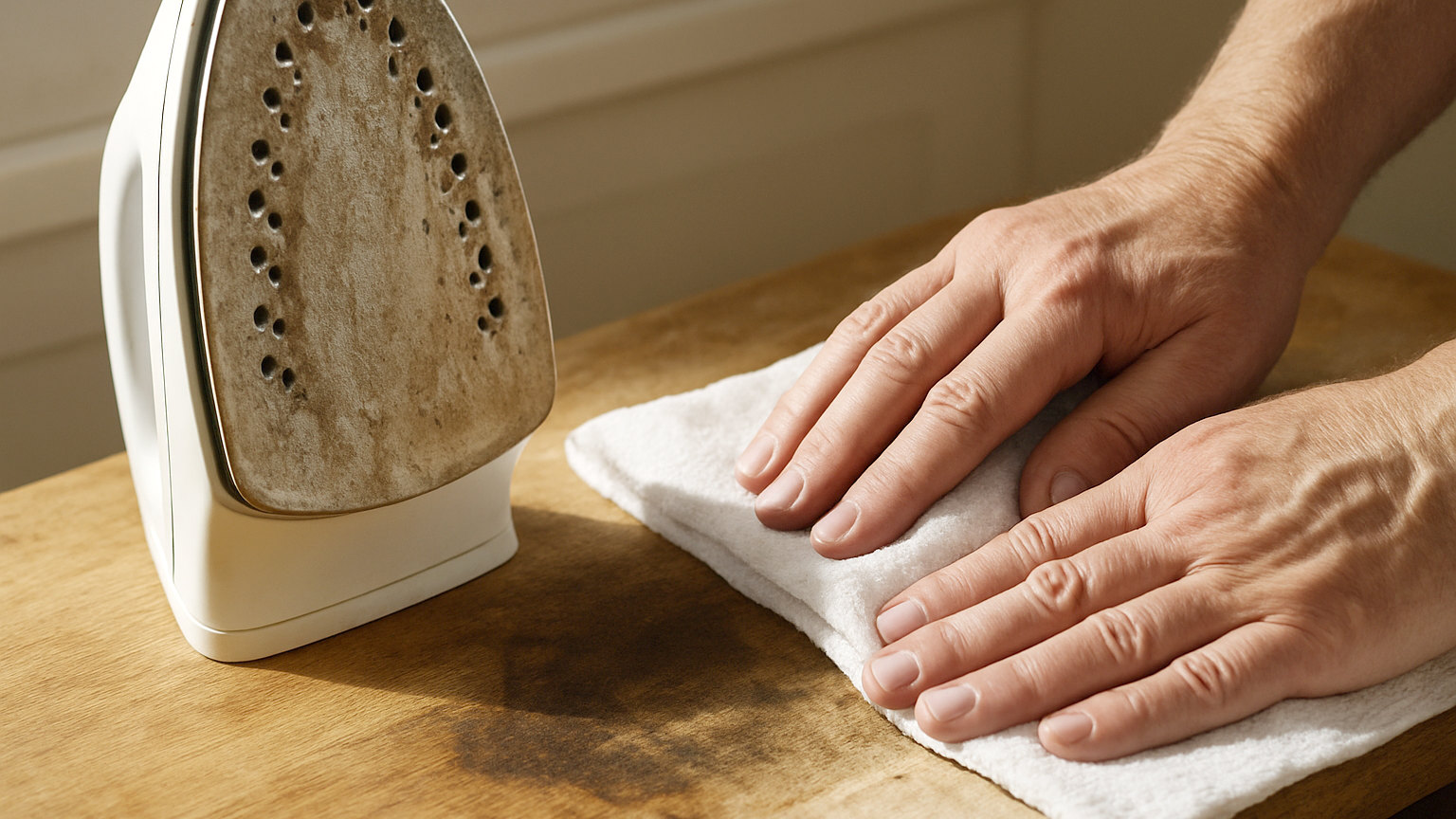
An iron that drags across fabric instead of gliding has something on the soleplate. The three usual culprits are melted synthetic fibre, starch or fabric conditioner residue, and burnt-on scale from the steam vents. Each comes off differently, and the wrong method will scratch a coated plate permanently.
What type of soleplate do you have?
It matters before you start. Stainless steel is the most durable and tolerates mild abrasion. Ceramic and non-stick coated plates are common on mid range irons and scratch easily, and once scratched they snag fabric for the rest of their life. Aluminium is soft and marks readily.
If you are not sure, treat it as coated and use the gentlest method.
How do you remove melted synthetic?
This is the most common problem and the most urgent, because the residue will transfer onto the next thing you iron. Unplug the iron and let it cool completely.
Once cold, most melted plastic can be lifted with a wooden or plastic scraper, or the edge of a credit card, worked gently under the edge of the deposit. Never use a metal blade or a knife.
For residue that will not lift cold, an alternative is to set the iron to low, let it warm slightly so the plastic softens, then unplug it and wipe firmly with a thick cotton cloth. Work carefully, since a warm soleplate will burn.
What removes starch and general build up?
A paste of bicarbonate of soda and a little water, applied to the cold plate with a soft cloth and worked gently, then wiped off with a damp cloth and dried. It is mildly abrasive and safe on stainless steel, and should be used very lightly on coated plates.
White vinegar on a cloth also works well on light deposits, and is the better first choice on a ceramic plate. Wipe the plate afterwards with a clean damp cloth so no acid remains.
Commercial soleplate cleaning sticks exist and are effective. They are applied to a warm iron and wiped off onto an old cloth, and they are the quickest option for heavy burnt-on residue.
How do you clear the steam vents?
The holes block with scale and residue and are easy to overlook. Use a cotton bud dipped in white vinegar, working around the rim of each hole on the cold plate. A cocktail stick clears anything solid, though it should be used gently on a coated plate.
Follow by filling the tank, standing the iron on an old towel, setting it to maximum steam and letting it run for a minute or two to flush the vents through. Do this away from anything you care about, since what comes out is usually brown.
What should never be used?
- Scouring pads, wire wool and abrasive powders, which scratch every type of soleplate.
- A metal blade or a knife to scrape off deposits.
- Oven cleaner or caustic products, which damage the coating and the surrounding plastic.
- A melamine sponge on a coated plate, which is more abrasive than it appears.
- Anything applied to a hot iron while it is plugged in.
What causes the build up in the first place?
Ironing synthetics at too high a temperature is the main one, and it is why working from the coolest fabric upwards matters. Spray starch used heavily leaves a residue that carbonises on the hot plate. Fabric conditioner carried on the clothing does the same thing more slowly.
Ironing over a garment that is not properly clean also transfers soil onto the plate, where it bakes on.
How do you keep it clean?
Wipe the cold plate with a damp cloth every few uses. Store the iron upright so the plate is not resting on anything. Empty the water tank after use. And if you use spray starch, apply it to the fabric rather than the iron and use less than the can suggests.
A test on an old cotton cloth before starting a pile of ironing takes ten seconds and catches a dirty plate before it marks a shirt.