An ironing board is usually treated as a surface rather than a piece of equipment, which is why so many people iron at the wrong height on a worn cover and find the job harder than it needs to be. Two adjustments make a considerable difference: the height and the state of the cover.
What height should it be?
The surface should sit at roughly hip height, or a little below the navel, so that your forearms are level and your shoulders relaxed when the iron is on the board. Too low and you stoop, which is what makes ironing tiring within ten minutes. Too high and you push with your shoulders rather than your body weight.
If you iron sitting down, set the board so the surface is at the height of a desk relative to the chair, and use a board that adjusts low enough to manage it.
Most boards have six or more height settings and most people never change them from wherever the board was when it arrived.
Why does the cover matter so much?
Because it affects how heat and steam behave. A good cover has a reflective surface that bounces heat back into the fabric from below, so the garment is effectively pressed from both sides, and padding underneath that allows steam to pass through rather than condensing on the board.
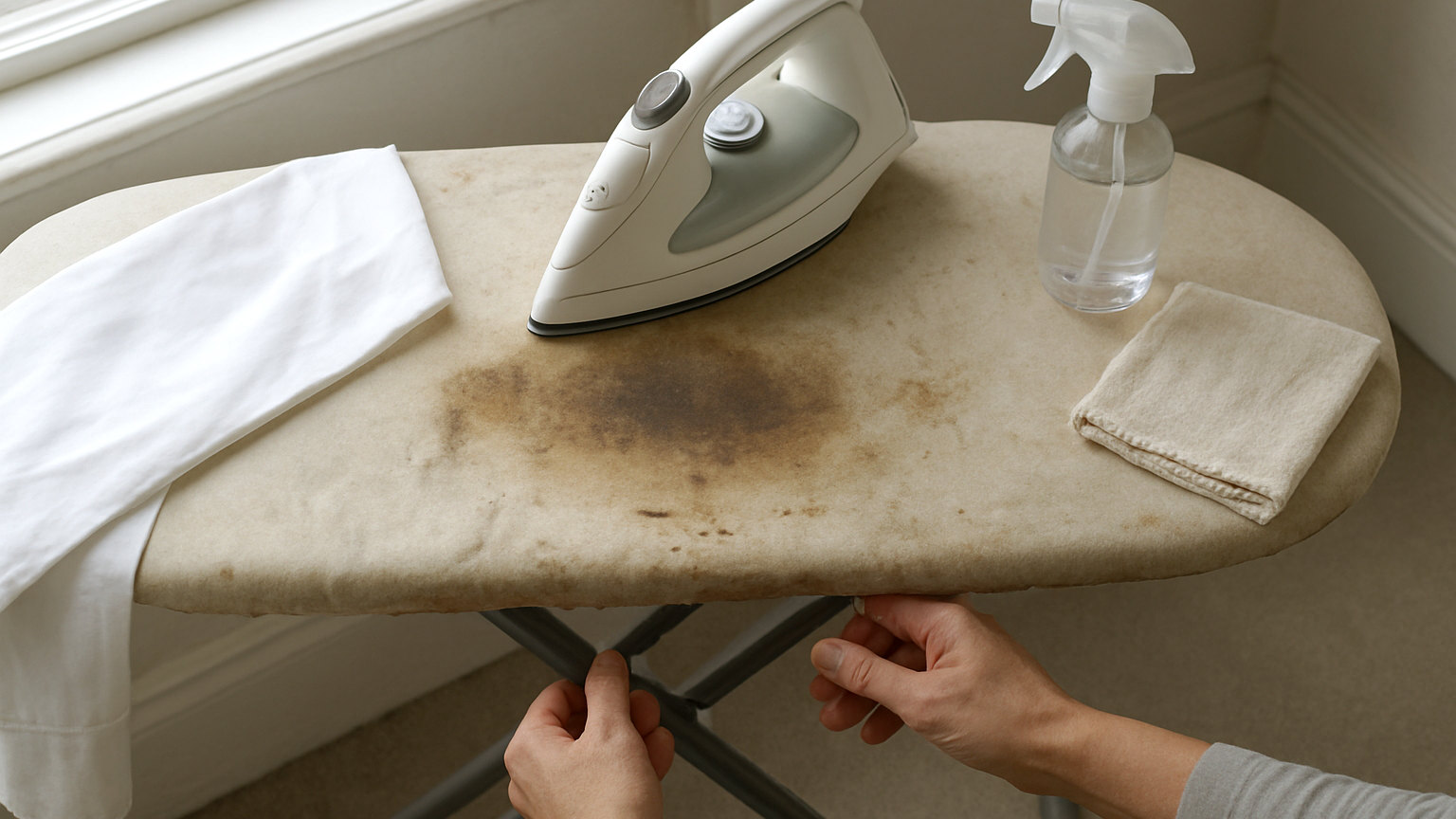
A worn, thin or scorched cover does neither. Garments take longer, steam collects and dampens the board, and the metal mesh underneath can print a pattern into the fabric.
Covers are inexpensive and are the single cheapest upgrade to the whole process. Replace one that is stained, thin, loose or burnt.
How much padding is needed?
Enough that the mesh of the board cannot be felt through it, which usually means a felt or foam underlay beneath the cover. Too little padding transfers the grid pattern onto fabric and makes seams and buttons press hard marks into the garment.
Too much padding is also a problem, since a very soft surface absorbs the pressure rather than letting it flatten the fabric, and creases will not press out cleanly.
How should the board be positioned?
- Narrow end away from your dominant hand, so you can slide shirts and sleeves onto it naturally.
- Near a socket, with the cable running behind you rather than across the board or the floor.
- Away from a doorway and out of a walkway, particularly with children or pets in the house.
- With space at the far end for finished garments and long items to rest, so they are not dragging on the floor.
- Somewhere you can hang things immediately, since a freshly ironed shirt needs to go straight onto a hanger.
What is the iron rest for?
The mesh or heatproof platform at the wide end is where the iron sits between garments, and it is designed to take the heat safely. Standing an iron on its heel on the board itself is less stable, and standing it on a worktop or a chair is how boards and surfaces get scorched.
Check that the rest is secure before you start, since they loosen with age and an iron toppling off one is a serious burn risk.
Is a sleeve board worth having?
If you iron shirts regularly, yes. A sleeve board is a small narrow board that lets you iron a sleeve in the round without folding it, which removes the crease down the top of the sleeve that is otherwise almost unavoidable. They cost very little and take up almost no space.
What about safety?
Never leave a hot iron unattended, and unplug it if you leave the room. Make sure the board is fully locked open before putting any weight on it, since collapsing boards are a common cause of injury. Let the iron cool completely before folding the board away, and store both somewhere a child cannot pull them over.
Check the flex regularly for damage near the iron, which is where cables fail from repeated bending.