Most bedding does not need ironing. Fitted sheets certainly do not, and a duvet cover spread flat on a bed looks perfectly acceptable without ever meeting an iron. Where it is worth doing – linen bedding, a guest room, pillowcases that sit against a face – the difficulty is managing the bulk rather than the fabric itself.
Does bedding need ironing at all?
It is a household preference rather than a requirement. Ironed cotton bedding feels crisper and smoother, and linen bedding looks considerably better pressed. Against that, it is among the most time consuming ironing there is, and the result lasts one night.
A reasonable middle position is to iron pillowcases, which take two minutes each and are the part you actually feel, and to leave the rest.
How do you avoid needing to iron it?
- Use a lower spin speed, since the high speed spin sets most of the creases.
- Take the load out of the machine the moment it finishes and shake each item out firmly.
- Hang sheets and covers over a line along the long edge, spread as wide as possible rather than bundled.
- Smooth the fabric with your hands while it is damp, particularly along the hems.
- Fold immediately once dry, while the fabric is still warm if it has come from a dryer.
- Store folded flat rather than crammed into a cupboard.
Done properly, cotton bedding comes out flat enough that most people would not consider ironing it.
What is the technique for a large item?
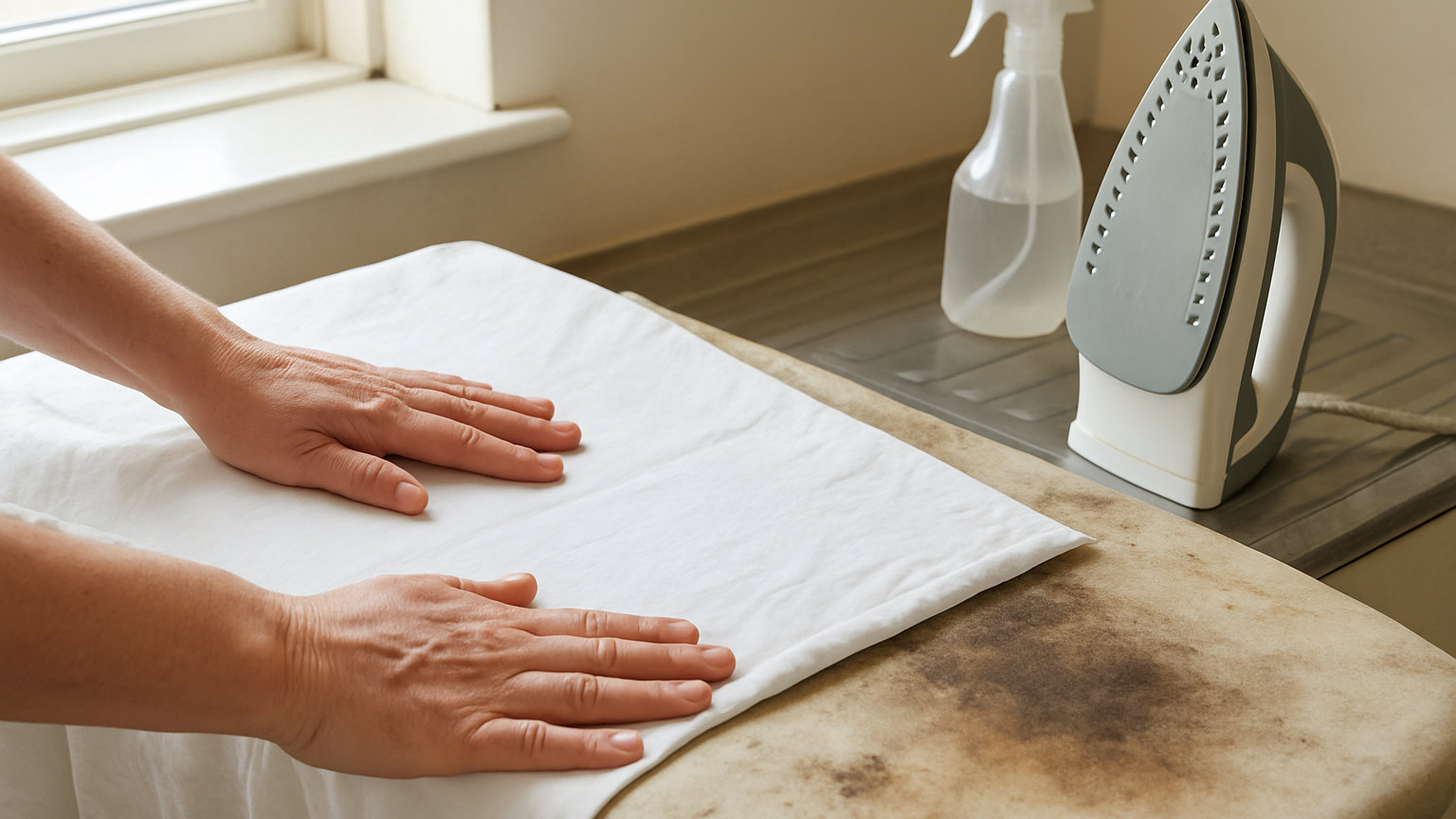
Work in sections and let the bulk hang off the board rather than trying to manage the whole thing. Fold the item in half or in quarters, iron the exposed section, then move the fold along.
Position a chair or a clean surface at the end of the board to take the weight of the finished section, so it is not dragging on the floor or pulling the rest out of position. A sheet hanging off the end of a board will crease itself as fast as you press it.
What order should a duvet cover go in?
Fasten the buttons or press studs first, which keeps it as a flat rectangle rather than an open bag. Turn it inside out if there is a print you want to protect.
Fold it in half lengthways, then in half again, giving a manageable width. Iron one face, turn it over, iron the other, then unfold and refold the other way to reach the sections that were inside the fold.
Work with plenty of steam on a three dot setting for cotton, and dampen the fabric if it has dried completely.
How do you iron pillowcases?
Lay flat, iron one side, turn over and do the other. Pay attention to the open end and the hem, which are the visible parts. Slide the narrow end of the board inside the case if you want both faces done without a fold line down the sides.
Two minutes each, and the item most worth the effort.
What about linen bedding?
Linen is the one type where ironing makes a substantial visual difference, and also the one that creases again fastest. Iron it damp, with maximum steam and the highest heat setting, and press firmly. Bone dry linen is very hard work and gives a poor result.
Many people deliberately leave linen bedding unironed for the relaxed look it has when air dried, which is a legitimate choice rather than a compromise.
Is a steamer any use?
For bedding already on the bed, yes. A handheld or upright steamer run over a made bed relaxes creases in a couple of minutes with no folding, no board and no handling of bulk. It will not produce the crisp finish of an iron, and for most households it is a better use of the time.
What about tablecloths and curtains?
The same principles apply: work in sections, support the weight, use plenty of steam. Curtains are far easier to steam in place once hung than to iron flat, and the weight of the fabric does much of the work as the creases relax.