Steam does most of the work when ironing. Heat alone flattens fabric temporarily; heat plus moisture allows the fibres to relax, release the creases they are holding and reset in a new position as they dry. That is why a hot dry iron on bone dry cotton is hard work for a mediocre result.
How does steam actually help?
Natural fibres such as cotton, linen and wool absorb water, and when they do the hydrogen bonds holding the fibre in its creased shape loosen. The iron then flattens the relaxed fibre and the heat drives the moisture off, so the fibre sets flat as it dries.
Without moisture, the iron is simply pressing a dry fibre that springs back. With moisture, it is reshaping it.
When should steam be used?
- Cotton and linen – full steam on the three dot setting, and the more the better on linen.
- Wool – steam through a pressing cloth, without pressing the soleplate hard against the fabric.
- Polyester and blends – light steam on the two dot setting.
- Heavy creases – a steam burst, which releases a concentrated shot.
- Hanging garments and curtains – vertical steam, holding the iron upright a few centimetres from the fabric.
When should steam be avoided?
On silk, where water droplets leave permanent ring marks, and where the label almost always specifies dry ironing. On anything with the steam symbol crossed out on the label. On acetate, viscose and some rayon, which mark easily. On waxed and coated fabrics. And on anything where you cannot control the drips, which is most low quality irons at low temperature settings.
The crossed out steam symbol on a label is a specific instruction rather than a general caution, and it usually means the fabric will water spot.
Why does the iron spit water?
Because the temperature is too low for the steam setting. Steam only forms properly on the higher settings, and if the dial is on one dot while the steam is on, the water passes through the soleplate as liquid rather than vapour. That produces the spitting and the wet patches.
Turn the steam off entirely for one dot settings. If the iron spits on a high setting, it usually needs descaling.
What is a steam burst for?
A concentrated shot of steam for stubborn creases, used in a specific spot rather than continuously. It is particularly useful on linen, on the fold line of trousers and on anything that has been folded in a drawer for months.
Most irons need a few seconds between bursts to build pressure again, and firing them in rapid succession produces water rather than steam.
How does vertical steaming work?
Hang the garment, hold the iron upright a few centimetres away, and release steam while drawing it slowly downwards. The steam relaxes the fibres and gravity pulls the creases out. It works well on jackets, curtains, dresses and jersey, and it is the right approach for anything that would be flattened by direct contact.
Not every iron supports vertical steaming, and using one that does not will simply pour water down the garment.
How much water should be in the tank?
Filled to the marked line and no further. Overfilling is a common cause of leaking. Empty the tank after use rather than leaving water standing in it, which encourages scale and, in a warm cupboard, can allow something to grow inside the reservoir.
Always unplug the iron and let it cool before filling or emptying it.
Does the water type matter?
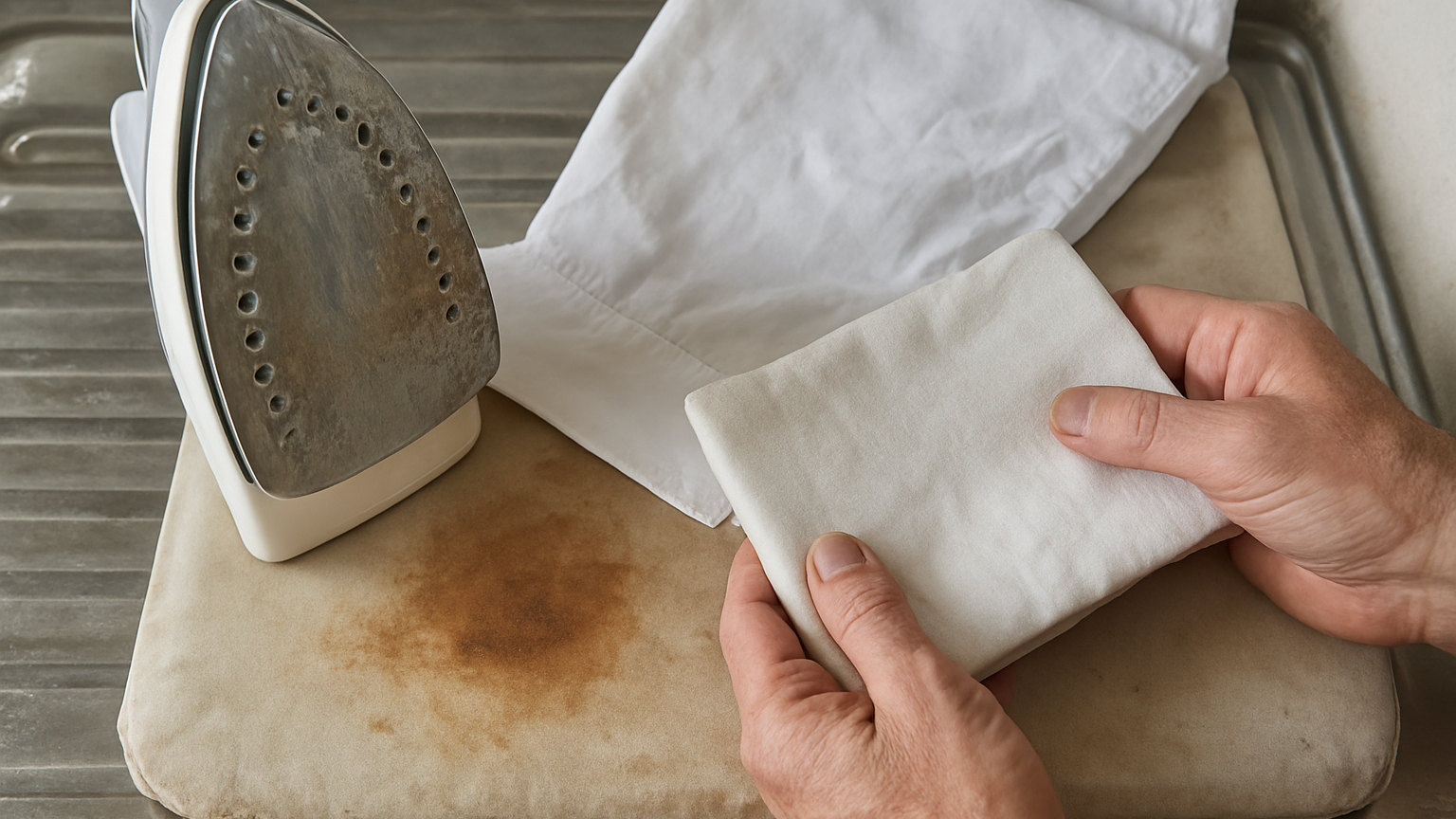
In a hard water area, considerably. Scale builds up inside the steam chamber and eventually blocks the vents, which reduces the steam output and causes spitting and white flakes on clothing. Many manufacturers now specify ordinary tap water rather than pure distilled, because their anti-scale systems are designed around it and demineralised water can cause spluttering in some designs, so it is worth checking the manual before switching to anything else.