Shine marks happen when the soleplate flattens and polishes the surface of the fibres. Instead of the slightly irregular surface that scatters light and gives fabric its matt appearance, you get a smooth flattened area that reflects light directly. On synthetics it is worse than cosmetic, because the early stage of shine is the early stage of melting.
Which fabrics are worst affected?
- Dark colours of any fibre, where the contrast between matt and shiny is most visible.
- Wool and wool blends, particularly suit trousers and jackets.
- Polyester and synthetic blends, which soften and flatten at relatively low temperatures.
- Twills and gabardine, where the diagonal weave picks up the light.
- Anything with a pile or a nap, such as velvet, corduroy and moleskin, where the pile is crushed flat.
- Seams, hems, pockets and cuffs, where the extra thickness means the soleplate presses harder on the raised area.
What causes it?
Three things in combination: too much heat for the fibre, too much pressure, and direct contact between the soleplate and the face of the fabric. Any one alone rarely does it, and all three together will mark almost anything.
Areas of double thickness are the usual starting point, because the raised section takes the full pressure while the surrounding single layer takes less.
How do you prevent it?
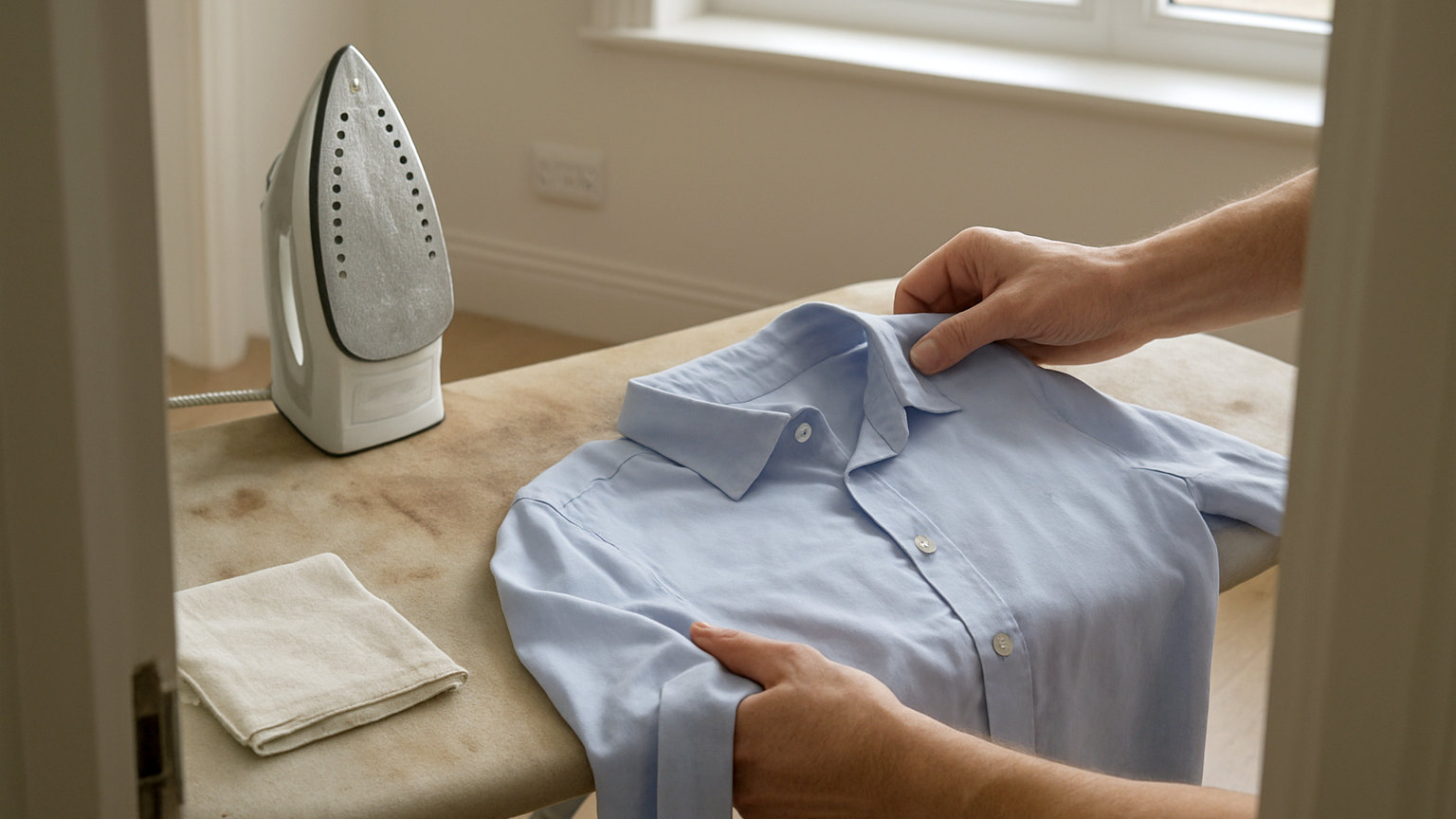
A pressing cloth is the single most effective answer, and it is simply a piece of clean cotton laid between the iron and the garment. An old pillowcase, a cotton tea towel or a square of muslin all work. The cloth spreads the heat, removes direct contact and prevents the polishing effect entirely.
Beyond that:
- Iron dark and delicate fabrics inside out, so any shine is on the inner face.
- Use the lowest temperature that removes the crease.
- Press by lifting and lowering the iron rather than sliding it, particularly on wool.
- Use steam, which relaxes the fibres so less pressure is needed.
- Reduce pressure over seams, hems and pockets.
- Keep the soleplate clean, since residue increases friction.
What is pressing rather than ironing?
Ironing slides the soleplate across the fabric. Pressing sets it down, holds it for a few seconds and lifts it straight up. Pressing is the correct technique for wool, for tailored garments and for anything prone to shine, because the sliding motion is what polishes the fibres.
It feels slower and is not, since each press covers a full soleplate of fabric at once.
Can an existing shine be removed?
Sometimes, on wool and natural fibres. Dampen a pressing cloth with white vinegar diluted in water, lay it over the shiny area, and press with a warm iron using the steam function. The moisture and heat lift the crushed fibres. Then brush the area gently with a clothes brush while it is still warm, working against the nap.
Repeat once or twice if needed. It often improves matters substantially, though a badly shined area of a wool suit may need a tailor or a dry cleaner.
On synthetics, shine caused by partial melting is permanent. The fibre surface has physically changed and nothing will restore it.
What about shine that is not from ironing?
Wool trousers and jacket elbows develop shine from wear rather than from heat, as constant friction against a chair or a desk flattens the surface fibres. The same diluted vinegar and steam treatment helps here too, followed by brushing the nap back up while the fabric is still warm. It is well worth trying before assuming a suit is finished, since the fabric underneath is usually perfectly sound.
Is a shiny soleplate part of the problem?
A dirty one is. Residue from melted synthetics, spray starch or fabric conditioner makes the plate drag rather than glide, which means more pressure gets applied to move it across the fabric. Cleaning the soleplate regularly reduces the pressure needed and therefore the risk of marking, and it takes two minutes with a cold iron and a damp cloth.