White vinegar is the most genuinely useful of the household laundry remedies, and it works for reasons that are chemical rather than folkloric. It is mildly acidic, and most of the residues that cause laundry smells are alkaline. Adding acid neutralises them and lets them rinse away.
What does it actually do?
- Neutralises alkaline residues from detergent, sweat and bacterial by-products.
- Helps rinse detergent out of fabric, which softens it and reduces skin irritation.
- Dissolves limescale in the machine and in the fibres, which is why it helps in hard water areas.
- Reduces static in synthetics, doing what fabric conditioner does without the coating.
- Helps with dye setting on some wool and silk acid dyes, though very little on cotton.
What it does not do is disinfect. It has some antibacterial effect at full strength and very little at laundry dilutions, so it is not a substitute for a hot wash where hygiene matters.
How much should you use?
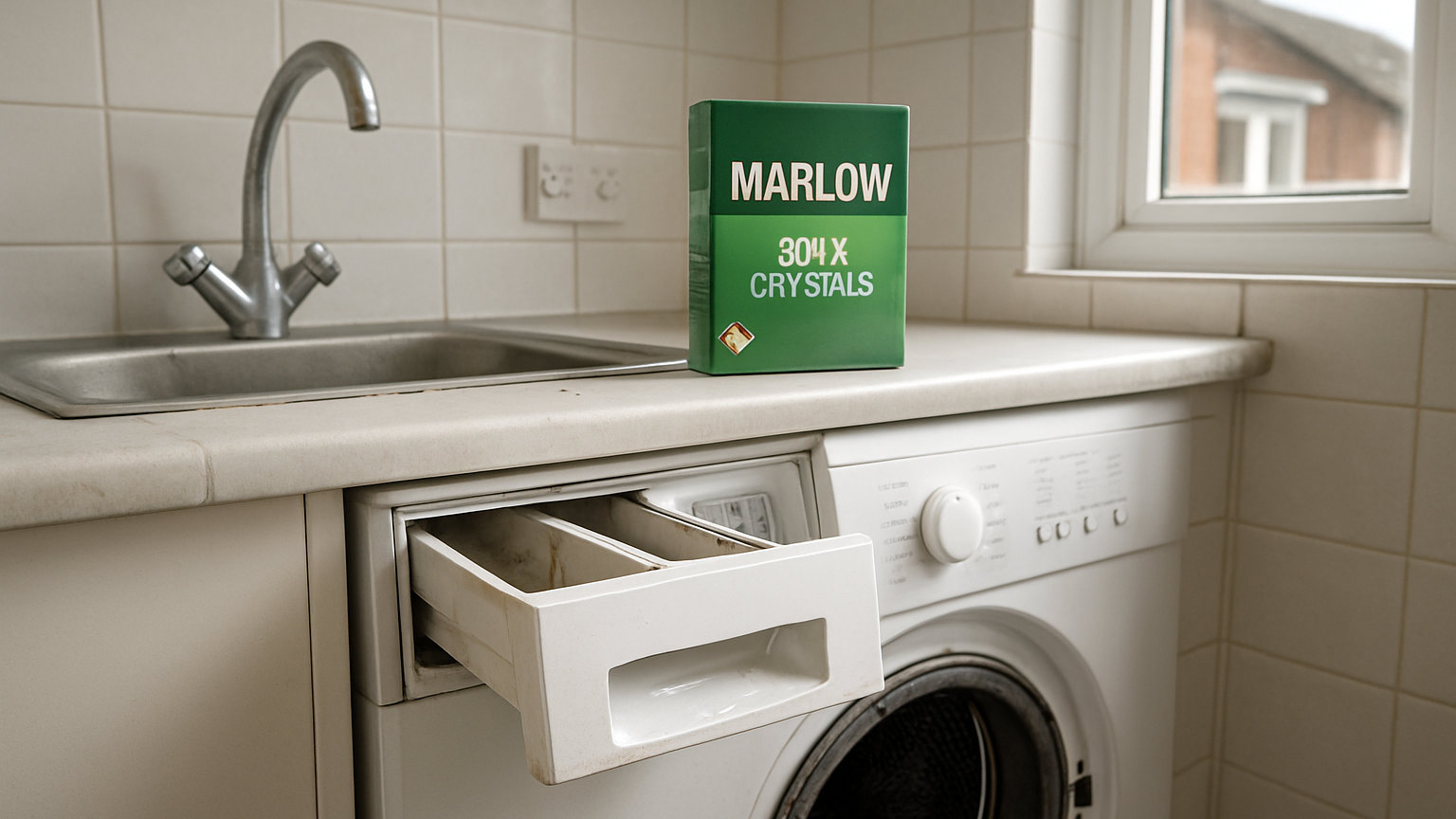
About 100 to 120ml, roughly half a cup, in the fabric conditioner compartment of the drawer. For a stripping wash or heavy odour, a full cup in the drum.
Ordinary distilled white vinegar is what to use. Malt vinegar will stain, and cider vinegar has more colour and a stronger smell than is helpful.
Does it leave clothes smelling of vinegar?
No. It is volatile and disperses completely during the rinse and drying. If washing smells faintly of vinegar afterwards, too much was used or the load was not rinsed properly, and a second rinse clears it.
Where should it go in the machine?
In the fabric conditioner compartment, so it is released during the rinse cycle where it is most useful. Putting it in with the detergent at the start neutralises the detergent and reduces its cleaning power, which is counterproductive.
For a stripping wash with no detergent, putting it directly in the drum is fine.
Is it safe for the machine?
This is the one genuine caution. Several manufacturers advise against using vinegar regularly, on the basis that prolonged acid exposure can degrade rubber seals and hoses over time. The evidence is disputed, and the risk from occasional use at laundry dilutions is low.
The sensible position is to use it when there is a reason, such as odour or residue, rather than in every wash as a routine conditioner substitute. Check your manual, since some manufacturers state it explicitly.
What should it never be mixed with?
Bleach, in any form and in any concentration. Acid plus chlorine bleach releases chlorine gas, which is genuinely dangerous in an enclosed room. Never add vinegar to a load containing bleach, and never pour it into a machine that has just run a bleach cycle.
Combining it with bicarbonate of soda in the same step is harmless and pointless, since the two neutralise each other and the fizzing does nothing useful.
What is it particularly good for?
Sour towels, sports kit, smoke and mildew smells, and stripping residue from over-conditioned fabric. It is also effective as a soak before washing, which is often more useful than adding it to the cycle.
For a new towel, a cup of vinegar in the first wash removes the manufacturing finish that stops it absorbing.
Can it be used on everything?
Avoid it on anything with elastic or rubber components over the long term, and on delicate silk without testing. It is fine on cotton, linen, synthetics and wool in the dilutions used for laundry.
Is it a replacement for fabric conditioner?
For softening, largely yes, and it does it by removing residue rather than by adding a coating. It will not perfume the laundry, which is the other thing conditioner does and the reason some people miss it.
Does it work in cold water?
Yes, which is one of its practical advantages over oxygen bleach. The neutralising reaction does not depend on heat, so a cold soak with vinegar is nearly as effective as a warm one. That makes it a reasonable option for wool, silk and anything else that cannot take a hot wash but has picked up an odour.