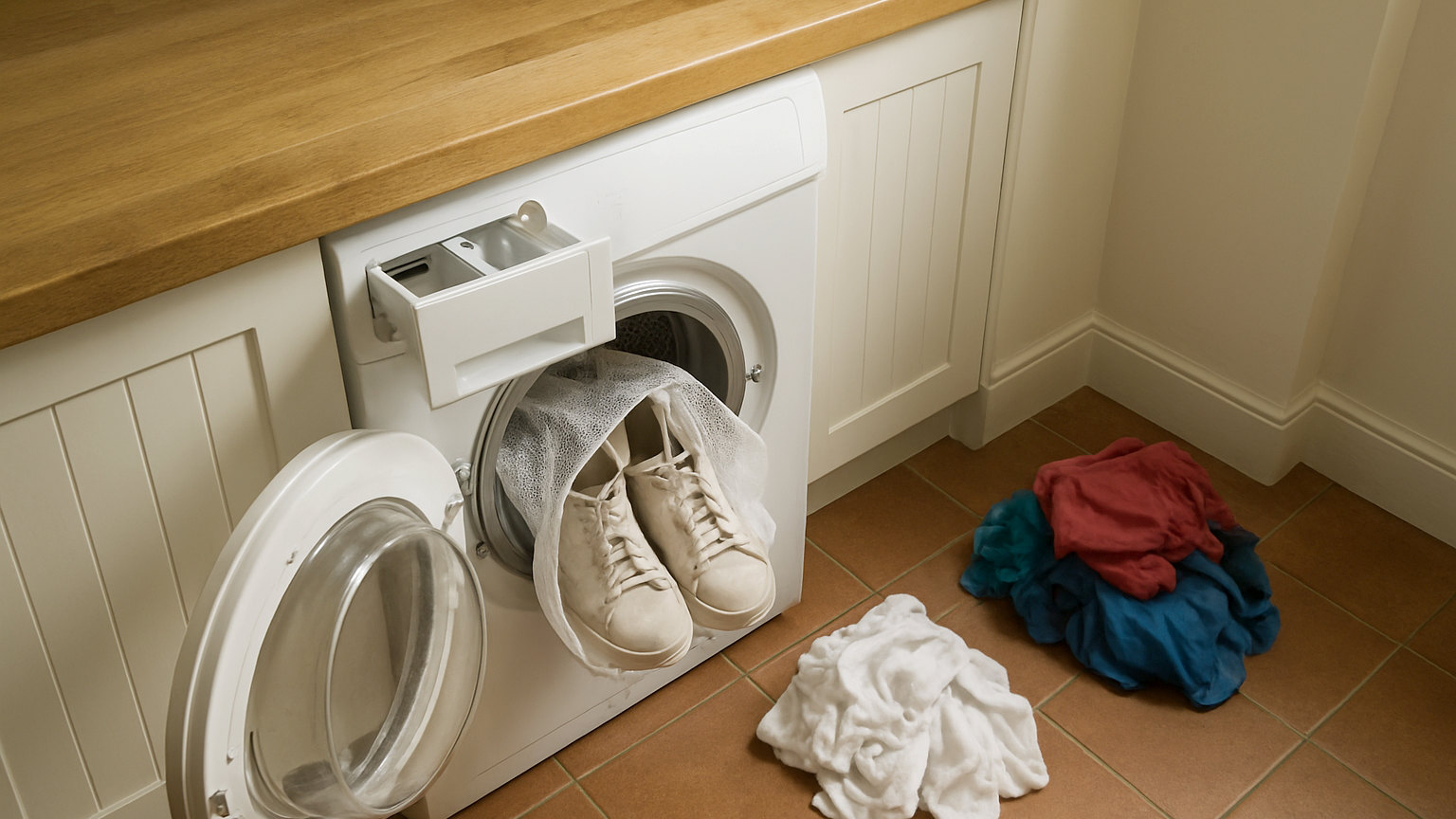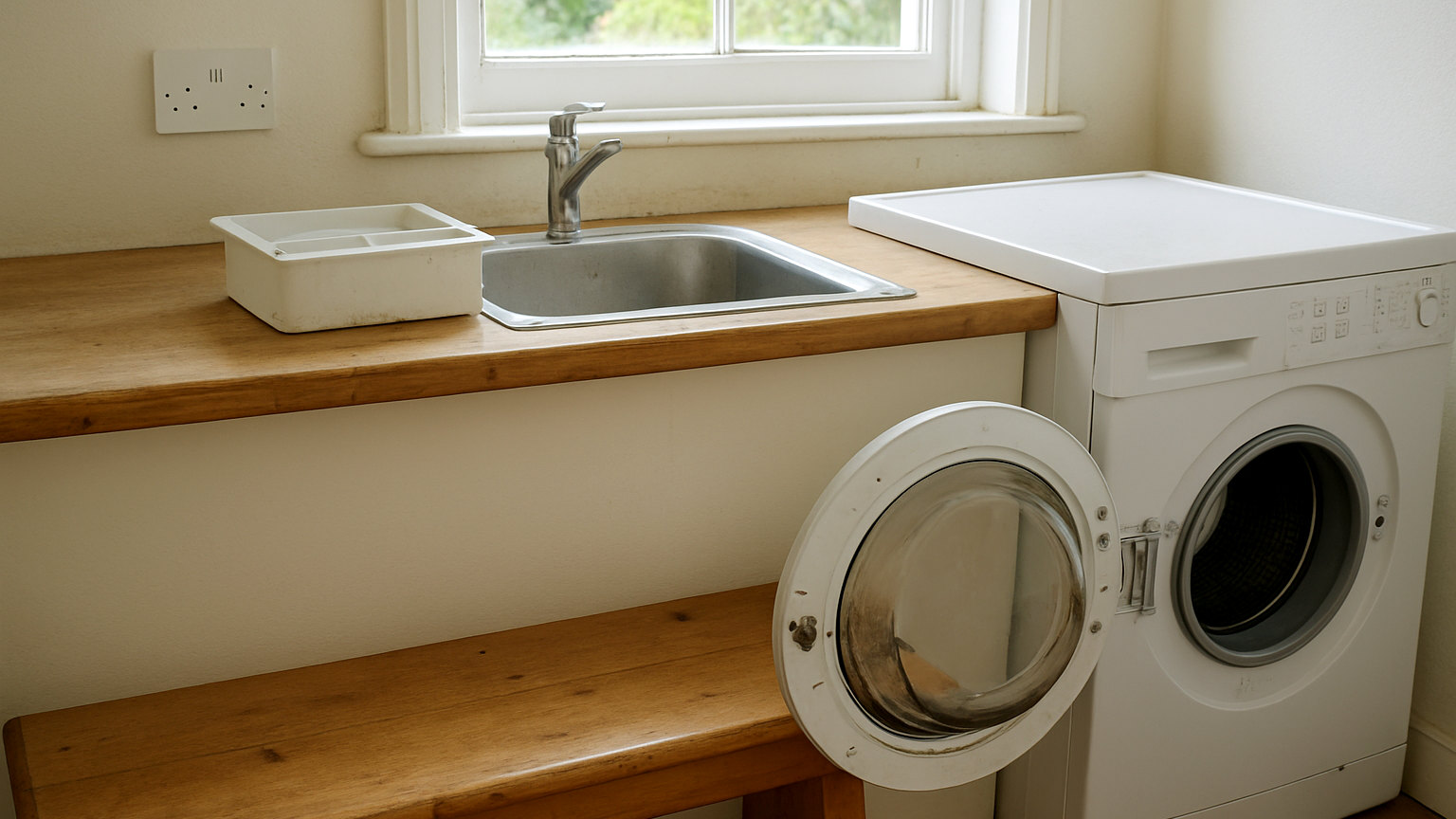
Running a hot empty cycle is the part everybody knows and it only deals with the drum. The residue that causes smells and transfers onto clothes sits in four places a cycle cannot reach: behind the door seal, in the drawer housing, in the filter and in the drain hose. All four need doing by hand.
How often should it be done?
Monthly for the full routine, and more often in a household that washes exclusively at 30 degrees or uses fabric conditioner on every load. Wiping the seal and leaving the door ajar can be done weekly in seconds and prevents most of the build up.
What is the maintenance wash?
An empty cycle at the highest temperature the machine offers, usually 90 degrees, with no clothes in it. Add either a proprietary washing machine cleaner, a large dose of soda crystals, or a cup of white vinegar and a cup of bicarbonate of soda.
Soda crystals are cheap and effective against the greasy element of the residue. A dedicated cleaner is formulated for the job and is worth using a few times a year. Vinegar helps with limescale, and should not be used in machines where the manufacturer advises against acids.
How do you clean the door seal?
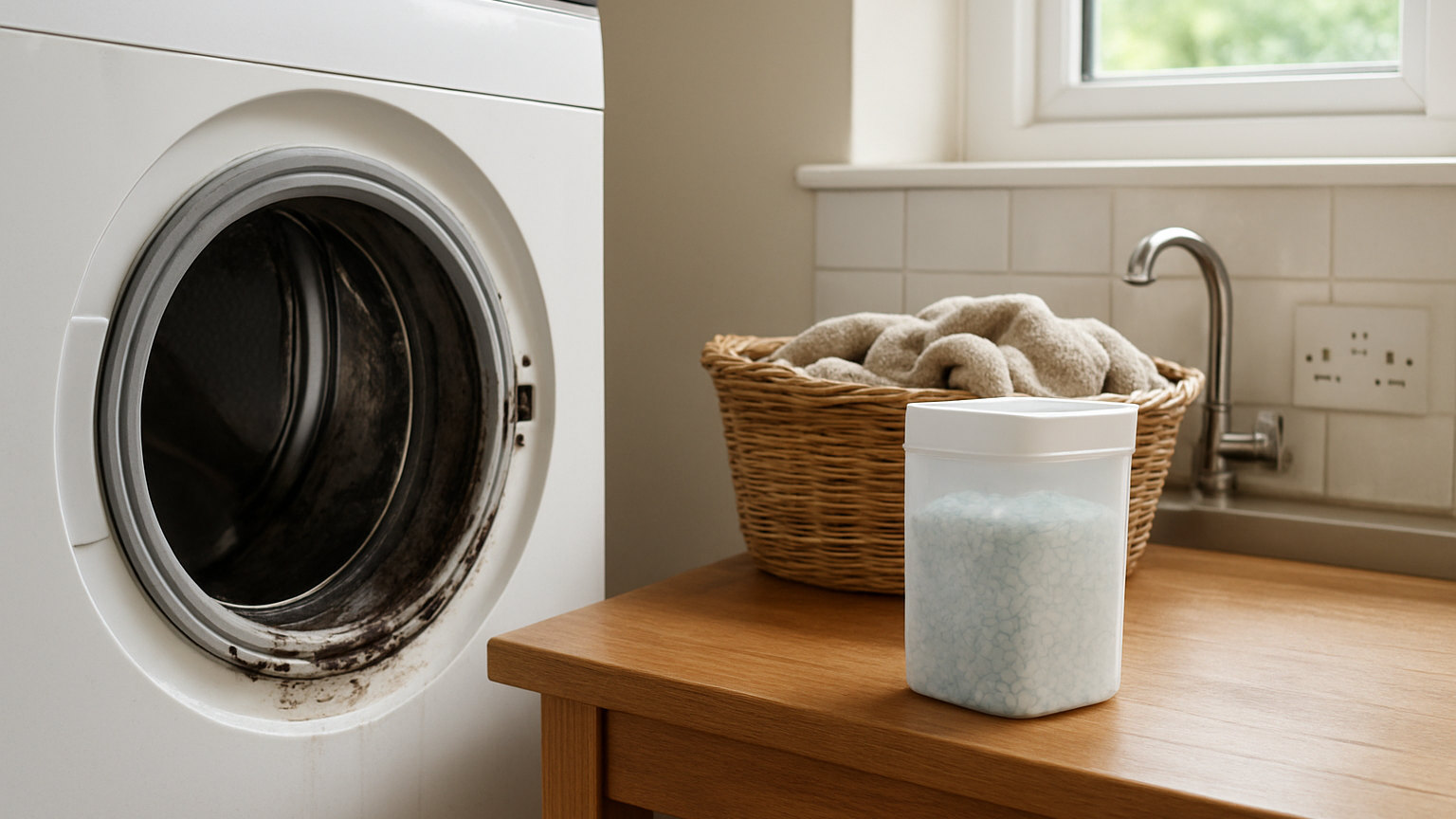
This is the most important step and the one most often skipped. Pull the rubber lip back with your fingers and look underneath. There will usually be a channel holding water, lint, hair and black deposits.
Wipe all the way round with a cloth and hot soapy water, working into the fold. For black mould, use a dilute bleach solution or a mould remover, leave it a few minutes and wipe again. Dry the whole seal afterwards, including under the lip.
If the mould is growing into the rubber rather than sitting on it, cleaning will lighten it but not remove it, and the seal may eventually need replacing.
What about the detergent drawer?
Most drawers pull right out, usually with a small catch or button in the middle compartment. Take it out and wash it in hot soapy water with an old toothbrush, paying attention to the siphon cap in the conditioner section, which blocks and causes conditioner to sit in the drawer.
Then clean the housing the drawer sits in, which is normally worse than the drawer itself. A bottle brush and hot water reach the roof of the cavity where residue collects and drips back down.
Where is the filter and how do you clean it?
Behind a small hatch at the bottom front of the machine. Put a shallow tray and towels underneath, because a surprising amount of water comes out. Unscrew the cap slowly, let it drain, then remove the filter and rinse it under a tap.
Expect coins, hair grips, buttons and a quantity of lint. Check the cavity behind it with a torch and clear anything lodged there before refitting. Make sure the cap is screwed back fully or the machine will leak.
What else is worth checking?
- The drum, wiped with a cloth, including under the lifters where small items hide.
- The door glass and its rim.
- The drain hose, where it connects, for kinks and for a blocked standpipe.
- The inlet hose filters at the tap end, which clog with grit and reduce fill rate.
- The machine feet, since a machine that is not level vibrates and damages its own bearings.
What stops it coming back?
Leave the door and the drawer ajar between washes so the drum dries. Wipe the seal weekly. Run one hot wash a week, using it for towels and bedding so it does a useful job. Use the correct detergent dose and less fabric conditioner. And take each load out as soon as the cycle finishes.
Does a clean machine wash better?
Noticeably. A machine with residue in it returns that residue into the wash water, which leaves grey marks on dark clothing and a stale smell on everything. Households that clean the machine properly often find the problem they blamed on their detergent disappears.