Smoke smell is caused by fine oily particles and tar compounds that settle into fabric and bond to the fibres. Because they are oily rather than water soluble, a normal wash lifts some of them and leaves the rest, which is why a garment can come out of the machine still smelling faintly of a bonfire or a pub.
What should you do first?
Air the garment outdoors before anything else, for several hours and ideally a full day. Fresh moving air removes a surprising proportion of the volatile compounds, and doing this first means the wash has less to deal with.
A breezy day does more than a still one. Sunlight helps as well, since ultraviolet light breaks down some of the compounds involved.
What is the soaking method?
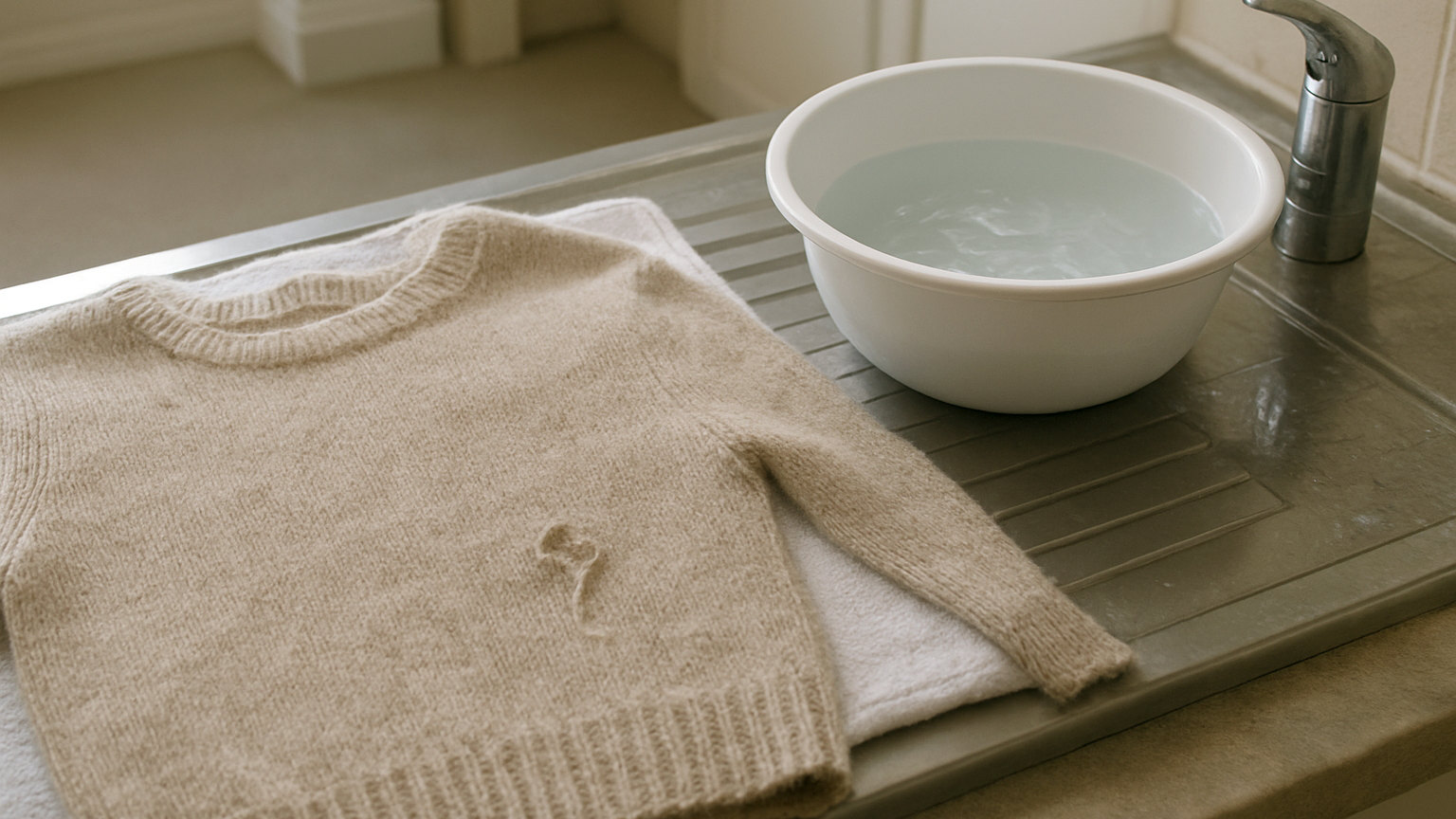
- Fill a basin or bath with warm water and add a cup of white vinegar.
- Submerge the garments fully and leave them for an hour, or overnight for heavy exposure.
- Drain and squeeze the water through the fabric.
- Wash normally at the highest temperature the label allows.
- Add an extra rinse.
- Dry outdoors if possible.
Vinegar is the most effective household treatment here. It neutralises the alkaline compounds in smoke residue, and its own smell disappears during the rinse and drying.
What else can be added to the wash?
Half a cup of bicarbonate of soda in the drum, in a separate cycle from the vinegar rather than the same one. An oxygen bleach booster helps on white and colourfast items, since it oxidises some of the residue.
Avoid adding a strongly perfumed product, which sits on top of the smoke smell rather than removing it and produces a combination most people find worse than the original.
Why does one wash often not work?
Because the particles are lodged deep in the fibre structure and are held there by their oily nature. Removing them is a matter of repetition rather than strength. Two or three washes, with airing in between, will usually clear what one will not.
Heat matters too, within what the fabric allows, since warmth helps dissolve the oils.
What about items that cannot be washed?
Coats, suits, leather and anything dry clean only need a different approach. Air them outdoors for as long as the weather allows, which does most of the work. A garment steamer helps, since steam opens the fibres and carries compounds away.
Sealing the item in a bag with an open tub of bicarbonate of soda or activated charcoal for a few days absorbs a good deal. For anything valuable or heavily affected, professional cleaning is the reliable route, and it is worth telling the cleaner what the smell is.
How do you deal with a whole wardrobe after smoke exposure?
Deal with the room first, or everything you clean will be recontaminated. Ventilate thoroughly, wash the hard surfaces, and clean or replace soft furnishings. Then work through the clothing in batches rather than trying to do it all at once.
Anything stored in the same wardrobe will have absorbed the smell even if it was never worn.
Does a tumble dryer help or hurt?
It hurts if the smell is still present, because heat sets residual odour into fibres and makes it far harder to remove afterwards. Check that a garment smells genuinely clean while damp before it goes anywhere near heat.
Once the smell has gone, drying normally is fine.
What about bonfire and barbecue smoke?
The same approach works, and it is usually easier, since the exposure is short and the residue lighter. Airing overnight followed by a normal wash clears most of it. Wood smoke is less oily than cigarette smoke and does not bond as stubbornly.
What about smoke in a coat lining?
Linings hold smoke more than outer fabrics do, because they are usually synthetic and sit against skin and warmth. Turn a coat inside out to air it, so the lining gets the moving air rather than the shell. Steaming the lining specifically is worth doing before deciding a coat needs professional cleaning.