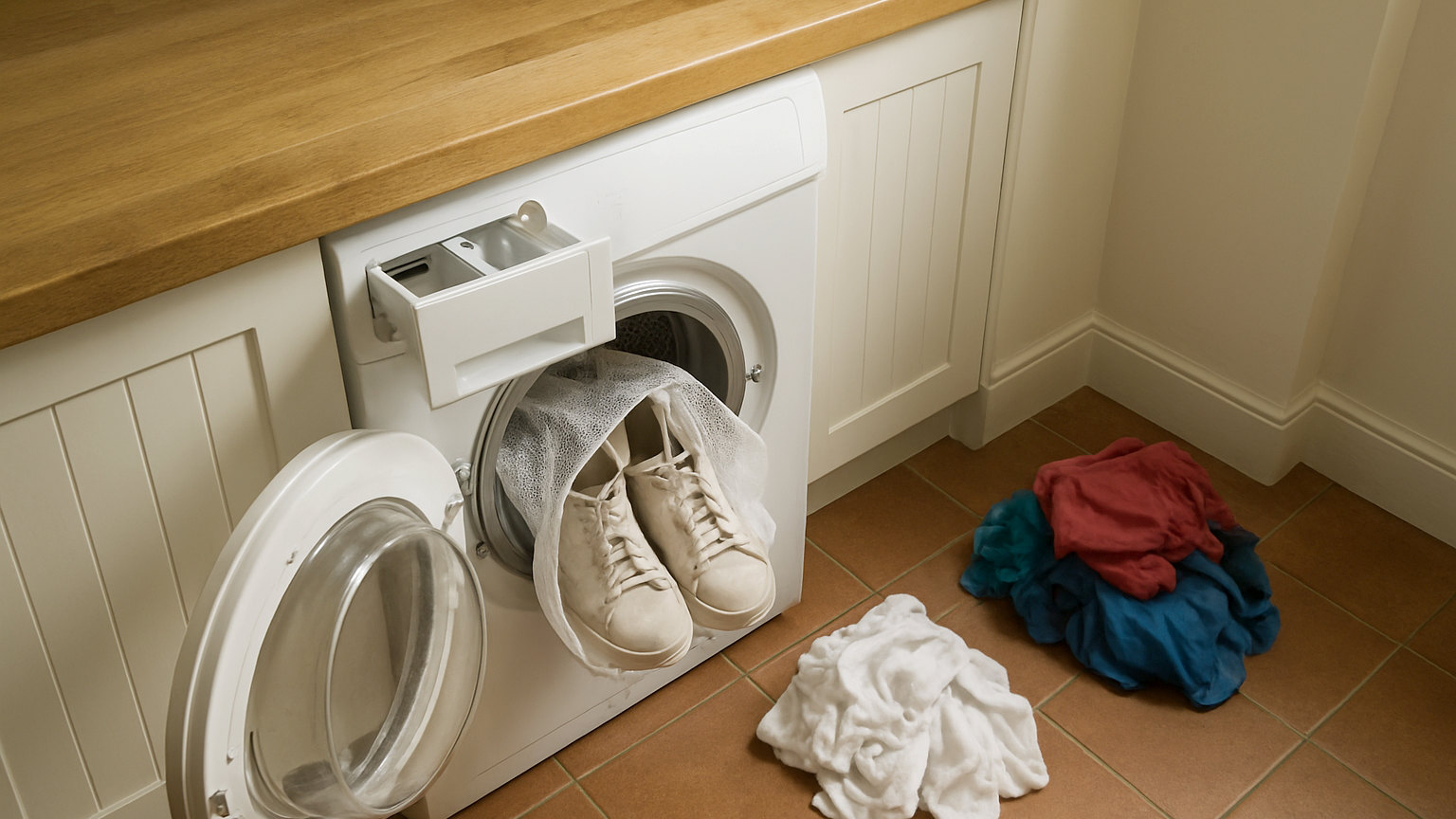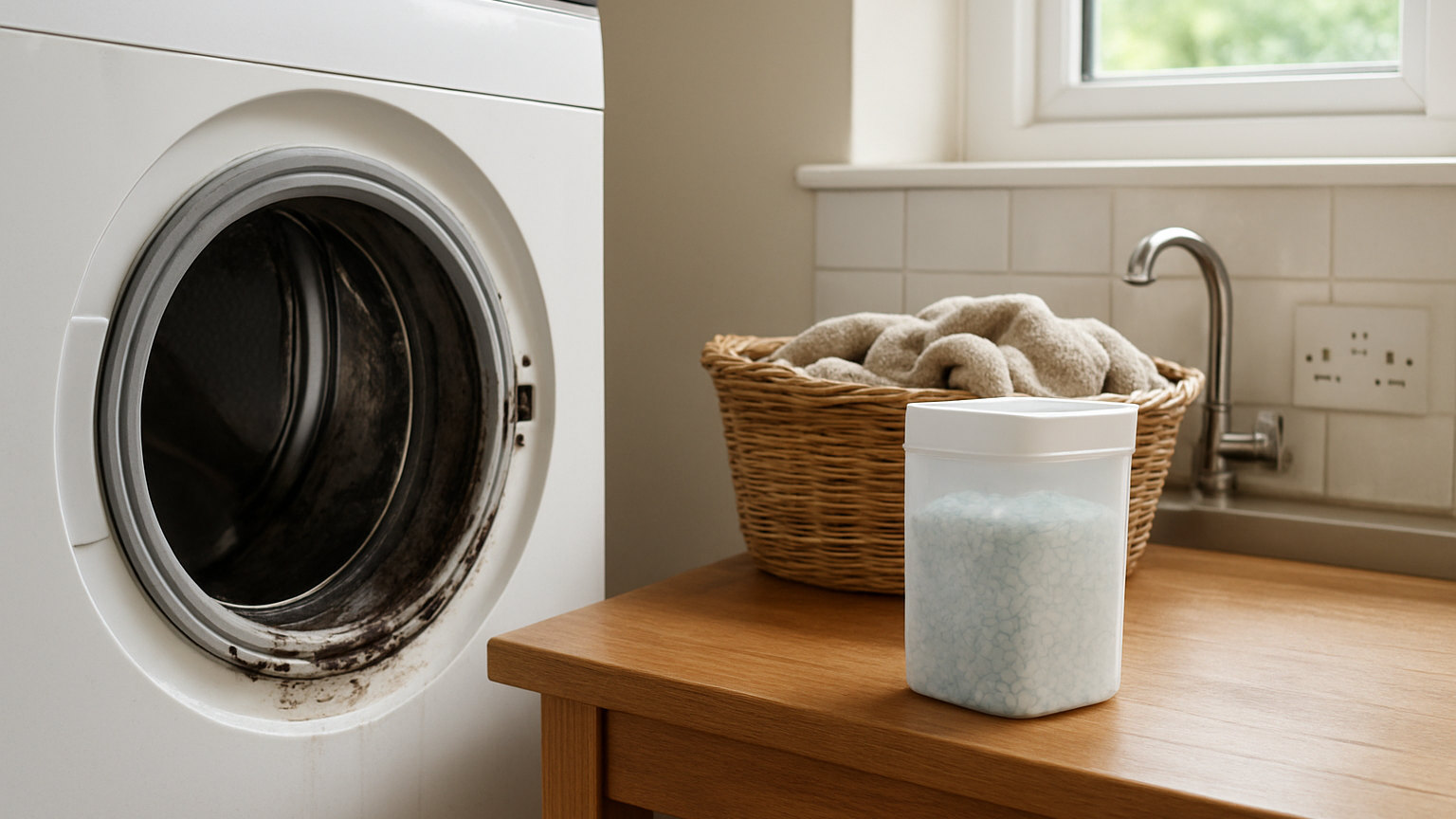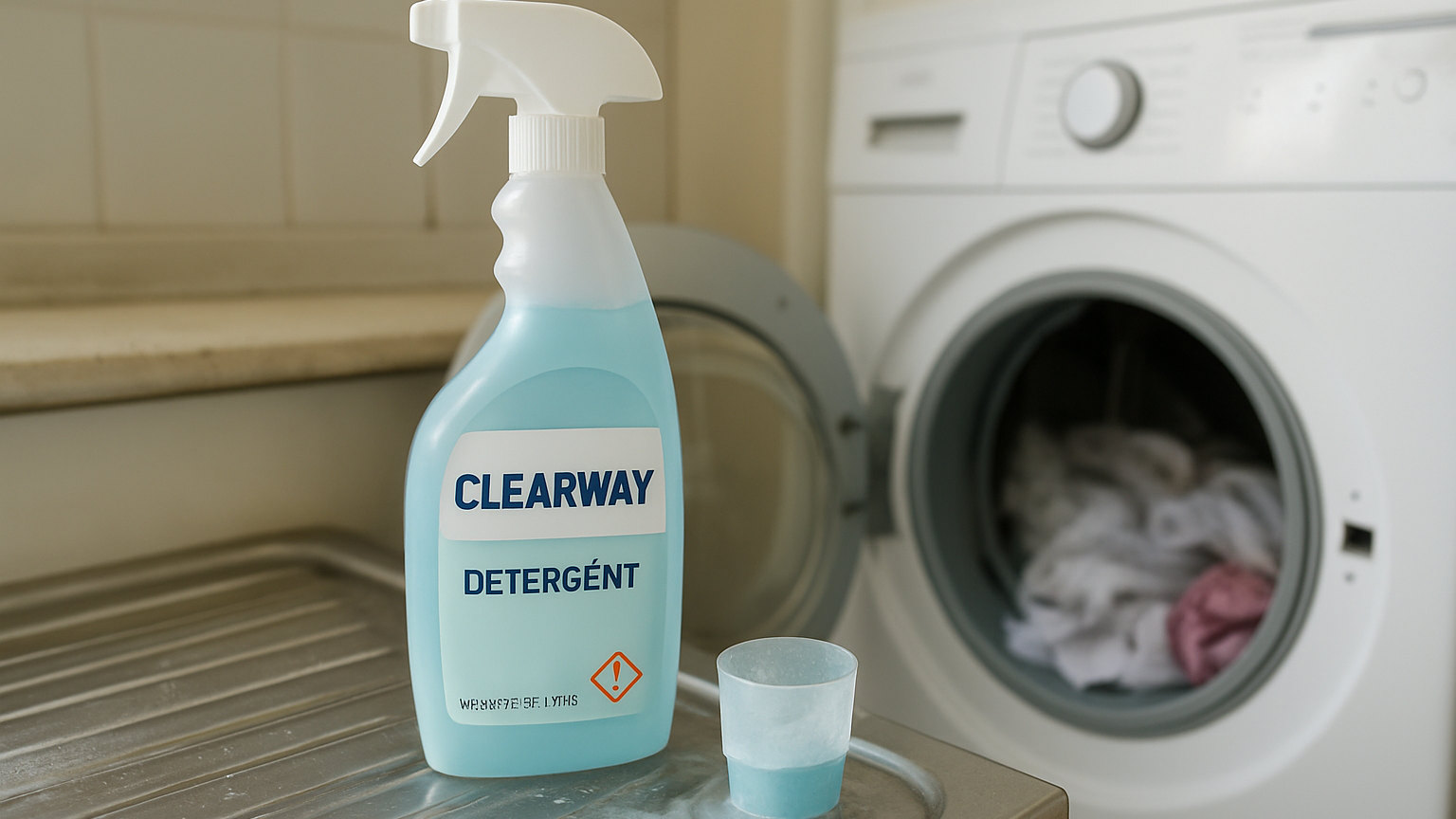
Most households use far more detergent than they need, and the excess causes most of the problems people blame on their machine. Towels that feel stiff, clothes that look grey, a drum that smells and skin irritation are all classic symptoms of overdosing rather than of a faulty appliance.
Why does using more not clean better?
Because detergent works by surrounding dirt and holding it in suspension so it can be rinsed away. Once there is enough detergent in the water to do that, adding more achieves nothing except leaving surplus behind. A washing machine uses a fixed volume of rinse water, so beyond a certain point the excess cannot be removed.
That surplus stays in the fabric and in the machine. In the fabric it dries stiff, dulls colours and attracts dirt. In the machine it feeds the biofilm behind the seal and in the drawer.
How much is right?
Start with the dose on the packet for a normal load in your water hardness, and then reduce it. Most people find that around two thirds of the recommended amount gives identical results, and the recommendation on the packet is generous for obvious commercial reasons.
Adjust for three things:
- Load size. A half load needs roughly half the detergent, not a full scoop.
- Soil level. Lightly worn clothes need less than muddy sports kit.
- Water hardness. Hard water requires more detergent because minerals react with it; soft water requires noticeably less.
How do you know if you are using too much?
Several reliable signs. Towels that are stiff and less absorbent. Dark clothes with a faint white residue or chalky streaks. A slippery feel to fabric when wet. Suds still visible in the drum during the final rinse. A washing machine that smells musty. Skin irritation, particularly in children.
The simple test is to run a rinse only cycle on a load you have just washed and see whether it produces suds. If it does, there was too much detergent in the wash.
How do you know if you are using too little?
Clothes come out smelling stale rather than clean, light soiling remains, and whites look progressively duller. Underdosing is genuinely possible, particularly in hard water areas and with large loads, but it is far less common than overdosing.
Does water hardness really change the dose?
Substantially. In hard water, calcium and magnesium ions react with detergent and take it out of circulation, so more is needed to achieve the same cleaning. In soft water areas, the recommended dose is often considerably more than necessary.
Your water supplier publishes the hardness for your postcode, and it is worth checking, because the dosing instructions on the packet assume a middling value that may be nothing like your supply.
How do you clear an existing build up?
Run the machine empty on a hot maintenance wash with a proprietary machine cleaner or a large dose of citric acid. Clean the detergent drawer, which will usually be lined with soft grey sludge, and wipe the door seal thoroughly. Then run the affected towels and clothing through a wash with no detergent at all, followed by an extra rinse, and repeat if they still feel coated.
Towels in particular often recover their absorbency completely after two or three detergent free washes.
What about capsules and tablets?
They are a fixed dose designed for a full, normally soiled load in medium hardness water, which makes them convenient and inherently inflexible. For a small or lightly soiled load they deliver considerably more than is needed, and there is no way to use half of one. Using liquid or powder for small loads and keeping capsules for full ones is a reasonable compromise.
Does the drawer or the drum make a difference?
Liquid and powder can go in either, though powder dissolves more reliably when placed directly in the drum on a cold or short cycle. Capsules must always go in the drum, at the back, before the clothes. Put in the drawer they fail to dissolve and leave a gel residue that blocks the dispenser.