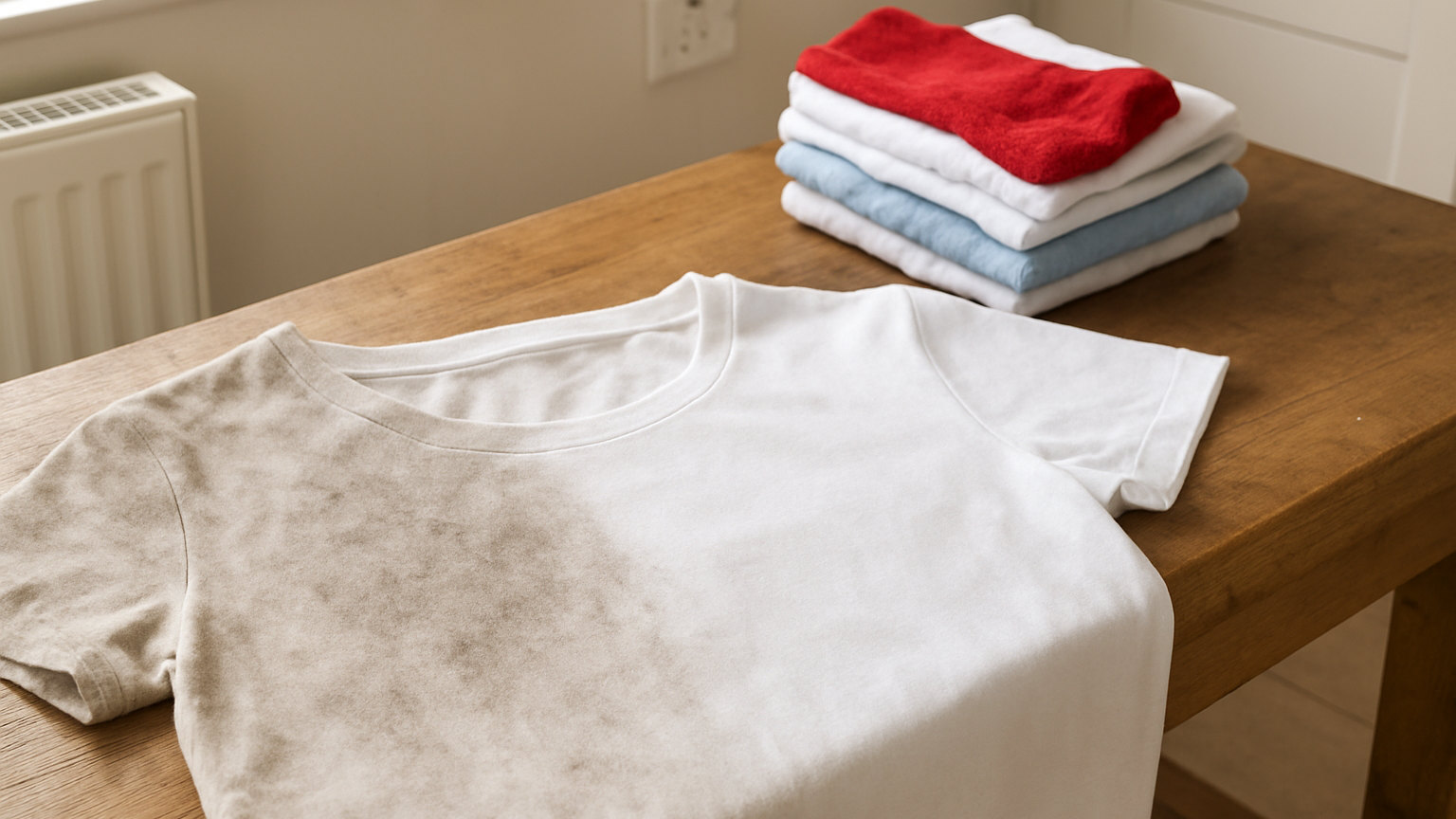
Colour running is loose dye leaving a garment and finding somewhere else to settle. It is most common in the first few washes of a new item, because manufacturers apply more dye than the fibre can permanently hold, and the surplus washes out. Preventing it is a matter of getting that surplus out safely rather than in with a load of white shirts.
Which items are most likely to bleed?
- Deep reds, burgundies and dark pinks, which use dyes that bond poorly to cotton.
- Indigo denim, particularly raw or selvedge denim, which is designed to release dye.
- Dark blues, blacks and purples on cotton.
- Anything hand dyed or batik.
- Cheap brightly coloured cotton, where the dyeing process has been rushed.
- Anything with a printed design on a pale background.
How do you test for colour fastness?
Dampen a hidden area of the garment with warm water, such as an inside seam or the inside of a hem. Press a piece of clean white cotton firmly against it for about a minute. If colour transfers to the white cloth, the item is not colour fast and needs washing separately.
Repeat the test after two or three washes. Most garments stop bleeding once the surplus dye has gone.
What is the safe washing method for a new item?
- Wash it alone the first time, or with two or three items of a very similar colour.
- Use cold water or 30 degrees. Heat opens the fibres and releases far more dye.
- Turn the garment inside out.
- Use a colour detergent, which contains dye transfer inhibitors.
- Add a colour catcher sheet as insurance.
- Do not leave the load sitting wet in the drum afterwards, since dye continues to migrate in standing water.
Why does cold water help?
Because dye solubility increases with temperature. A garment washed at 60 degrees releases substantially more dye than the same garment at 30, and the released dye is also more readily absorbed by other fabrics in hot water.
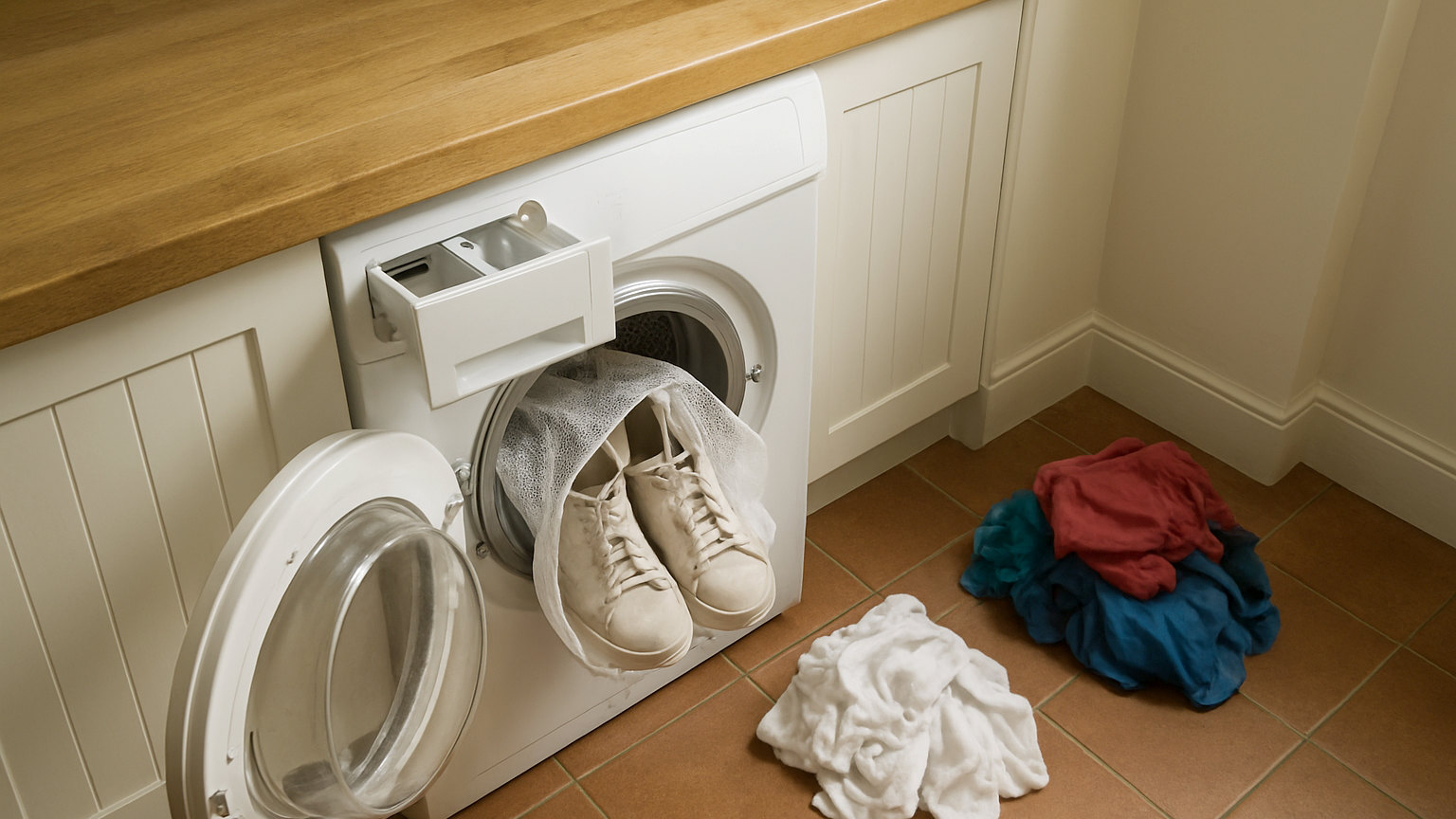
This is also why colour running incidents are often traced to someone putting a red item into a hot towel wash.
Does salt or vinegar set the dye?
This is a persistent piece of folklore with limited basis. Salt is used in commercial dyeing to help dye bond to fibre during the dyeing process itself, not afterwards, and adding it to a domestic wash does very little. Vinegar has some effect with certain acid dyes used on wool and silk, and almost none on the reactive dyes used for cotton.
Neither does any harm, and neither is a substitute for washing the item separately until it stops bleeding.
What about denim specifically?
Indigo sits on the surface of the fibre rather than bonding into it, which is why denim fades attractively and also why it transfers onto everything. Wash jeans inside out, cold, and separately for the first several washes. Expect some transfer onto light upholstery and bags regardless, particularly with raw denim, which is designed to do exactly that.
How long does a garment keep bleeding?
Usually three to five washes for mass produced clothing, after which the surplus is gone and the item can join a normal coloured load. Hand dyed and raw denim items can continue for far longer, sometimes indefinitely.
Retest with the white cloth after a few washes rather than assuming. It takes a minute and is considerably cheaper than a ruined load.
What if you are not sure?
Treat the item as though it will bleed. Washing something separately that did not need it costs one cycle. Washing something with everything else that did need separating can cost the whole load, and dye transfer is far harder to remove than it is to avoid.
What about items that bleed onto themselves?
A garment with a strong colour next to a pale one, such as a white shirt with navy trim or a striped top, can transfer dye internally during a wash. Wash these cold and alone for the first few cycles, take them out of the drum immediately and dry them flat rather than bunched, since dye migrates fastest where wet fabric sits pressed against itself.