Dark clothes lose their colour through three separate mechanisms: dye washing out in the water, dye breaking down under ultraviolet light, and the fabric surface being physically abraded so that the pale fibre core shows through. Most advice addresses only the first, which is why black jeans still fade even when they are washed carefully.
What does the washing itself do?
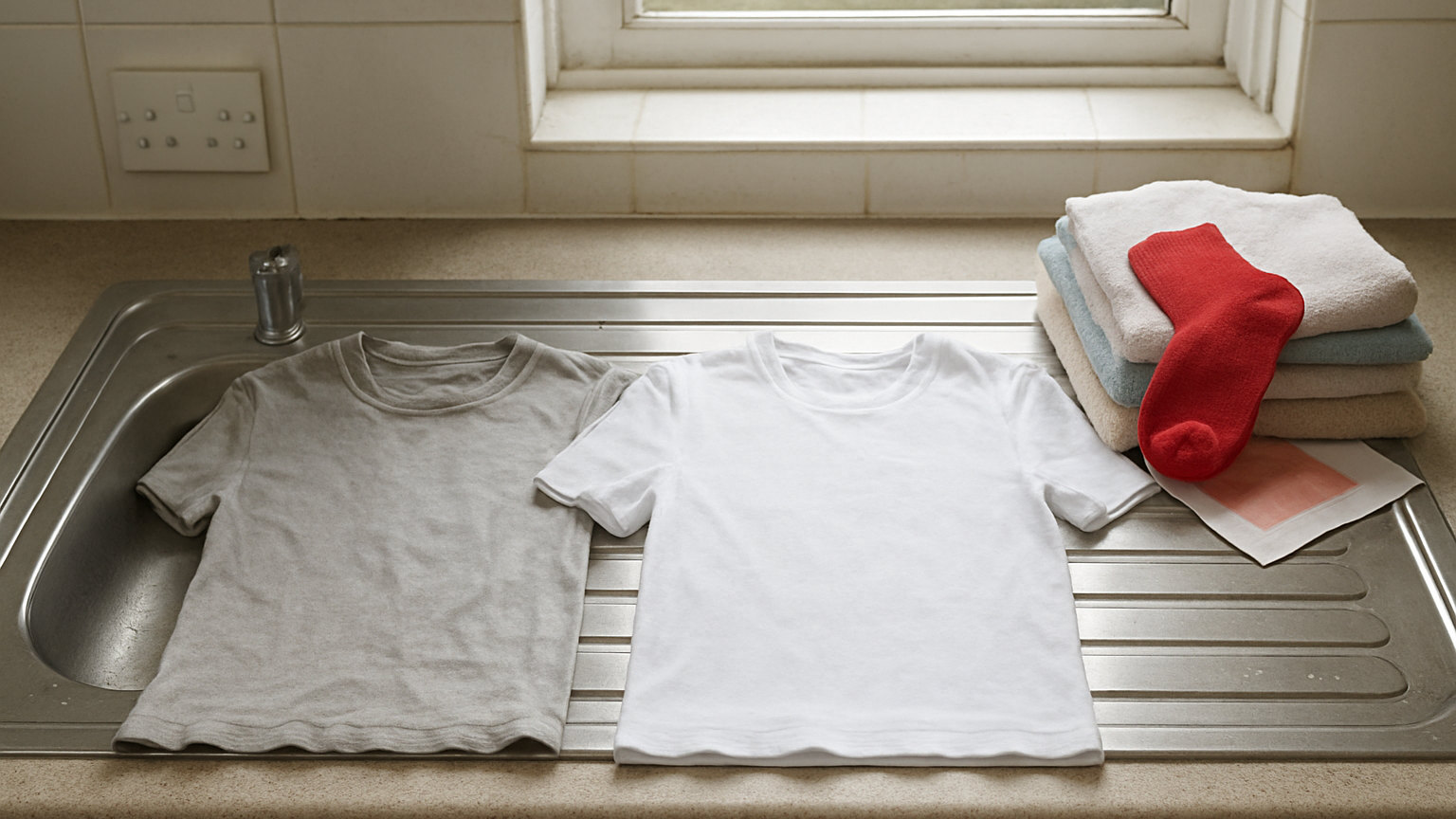
Every wash removes a small amount of dye, and how much depends on temperature, agitation and detergent. Hot water releases far more than cold. Vigorous cycles release more than gentle ones. Detergents containing optical brighteners or oxygen bleach actively work against dark colours, which is why a whites powder should never be used on darks.
Washing at 30 degrees on a gentle or synthetics cycle with a colour or dark specific detergent reduces the loss substantially.
Why does abrasion matter so much?
Because most dyes colour the outer part of the fibre rather than penetrating it completely. When the fabric surface is rubbed, the coloured outer layer wears away and paler fibre underneath is exposed. The result looks like fading and is actually wear.
This is why the knees, seat and thighs of black jeans go pale first, and why the parts of a garment that rub against a bag strap or a desk fade faster than the rest.
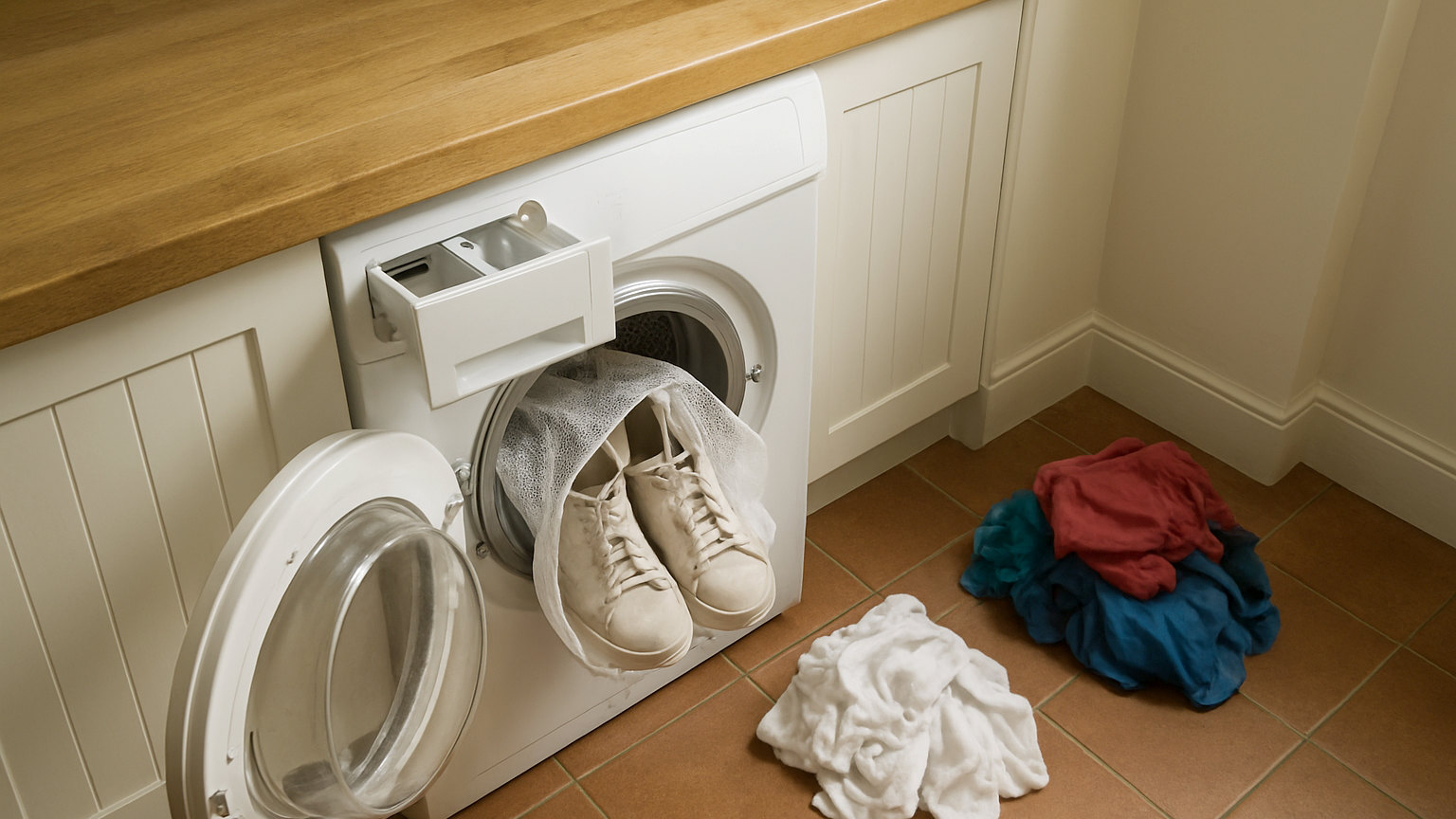
Turning garments inside out before washing is effective precisely because it puts the outer face away from the drum and away from other fabric, so the abrasion happens on the inside.
What does sunlight do?
Ultraviolet light breaks dye molecules down directly, and the effect is cumulative and permanent. A black t-shirt dried repeatedly in full summer sun will grey noticeably within a season, and a curtain or a cushion in a sunny window will fade in a matter of months.
Dry darks in the shade, indoors, or inside out. Bring them in as soon as they are dry rather than leaving them out all afternoon.
What is the practical routine?
- Turn everything inside out before it goes in the machine.
- Wash darks together, cold or at 30 degrees.
- Use a colour or dark specific detergent, and no oxygen bleach or whites powder.
- Use less detergent rather than more, since residue dulls dark fabric visibly.
- Choose a gentler cycle and a lower spin.
- Skip fabric conditioner on anything textured, which flattens the surface and changes how it reflects light.
- Dry inside out, out of direct sunlight, and avoid high dryer heat.
- Wash darks less often, airing them between wears instead.
Does washing less really help?
More than any product. Every cycle costs a little dye and a little surface, so a jumper worn five times between washes lasts far longer than one washed after each wear. Airing overnight near an open window deals with most of the reason people wash outer layers at all.
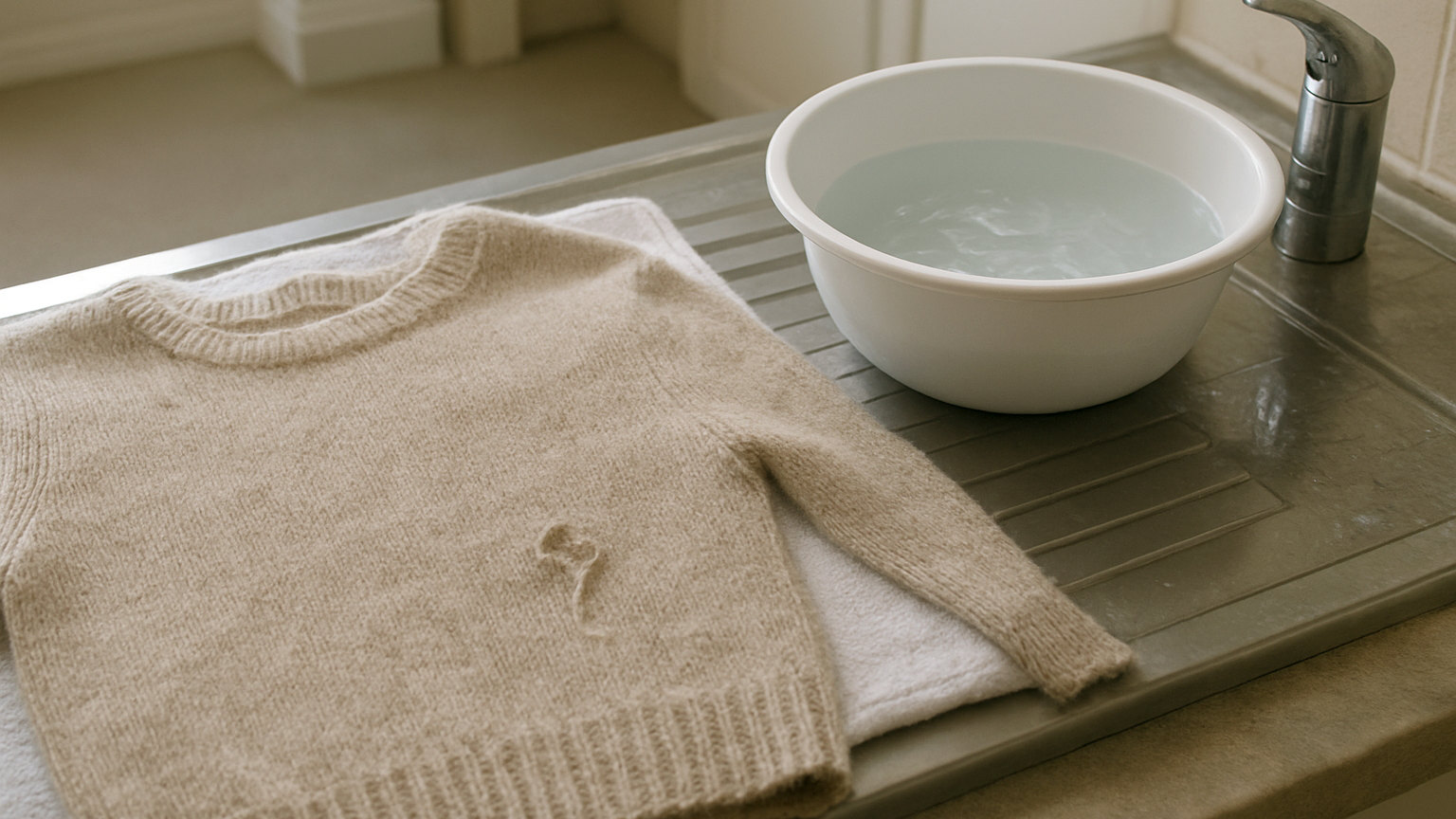
Spot cleaning a single mark rather than washing the whole garment is the same principle applied smaller.
Do dark specific detergents work?
They help, modestly. They omit optical brighteners and bleaching agents, they usually contain dye transfer inhibitors, and some include compounds that coat fibres to reduce the appearance of surface wear. The last of those is cosmetic rather than restorative.
The benefit is real but smaller than the benefit of washing cold, inside out and less often.
Can faded black be restored?
Partially. A fabric dye designed for machine or hand use will restore a faded cotton garment to a good depth of colour, provided the fabric is a natural fibre and the stitching is accounted for, since polyester thread will not take the dye and the seams will stay pale.
Where the fading is abrasion rather than dye loss, dyeing helps less, because the worn fibres take colour differently. The result is usually an improvement rather than a restoration.
Does the drying method matter?
As much as the wash. High tumble dryer heat accelerates dye breakdown and the tumbling abrades the surface, so a garment dried hot repeatedly fades faster than one hung to dry. Dry darks inside out, on a low heat or on a hanger, and out of direct sun. Taking items out of the dryer slightly damp and finishing them on a hanger reduces both problems at once.