Yellowing is a different problem from greying and has a different cause. Where greying is soil redeposited evenly across a garment, yellowing is usually body oils that were never fully removed and have since oxidised in the fabric. That is why it appears first at the collar, the cuffs and the underarms rather than uniformly.
What causes it?
- Body oils and sweat left in the fabric after washing, which oxidise over time and turn yellow.
- Washing too cool, since oils need warmth to dissolve and a 30 degree wash often leaves them behind.
- Antiperspirant residue, particularly aluminium based products, which react with sweat and with the fabric to produce stiff yellow marks.
- Chlorine bleach, which reacts with protein residues and can cause yellowing rather than preventing it.
- Storage, where a garment put away with invisible oils in it yellows in the wardrobe over months.
- Age and light, which slowly degrade the cellulose in cotton.
Why does bleach sometimes make it worse?
Because chlorine bleach reacts with the proteins in sweat and with some synthetic fibres to produce yellow compounds. It also weakens cotton with repeated use, which allows more soil to lodge in the damaged fibres.
This is why a white shirt bleached repeatedly at the underarms often ends up with a permanent stiff yellow patch that is worse than the original mark. Once that has happened, bleach cannot undo it.
What actually removes yellowing?
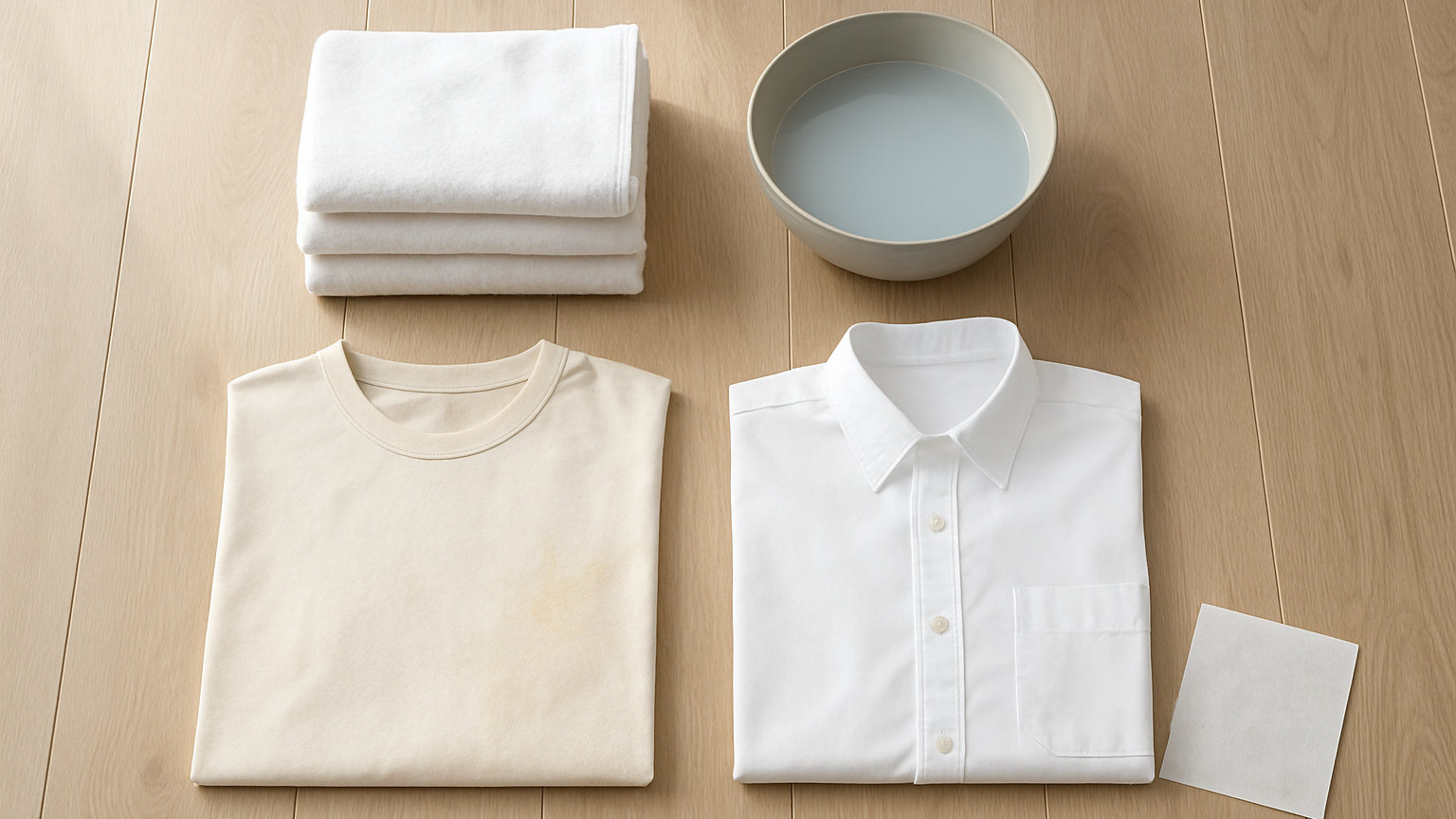
Oxygen bleach, used as a soak rather than in the wash. Dissolve a generous dose in warm water, submerge the garment fully and leave it for several hours or overnight. Then wash normally at the highest temperature the fabric allows, with a powder detergent.
For underarm marks specifically, a paste of bicarbonate of soda and a little water, worked into the area and left for an hour before washing, helps break down the antiperspirant residue.
Follow either with drying in sunlight, which is genuinely effective on yellowing and costs nothing.
How do you prevent antiperspirant marks?
Let antiperspirant dry fully before dressing. Use less of it. Wash shirts after every wear rather than twice, since the residue builds. And wash at 40 rather than 30 for white cotton shirts, since the oils need the warmth.
Rinsing the underarm area under a warm tap before the garment goes in the machine also helps considerably and takes seconds.
Why does storage cause it?
Because oils that are invisible when a garment is put away oxidise slowly in the dark. A white shirt that looked clean in October can come out in March with clear yellow underarm marks that were not there before.
Store whites only when genuinely clean, completely dry and away from direct light. Avoid cardboard boxes and ordinary plastic, both of which can cause yellowing over months. Cotton bags or acid free tissue are the right choice for anything stored long term.
What about old linen and vintage cotton?
Age related yellowing in stored linen responds well to a long soak in oxygen bleach followed by sunlight, repeated over several days if necessary. Be patient rather than aggressive, since old fibres are weaker and chlorine bleach will damage them.
Test on a hem or an inside seam first, and support delicate textiles on a mesh surface rather than lifting them wet by one corner.
Can every yellow stain be removed?
No. Yellowing caused by a chemical reaction between antiperspirant, sweat and repeated bleaching is often permanent, as is heat-set discolouration from a tumble dryer. Fabric that has been damaged rather than stained cannot be restored.
The practical conclusion is to prevent it, since the prevention is easy and the cure frequently is not.
Does the fabric type make a difference?
Considerably. White polyester and synthetic blends yellow more readily than pure cotton and are far harder to whiten afterwards, because the oils bond to the synthetic fibre rather than sitting in it. Oxygen bleach helps less on these, and chlorine bleach makes them worse. For white shirts intended to last, cotton is the more forgiving choice.