The usual answers are two years for a pillow and eight for a mattress, and both are averages that tell you very little about the item on your own bed. Use and quality vary enormously. There are simple physical tests for both that give a much better answer than counting years.
What is the fold test for a pillow?
Take the pillow out of its case, fold it in half and hold it for a few seconds, then let go. A pillow with life left in it springs back to its original shape. One that stays folded, or that unfolds slowly and unevenly, has lost the resilience that supports your head, and no amount of washing or plumping will bring it back.
For a feather or down pillow, fold it in half and put a light object on top. If the pillow pushes it off, it is fine. If it stays, the filling has broken down.
What else indicates a pillow is done?
- Lumps that do not redistribute when you shake it.
- Deep yellowing in the centre, which is accumulated sweat and oils.
- A musty smell that survives washing.
- Waking with neck ache or a headache that eases during the day.
- Constantly folding or bunching the pillow to get enough height, which means it no longer provides the support it should.
Rough guidance by type: synthetic pillows one to two years, memory foam around three, feather and down five or more with regular washing and plumping.
How do you tell if a mattress is finished?
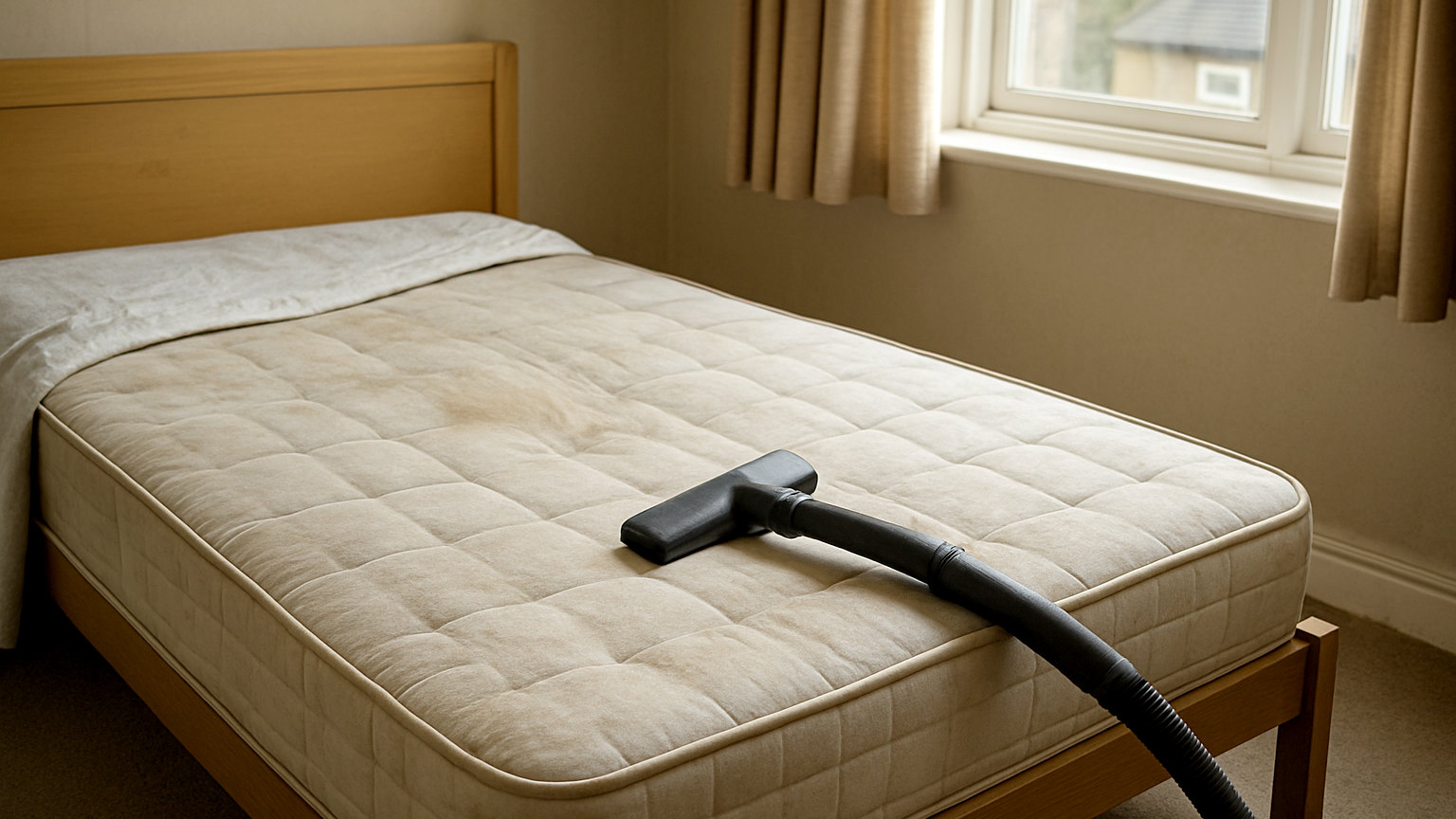
Strip it and look along the surface from the side at eye level, in good light. A visible dip where you sleep, particularly one deeper than a couple of centimetres, means the fillings have permanently compressed. Press down in the middle and at the edges: soft spots, a crunching or grinding sound from the springs, and edges that collapse when you sit on them are all signs of structural failure.
The other test is how you feel. Waking stiff or sore, sleeping better in a hotel or a spare bed, and rolling involuntarily towards the middle all point the same way.
Does a dip mean the mattress or the base?
Check the base before condemning the mattress. Take the mattress off and look at the slats or the divan top. A cracked slat, slats that have slipped out of their fittings, or a sagging divan will produce a dip in any mattress placed on top of it. Replacing a slat costs almost nothing and sometimes solves the whole problem.
Slats spaced more than about 7cm apart are too wide for most foam mattresses and will cause premature sagging.
How long should a mattress actually last?
Seven to ten years for a good quality mattress used nightly, and less for a cheap one or one carrying heavier loads. A guest room mattress used a dozen nights a year will last decades. Rotating regularly, using a protector and having a sound base all push the figure towards the upper end.
Age is worth noting for one reason: many warranties run for eight or ten years and cover sagging beyond a specified depth. If your mattress has a genuine dip and is still in that period, photograph it with a straight edge across the surface and contact the retailer before buying a replacement.
Is it worth replacing a mattress that seems fine?
Not on age alone. A mattress that passes the visual and pressure checks, sits on a sound base and does not cause aches is doing its job, whatever the calendar says. Vacuum it, rotate it, fit a protector and leave it alone.
What should be replaced more often than people think?
Pillows, comfortably. They are cheap, they take the most direct contact with skin and hair, they compress fastest, and they are the item most likely to be a decade old in a house where the mattress was replaced last year.