The shelves and drawers are the part of a fridge that actually gets dirty, and they are also where most fridge cleaning goes wrong. Toughened glass cracks if it meets hot water while cold, and most fridge plastics warp in a dishwasher. Both mistakes are easy to avoid and expensive to make.
What should you do before washing anything?
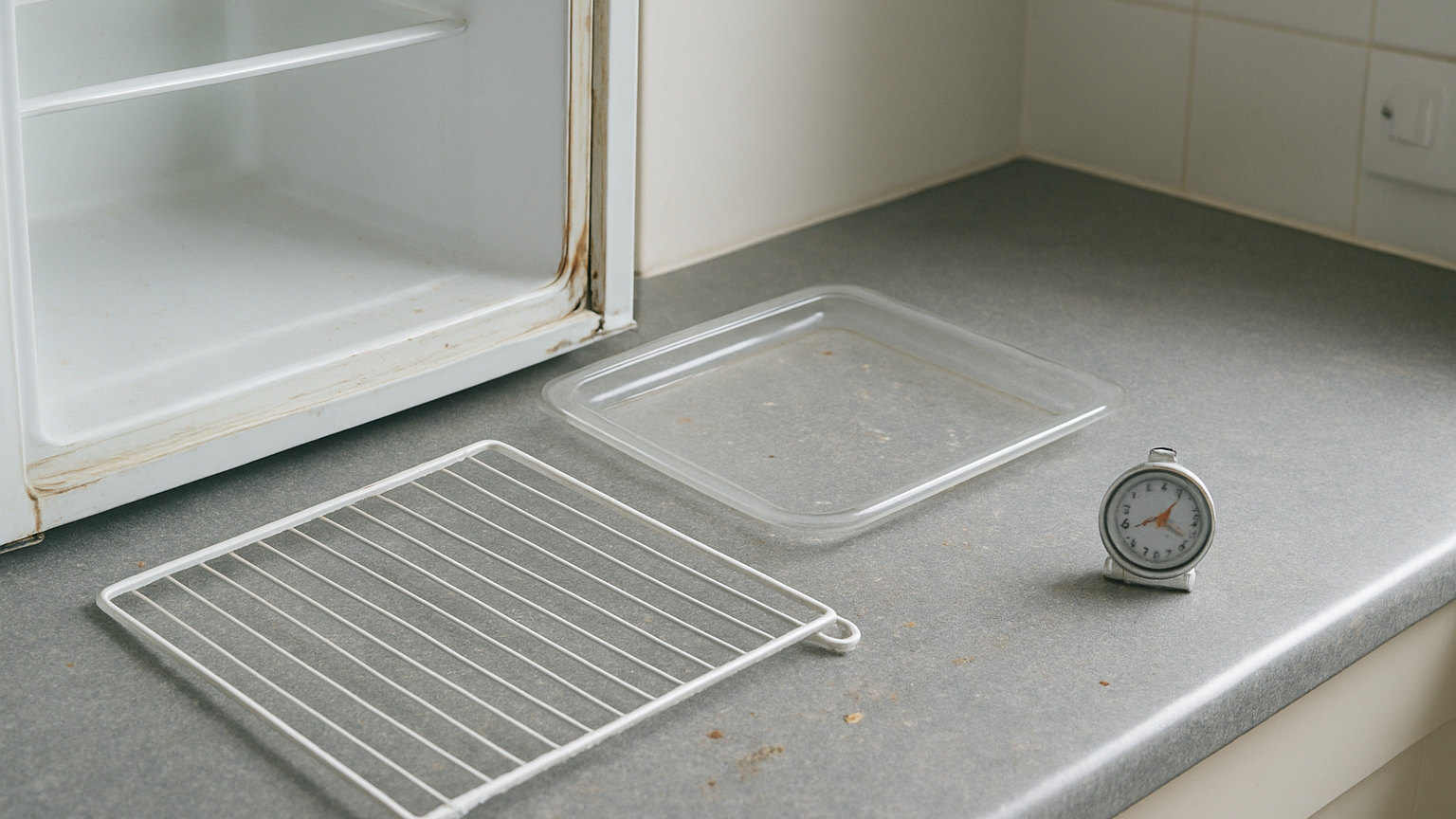
Let it warm up. Take the shelves and drawers out and leave them on the worktop for fifteen to twenty minutes before they go near water. Cold toughened glass subjected to hot water can crack, and very cold plastic is brittle enough to snap if knocked.
This one step prevents the most common and most annoying failure.
What is the method?
- Remove everything and let it reach room temperature.
- Scrape off any solid debris.
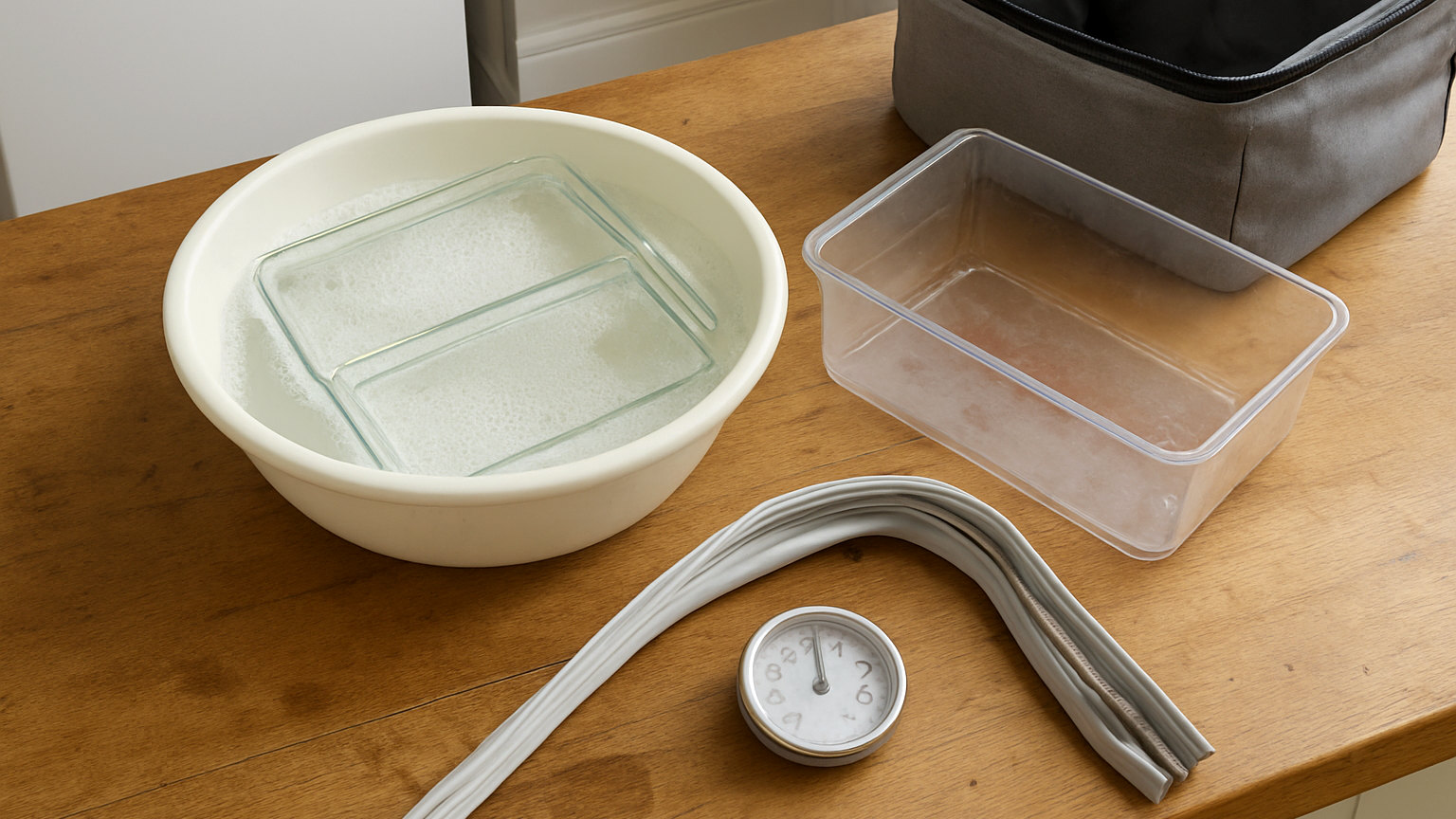
- Wash in warm water with washing up liquid, using a soft cloth or a non-scratch pad.
- For dried on spills, soak in warm soapy water for twenty minutes rather than scrubbing.
- Pay attention to the trim around glass shelves, where liquid collects.
- Rinse thoroughly.
- Dry completely before refitting, including the runners.
Can they go in the dishwasher?
Usually not, and it is worth checking the manual before trying. Fridge plastics are often not dishwasher safe and will warp or craze on a hot cycle, after which they no longer sit properly on the runners.
Where the manual permits it, use the lowest temperature cycle and the top rack. Glass shelves with plastic trim are particularly prone to the trim distorting.
Hand washing takes five minutes and carries no risk.
How do you deal with sticky rings?
Soak rather than scrub. A warm damp cloth laid over a dried ring for fifteen minutes softens it completely, after which it wipes away. Jam, honey, syrup and sugary drinks all leave rings that harden into something that resists dry wiping entirely.
A paste of bicarbonate of soda handles anything that remains, and it is safe on both glass and plastic.
What about the trim on glass shelves?
Most glass fridge shelves have a plastic or metal trim around the edge, and liquid gets underneath it and stays there. It is a common source of smell and it is rarely cleaned.
Some trims can be slid off for cleaning. Where they cannot, work a thin cloth or a cotton bud into the gap and flush it with warm water, then dry thoroughly.
What about the salad drawers?
These take the worst of it, because vegetables release moisture and decaying produce leaks. Wash them properly rather than wiping, dry completely, and consider lining them with a paper towel or a reusable liner that can be changed.
Check underneath and behind the drawers as well, which is where liquid runs and where smells originate.
What about door racks?
They collect drips from bottles and jars, particularly milk. Take them out and wash them with everything else. Wiping the base of every bottle and jar before it goes back is what keeps them clean afterwards.
What should you avoid?
- Hot water on cold glass, which cracks it.
- Abrasive pads and powders, which scratch plastic and give bacteria a foothold.
- Bleach, which can damage plastic and taints food.
- Putting parts back wet, which causes frost and encourages mould at the edges.
- Forcing a drawer that does not slide, which usually means something is caught behind it.
What if a shelf is broken?
Replacement shelves and drawers are available for most models as spare parts, and they are far cheaper than a new fridge. Have the model number to hand, which is usually on a label inside the fridge on the side wall.
How do you deal with a stale smelling drawer?
Wash it, dry it, and then leave it out in fresh air for a few hours before it goes back, which does more than any product. For a drawer that still smells, a wipe with a white vinegar solution followed by thorough drying usually finishes it. Plastic that has absorbed a strong smell over years occasionally never clears entirely, and a replacement drawer is inexpensive.