A fridge holds food that is eaten without further cooking, which makes cleaning it a food safety job rather than a cosmetic one. It is also straightforward, provided you work in a sensible order and keep the food cold while you do it.
What is the order of work?
- Take everything out and put it into a cool bag or a box with ice packs.
- Check dates as you go and throw away anything past its use by date.
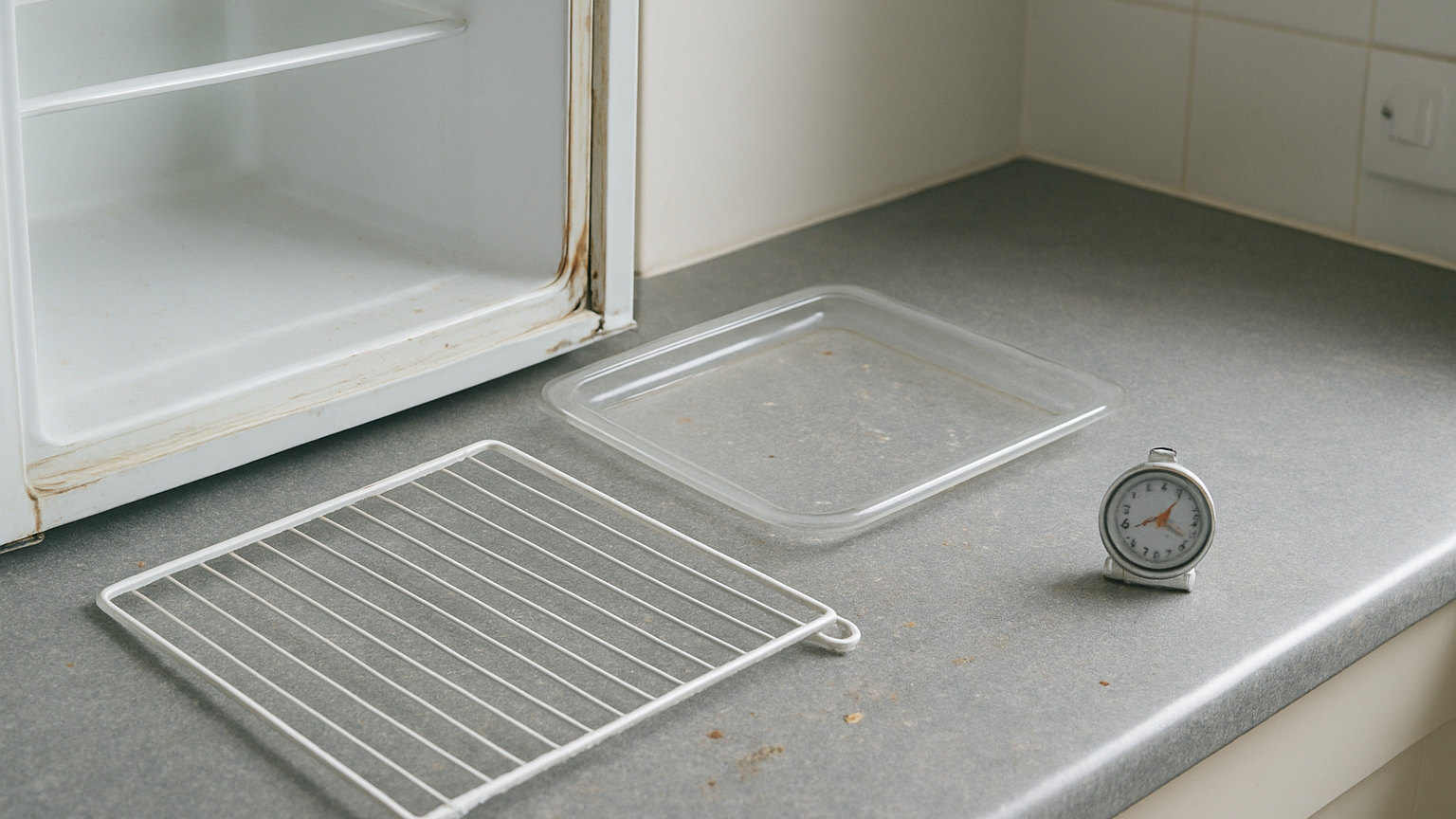
- Remove all the shelves, drawers and door racks.
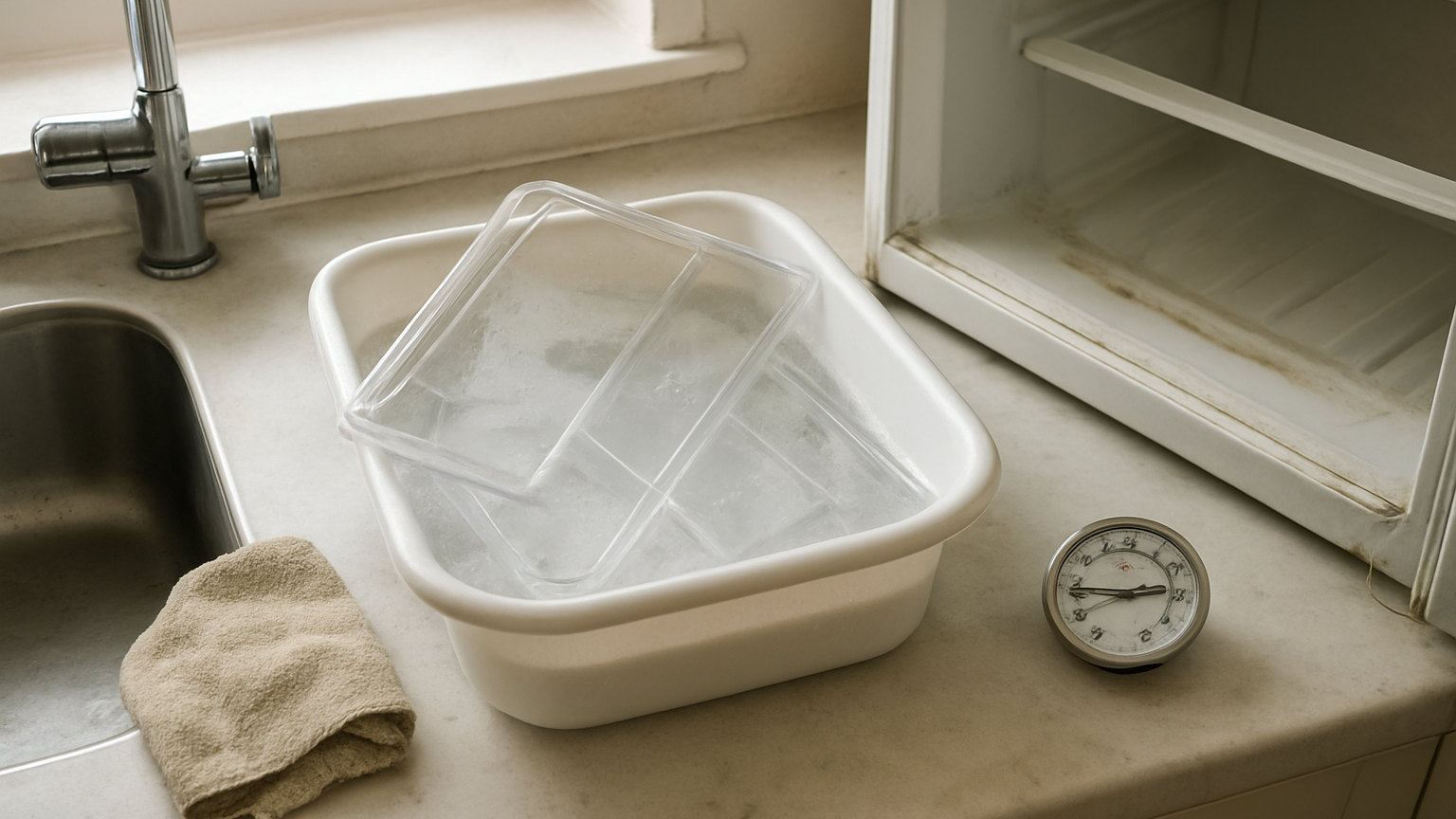
- Wash those separately in the sink and leave them to drain.
- Wipe the interior from the top down with hot soapy water.
- Clean the door seal with a damp cloth, working into the folds.
- Check and clear the drain hole at the back of the base.
- Dry everything thoroughly and refit.
- Wipe each item before it goes back in.
What should you clean it with?
Hot water and washing up liquid handles almost everything. For a fridge that needs more, a solution of bicarbonate of soda in warm water is mildly alkaline, deodorises as it cleans and leaves nothing behind that you would object to near food.
A food safe sanitiser is worth using on the shelves after a raw meat spill, applied after cleaning rather than instead of it, and left for the contact time on the label.
What should you avoid?
- Bleach in most cases, since it taints and can damage plastic and seals. Where a sanitiser is genuinely needed, use a food safe one.
- Strongly perfumed cleaners, since the smell transfers into food.
- Abrasives, which scratch plastic liners and give bacteria somewhere to sit.
- Anything sprayed directly into the interior, which gets into the drain and the vents. Spray onto a cloth.
- Hot water on cold glass shelves, which can crack them.
How do you keep the food safe?
Work quickly and keep everything cold. A cool bag with ice packs, or a box in the coldest room, will hold chilled food for the hour or so this takes.
Chilled food should not be left at room temperature for extended periods. If the job is going to take longer, do the fridge in halves: one shelf at a time, with the rest of the food still inside.
What about the freezer compartment?
Deal with it separately and on a different day unless it needs defrosting, since a freezer clean is a bigger job. Frozen food will not survive an hour out of the freezer in warm weather.
What gets missed?
The door seal, which collects crumbs and mould in its folds and is the most common source of a fridge smell. The drain hole at the back of the base, which blocks and causes water to pool. The underside of the shelves. The top of the fridge, and the gap between the fridge and the worktop. And the condenser coils at the back.
How do you deal with the shelves?
Let glass shelves come up to room temperature before washing them, since thermal shock cracks toughened glass. Then wash in hot soapy water and dry thoroughly.
Plastic drawers can usually go in the dishwasher on a low temperature cycle, though many will warp on a hot one. Hand washing is safer.
What should you do before putting food back?
Wipe every jar, bottle and container as it goes back in. Sticky jars are the main source of the marks on shelves, and dealing with them at this point keeps the fridge clean for far longer.
Check the temperature while it is empty, and give it an hour to come back down to 5 degrees or below before it is fully loaded again.
How long does it take?
About an hour for a full clean of an average fridge, of which twenty minutes is washing shelves and drawers at the sink. It is worth doing on the day before a food shop, when the fridge is at its emptiest and there is least to move, rather than the day after when it is full.