A fridge that smells has something in it causing the smell. Cleaning the whole interior and hoping is the usual response and frequently misses the source, because in most cases it is in one of four places that are easy to overlook.
Where should you look first?
- Under and behind the salad drawers, where leaked liquid collects out of sight.
- The drain hole at the back of the base, which blocks and holds stagnant water.
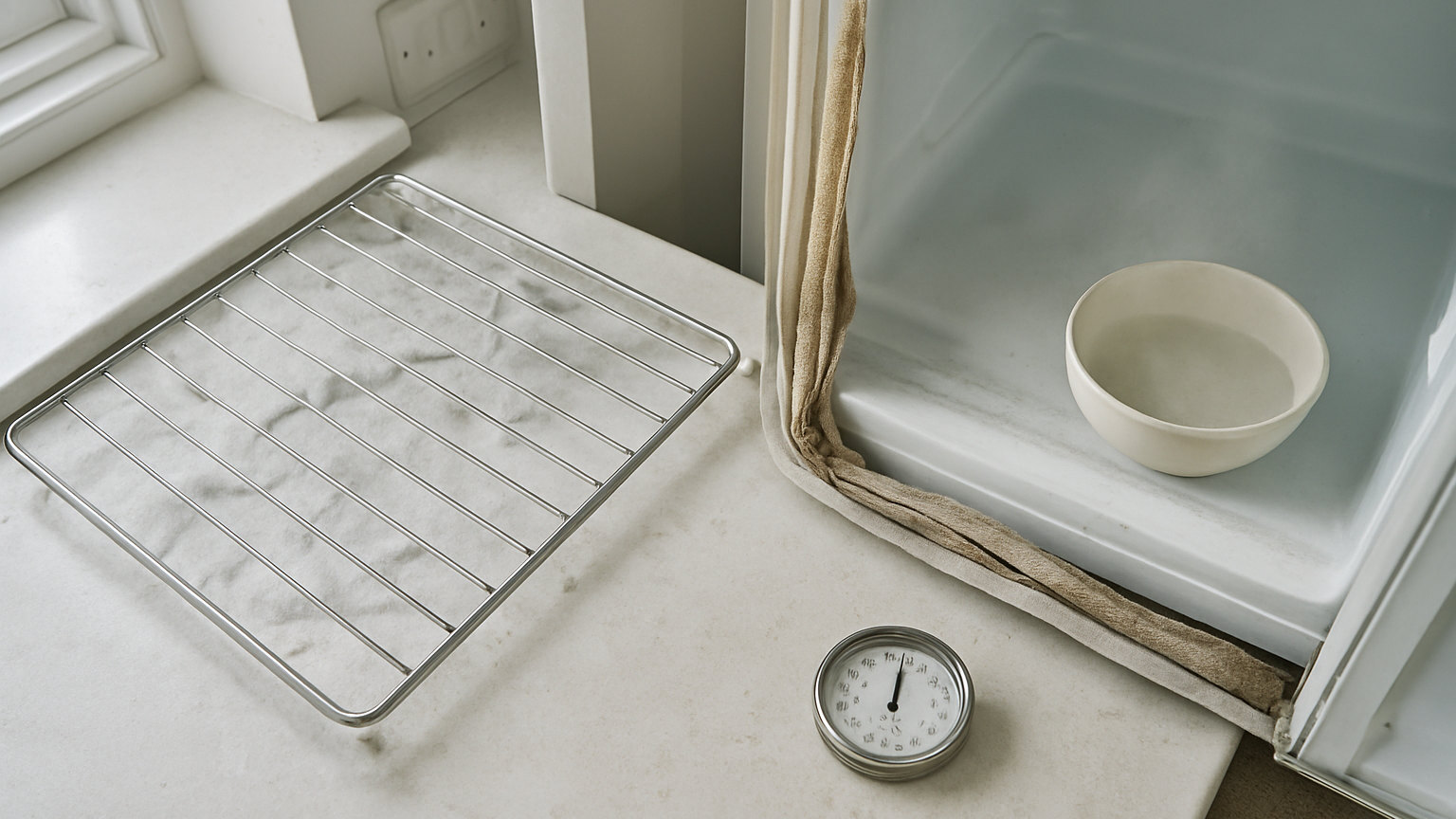
- The door seal, in the folds of the rubber, where mould grows.
- An item that has gone off, often at the back or in a door rack.
Between them these account for the large majority of fridge smells. Check all four before assuming a general clean is needed.
How do you clear the drain hole?
Most fridges have a small hole at the back of the base to carry condensation away to a tray above the compressor. It blocks with food debris, and once blocked the water sits there and goes stagnant.
Clear it with a cotton bud or a pipe cleaner, then flush it with warm water using a turkey baster or a small jug. Some fridges come with a plastic tool for the purpose.
Check the evaporation tray at the back as well, which can hold standing water and is rarely cleaned.
What is the cleaning method?
- Empty the fridge into a cool bag and discard anything doubtful.
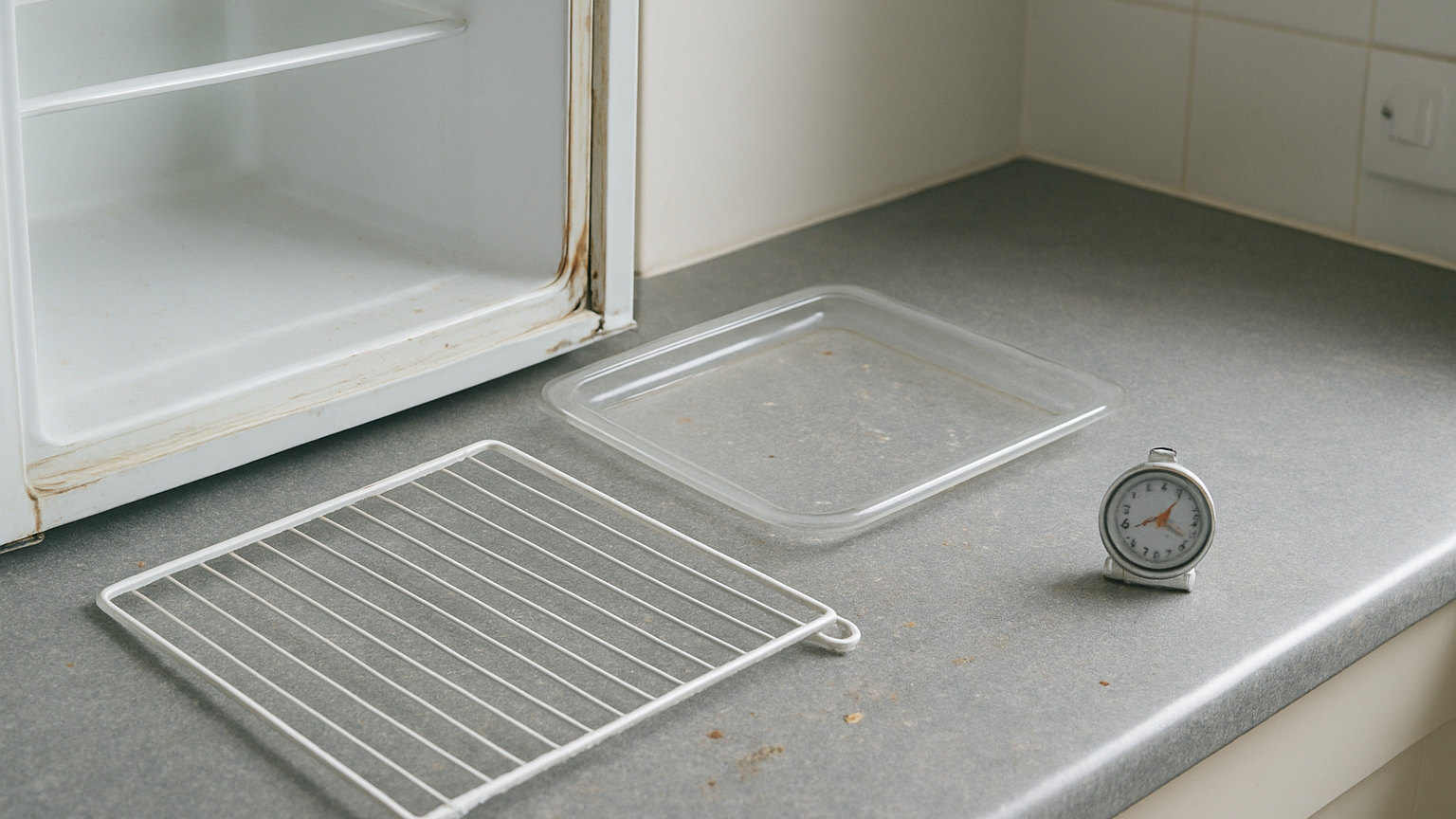
- Remove all shelves and drawers and wash them in hot soapy water.
- Wipe the interior with a solution of bicarbonate of soda in warm water.
- Clean the seal thoroughly, working into every fold.
- Clear and flush the drain hole.
- Dry everything completely, which matters more than people expect.
- Leave the door open for an hour with the fridge off if the smell was strong.
Why bicarbonate of soda rather than a cleaner?
Because it neutralises acidic odour compounds rather than covering them, and because it leaves no fragrance of its own. Perfumed cleaners transfer their smell into butter, cheese and milk, which is worse than the original problem.
An open tub of bicarbonate left in the fridge afterwards continues absorbing, and should be replaced every couple of months.
What else absorbs odour?
Activated charcoal, which is more effective than bicarbonate and slightly more expensive. Coffee grounds, dry and in an open container, which work well and add a coffee smell. And a tray of dry oats or rice, which are surprisingly effective absorbers.
All of these work after the source has been removed. None of them will fix a smell that is still being produced.
What should never go in a fridge?
Air freshener, scented sprays and anything perfumed. Fridge deodoriser gels are sold and are better than an air freshener, though an open tub of bicarbonate does the same job for less.
What if the smell persists?
Check for a spill that has run into a seam or under the liner, which happens when something leaks and runs down the back wall. Also check the tray under the fridge at the back, and the underside of the fridge itself.
A persistent smell in a fridge that has been thoroughly cleaned can also come from a failed seal allowing condensation into the insulation, which is a repair rather than a cleaning job.
What about strong food smells?
Onion, garlic, fish and some cheeses transfer readily. Store them in sealed containers rather than covered with film, keep cut onion in a box, and use a covered dish for anything strong. Milk and butter absorb odour particularly easily, which is why they are the first things to taste wrong.
How long should it take to clear?
A day or two once the source has been removed and the fridge cleaned. A smell that is still there after three days means the source was not found, and the drain hole and the space behind the drawers are the two places worth checking again before anything else.