An American style fridge with a plumbed in water and ice dispenser has parts that no other fridge has: a water filter, a supply line, an ice maker and an ice storage bin. All of them need occasional attention and none of them is obvious, which is why the usual first sign of a problem is ice that tastes stale.
What is the routine?
- Wipe the dispenser recess and the nozzle weekly with a damp cloth.
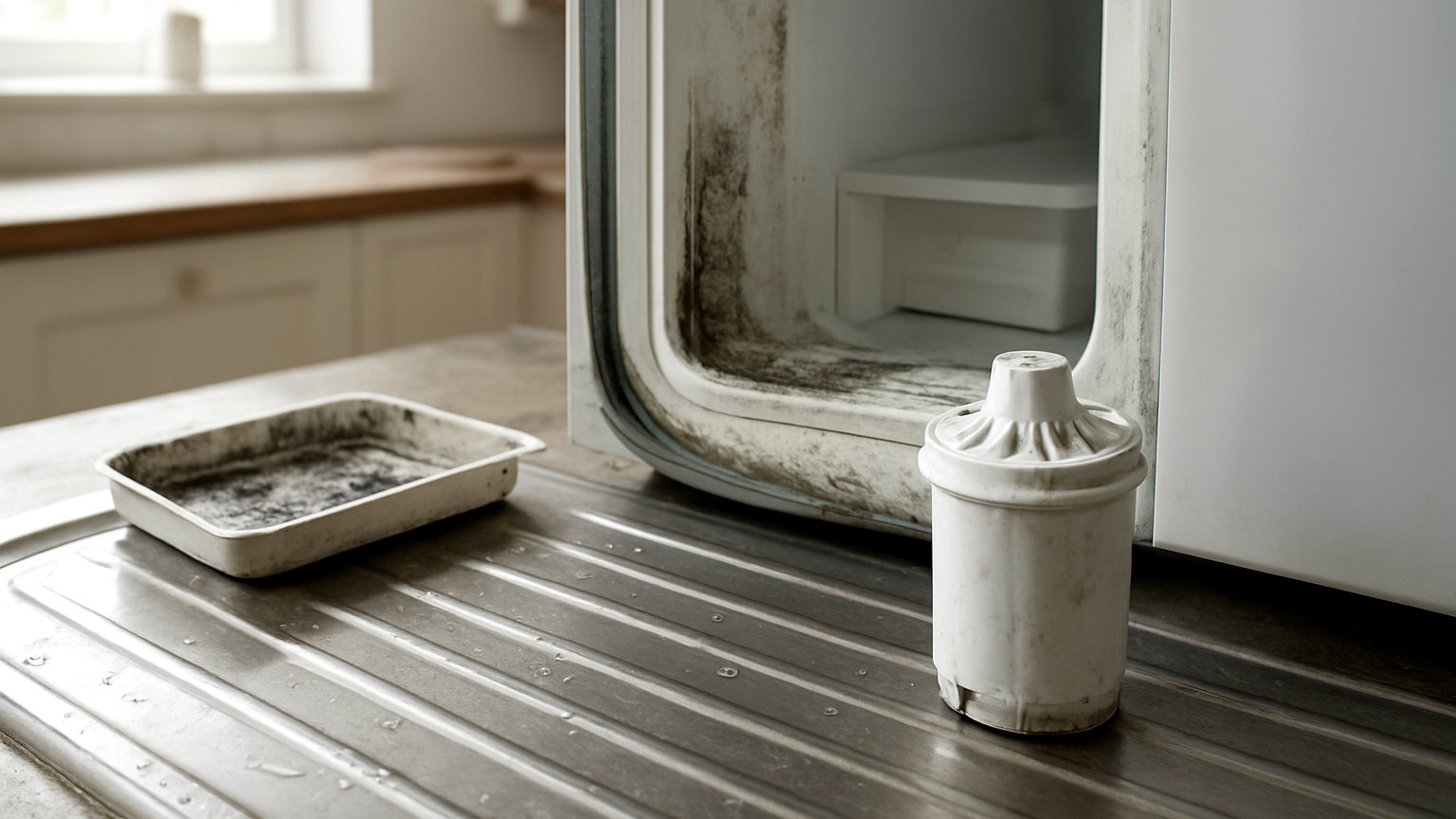
- Empty and wash the drip tray weekly, since it collects water and grows mould.
- Change the water filter every six months, or when the indicator prompts.
- Empty and wash the ice bin every few months.
- Run several litres through the dispenser after any filter change.
- Descale the nozzle area periodically in a hard water area.
How do you change the filter?
Location varies: inside the fridge compartment at the top, in the base grille at the front, or behind a panel. The manual will say. Most are a quarter turn to remove and replace, with no need to turn the water off.
Run four to eight litres through the dispenser afterwards to flush out carbon fines and air, discarding that water. The first few glasses will look cloudy and that is normal.
Filters are branded and expensive, and third party equivalents vary in quality. A filter left in beyond its life stops filtering effectively and can become a place where bacteria accumulate.
Why does the ice taste stale?
Usually because it has been sitting in the bin for weeks absorbing smells from the freezer. Ice is porous and picks up odour readily, particularly from strong foods and from a freezer that needs cleaning.
The remedy is to empty the bin completely, wash it, and discard the first two or three batches. If the freezer itself smells, deal with that first or the problem returns.
An old filter is the other common cause.
How do you clean the ice bin?
Take it out, tip out the ice, and let it come up to room temperature before washing so the plastic is not brittle. Wash in warm soapy water, rinse, and dry completely before refitting.
Do not put a wet bin back, since the water freezes into a solid lump. Check the auger mechanism at the back for ice build up while it is out.
What about the drip tray?
The small grille and recess below the dispenser collects water and is the part most likely to grow mould. On most models the grille lifts out and the tray beneath it can be wiped or removed.
It is usually not plumbed to a drain, so it holds whatever collects until it evaporates. Weekly attention keeps it clean; leaving it produces a black ring and a smell.
What about limescale?
In a hard water area, scale builds around the nozzle and inside the dispenser mechanism. Wipe the nozzle with a cloth dampened in white vinegar and leave it a few minutes, then rinse thoroughly with clean water.
Do not put descaler or any cleaning product into the water supply or the reservoir, since it is a drinking water system.
What if the dispenser stops working?
Check the obvious first: the water supply valve, whether the filter is overdue, whether the freezer is cold enough for the ice maker to cycle, and whether the ice maker switch or arm has been knocked off.
A frozen water line in the door is a common fault and usually presents as no water but working ice, or the reverse.
What about a fridge that is going into storage?
Turn the water supply off, remove and discard the filter, empty the ice bin, and run the dispenser until no more water comes through. Water left standing in the lines will stagnate.
Is filtered fridge water actually better?
The carbon filter removes chlorine taste and some sediment, which most people notice as an improvement. It is not a purifier and it does not make unsafe water safe. Its main practical benefit is taste, and that benefit disappears entirely once the filter is past its life, which is why the six month interval matters more than it appears to.