Ice inside a freezer takes up space, insulates the walls so the appliance works harder, and eventually stops drawers closing. Defrosting is not difficult; it is mostly a matter of planning, because the food has to stay frozen while you wait.
When does it need doing?
When the ice reaches about half a centimetre thick on the walls or the shelves. For a frost free freezer that should never happen, and if it does there is usually a fault, commonly a door seal not sealing or the door being left ajar.
For an older freezer, once or twice a year is typical.
How do you plan it?
- Run the freezer down first by using up what is in it over a few weeks.
- Pick a cold day if you can, which buys time.
- Turn the freezer to its coldest setting for a few hours beforehand so the food is as cold as possible.
- Have cool boxes, cool bags, blankets and a neighbour with freezer space lined up.
- Allow two to four hours for the job.
How do you keep the food frozen?
Pack it tightly into cool boxes or cool bags with ice packs and cover with blankets or newspaper. A tightly packed insulated box keeps food frozen for several hours, and food packed loosely will not.
Anything that has partially thawed but is still cold and has ice crystals can usually go back in the freezer. Anything that has fully thawed should be cooked and eaten, or thrown away, rather than refrozen raw. If in doubt about a particular item, the sensible course is to discard it.
What is the method?
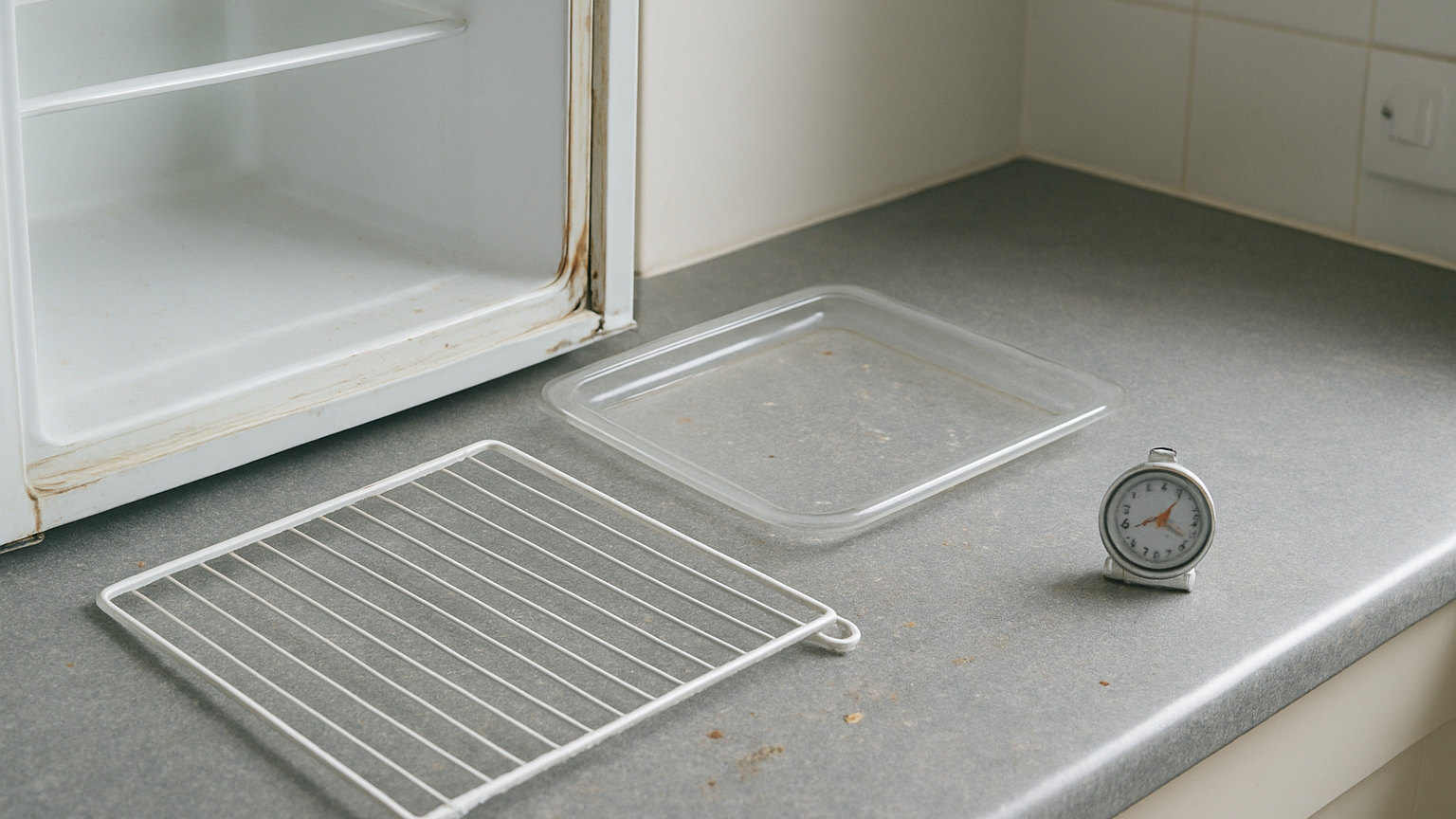
- Switch the freezer off at the wall.
- Put towels along the base and on the floor in front.
- Leave the door open and let the ice melt.
- Catch water in a shallow tray, and empty it regularly.
- Lift off ice with a plastic scraper as it loosens, rather than chipping at it.
- Once clear, wash the interior with a bicarbonate of soda solution.
- Dry every surface completely.
- Switch on and let it reach temperature before loading the food back.
What speeds it up?
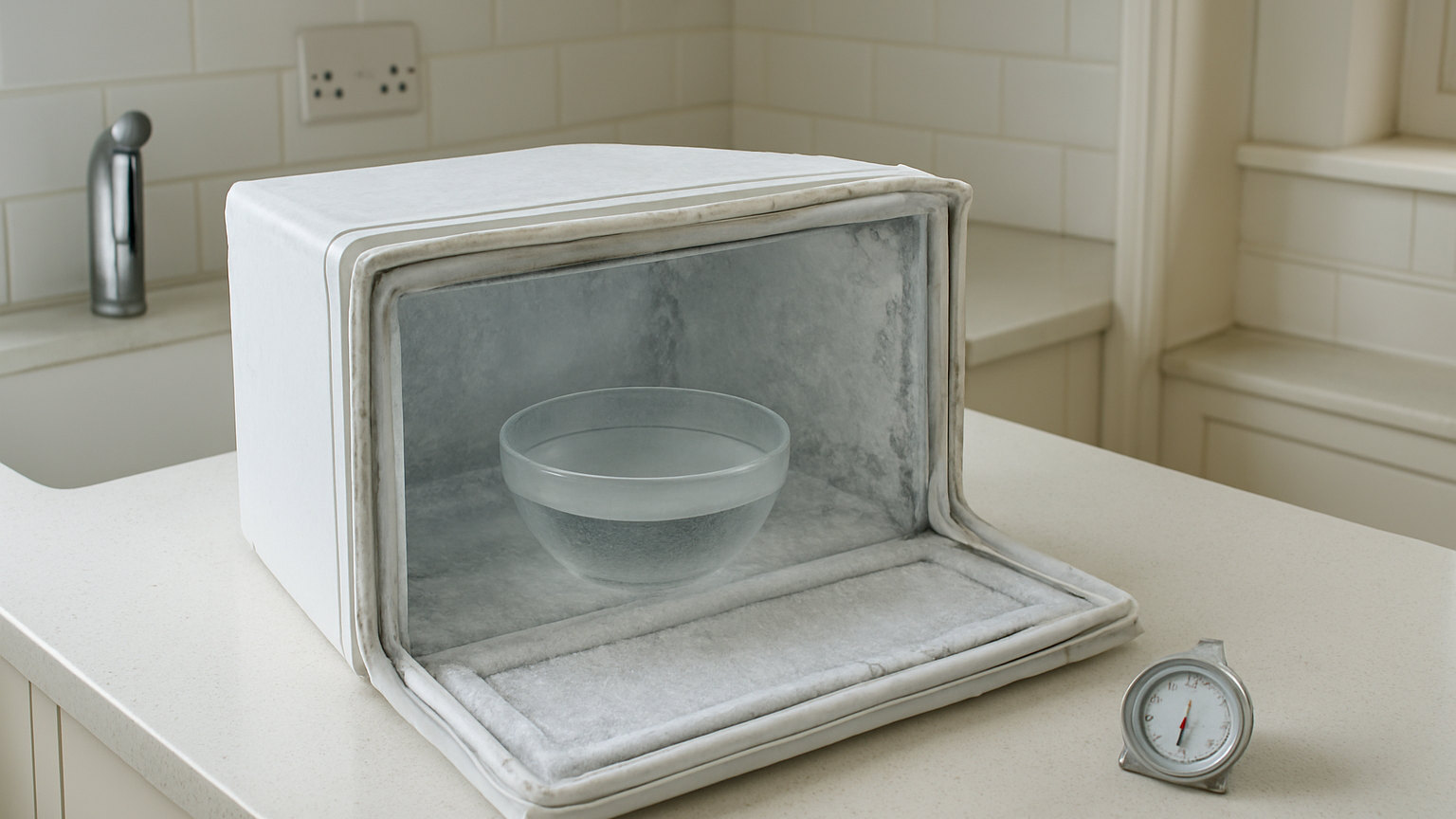
Bowls of hot water placed inside with the door shut, replaced as they cool, which is the most effective approach. A fan blowing warm room air into the freezer. A hairdryer on a low setting held well back and kept away from any water, which needs care and should be used with a residual current device.
A steam cleaner or a kettle held near the ice also works and puts a lot of moisture into the appliance.
What must never be used?
- A knife, chisel, screwdriver or any metal tool, which will puncture the evaporator and write off the freezer.
- Boiling water poured directly onto the ice, which can crack the liner.
- Salt, which corrodes the interior.
- A hairdryer near standing water, for obvious reasons.
The punctured evaporator is the most common way a freezer is destroyed during defrosting, and it is always caused by impatience with a metal implement.
Why does drying matter?
Because any water left on the surfaces freezes immediately when the appliance restarts, and you begin the next ice build up on the day you finished. Dry every surface, including the door seal and the runners, before switching back on.
How do you slow the ice returning?
Keep the door closed and open it decisively rather than standing with it open. Cool food before freezing it. Make sure packaging is sealed, since moisture from food causes frost. And check the door seal, since a failing seal lets warm moist air in and is the most common cause of rapid ice build up.
What about a chest freezer?
The same approach with one advantage and one difficulty. The advantage is that cold air does not fall out when the lid is opened, so ice builds more slowly and the food stays colder while you work. The difficulty is that the water collects in the bottom and has to be mopped out by hand, since most chest freezers have a drain plug at the base that is worth locating before you start.