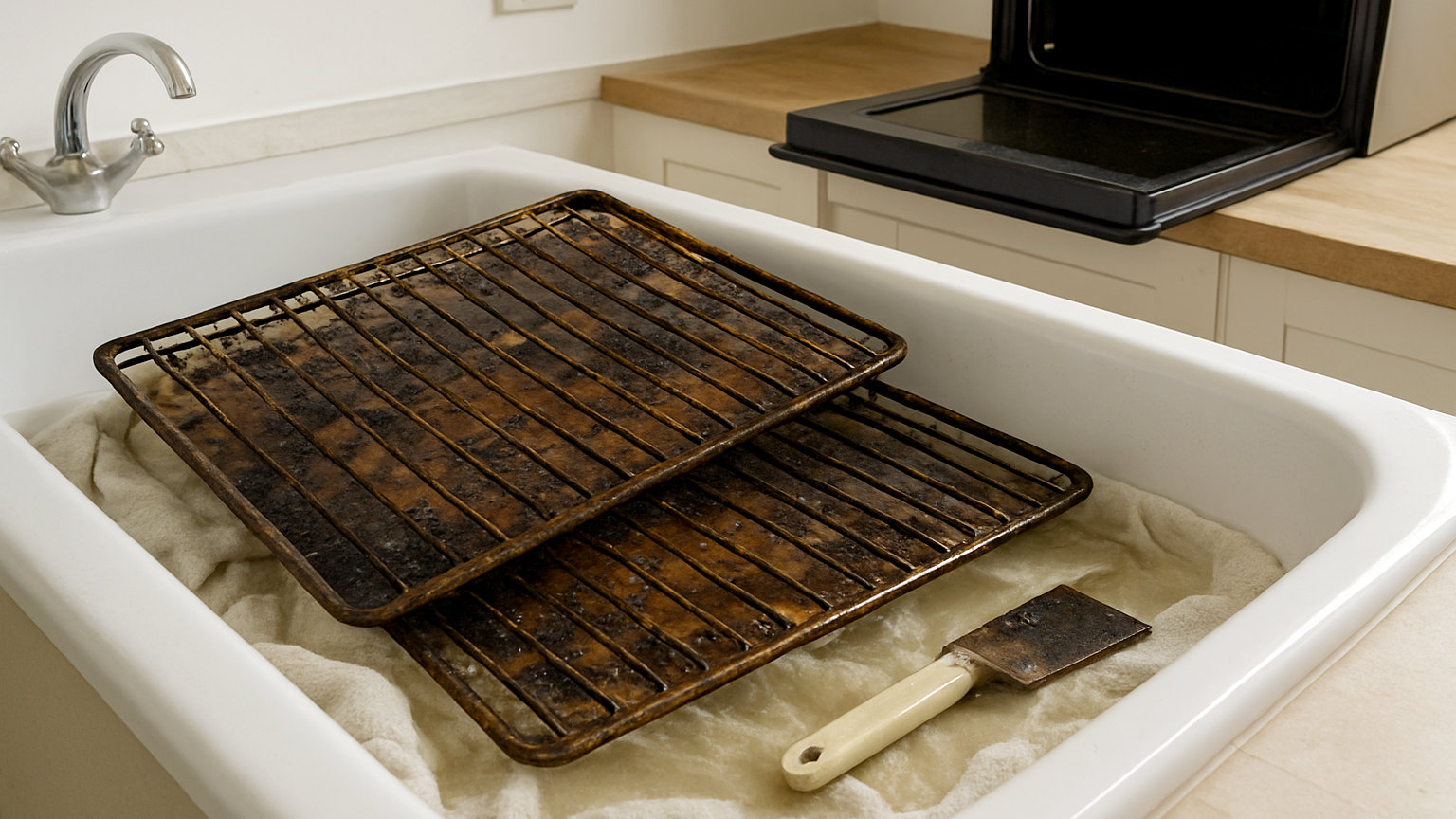
Oven shelves respond better to soaking than to any amount of scrubbing. Baked on grease softens given several hours in hot water with an alkaline cleaner, and most of it then wipes away. The practical problem is almost always finding a container big enough.
What is the bath method?
- Lay an old towel in the bath to protect the enamel or acrylic from scratching.
- Lay the shelves on the towel.
- Run hot water until they are fully covered.
- Add a generous scoop of biological washing powder, soda crystals, or two or three dishwasher tablets.
- Leave overnight.
- In the morning, work over them with a nylon brush or a non-scratch pad.
- Rinse thoroughly and dry completely before they go back.
The towel matters. Metal shelves dragged across a bath will scratch it, and a scratched acrylic bath then stains permanently.
What if you have no bath?
Several alternatives work. A large plastic storage box or a builder bucket. A bin bag laid in a shower tray or on a patio, filled with hot water and sealed at the top. A washing up bowl doing one shelf at a time. Or a sink with the shelf turned periodically so each part soaks.
For a bin bag, double bag it and put it somewhere that spilling would not matter, since the weight of water is considerable.
Which cleaner works best?
Soda crystals are the cheapest and are strongly alkaline, which suits baked grease well. Biological washing powder works because the enzymes attack food residue. Dishwasher tablets are convenient and effective. A specialist oven shelf cleaner is stronger and correspondingly more expensive.
All of them work far better in hot water than warm, so fill the bath as hot as the tap runs.
Can they go in the dishwasher?
Only if they fit without blocking the spray arm, and only if the manual permits it. Most oven shelves are too large, and heavily soiled ones will leave residue that affects the next load. They can also discolour, since dishwasher detergent is aggressive on some coatings.
For lightly soiled shelves in a large dishwasher it is a reasonable option, run on the hottest cycle.
What about the aluminium foil and boiling water method?
The version circulating widely involves lining a bath with foil and adding boiling water and detergent. The foil reacts with the alkaline solution and produces bubbling, which looks impressive.
It is a chemical reaction between the aluminium and the alkali rather than a cleaning action, and plain soaking achieves much the same result. It also consumes the foil and can pit an aluminium sink. Soaking without the foil is simpler.
What about shelf supports and runners?
The side racks that hold the shelves usually unclip or unscrew and are frequently ignored. Take them out and soak them with the shelves, which makes the oven interior far easier to clean as well.
Note which way round they go before removing them, since they are usually handed.
What about telescopic runners?
These should not be soaked. They contain bearings and a lubricant that water will wash out, after which they stiffen and eventually seize. Wipe them with a damp cloth and a little detergent, dry immediately, and avoid getting water into the mechanism.
Do they need drying before they go back?
Yes. Water left on bare steel shelves will rust, particularly where the coating has worn. Dry them with a towel and leave them to air for an hour before refitting, and run the oven empty for a few minutes if there is any doubt.
What about the shelf coating?
Most oven shelves are chrome or nickel plated steel, and the plating wears through at the points where pans rub and where they are scrubbed hardest. Once bare steel is exposed it will rust after every soak, so dry those areas particularly well. Shelves that have rusted through are a replacement part rather than a cleaning problem, and they are inexpensive for most models.