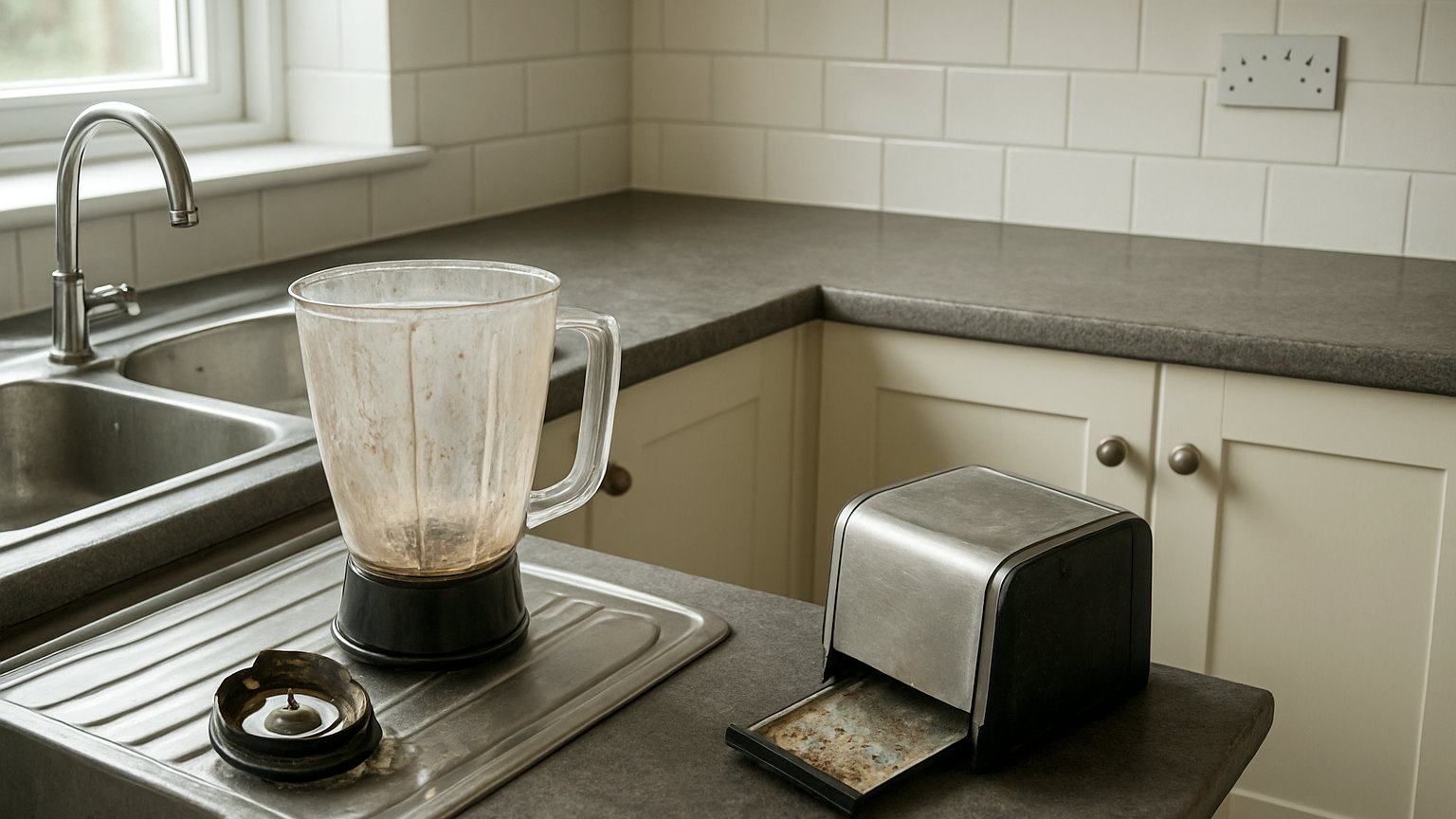
Blenders and food processors are quick to clean immediately after use and difficult once anything has dried. The blade assembly is where the real problem sits, since food works past the blade into the seal and the threads, where it stays.
What is the self cleaning method?
- Rinse the jug immediately after use so nothing dries.
- Half fill it with warm water and add a drop of washing up liquid.
- Run the blender for twenty to thirty seconds.
- Tip out and rinse thoroughly, twice, since detergent residue foams in the next smoothie.
- Leave to drain upside down.
It works well for everyday use and it does not clean the underside of the blade or the seal, which is why it needs supplementing.
How do you clean the blade assembly?
On most blenders the blade unit unscrews from the base of the jug, and there is a rubber gasket between them. Take it apart, wash each part separately in hot soapy water with a brush, and dry before reassembling.
Handle the blade by the hub rather than the edges. A blender blade is sharp enough to cause a serious cut and it is easy to forget when it is submerged in soapy water.
Check the gasket for splits, since a perished one leaks and is a cheap replacement part.
Why does a blender smell?
Because food residue is trapped in the seal, the threads or under the blade. Smoothies with dairy, protein powder or nut milk are the usual culprits, and the smell develops within a day or two.
The fix is dismantling and washing the blade assembly rather than running more self cleaning cycles, which never reach the area.
What about a food processor?
More parts and the same principle. Take everything off the motor base: bowl, lid, pusher, blades and discs. Wash each separately.
Pay attention to the underside of the lid, the centre spindle of the bowl and the recess the blade sits in, all of which trap food. The rubber seal on the bowl, where fitted, should come out and be washed separately.
What about the motor base?
Never immerse it, and never run it under a tap. Wipe it with a cloth wrung out in warm soapy water, then dry.
Clean around the drive coupling and the controls, where spillage collects. A cotton bud is useful for the recess around the coupling. Make sure the unit is unplugged first.
How do you deal with stains?
Plastic jugs stain with turmeric, tomato, carrot and beetroot. A paste of bicarbonate of soda rubbed in and left for half an hour lifts a good deal, and leaving the jug outside in sunlight for a day fades the rest.
Cloudiness in a plastic jug is usually fine scratching from abrasive cleaning, which is permanent. Use a soft sponge only.
Can the parts go in the dishwasher?
Check the manual, since it varies considerably. Many jugs and bowls are top rack only, and many are not dishwasher safe at all because the plastic crazes or the printed markings wear off.
Blades are usually better washed by hand, since dishwasher detergent dulls them and they knock against other items. The motor base never goes in.
What should you avoid?
Reaching into a jug with a hand while the blade is in place. Abrasive pads on plastic. Leaving the jug to soak with the blade unit attached, which lets water into the bearing. And putting it away damp, which is how the smell starts.
Store the jug and lid separately rather than assembled, so air can circulate.
What about a personal blender?
The bottle style blenders where the blade screws onto a cup have exactly the same seal problem in a smaller package, and they are more often used for smoothies with dairy and protein powder. Unscrew the blade after every use rather than leaving it on, wash the gasket, and never store the bottle assembled.