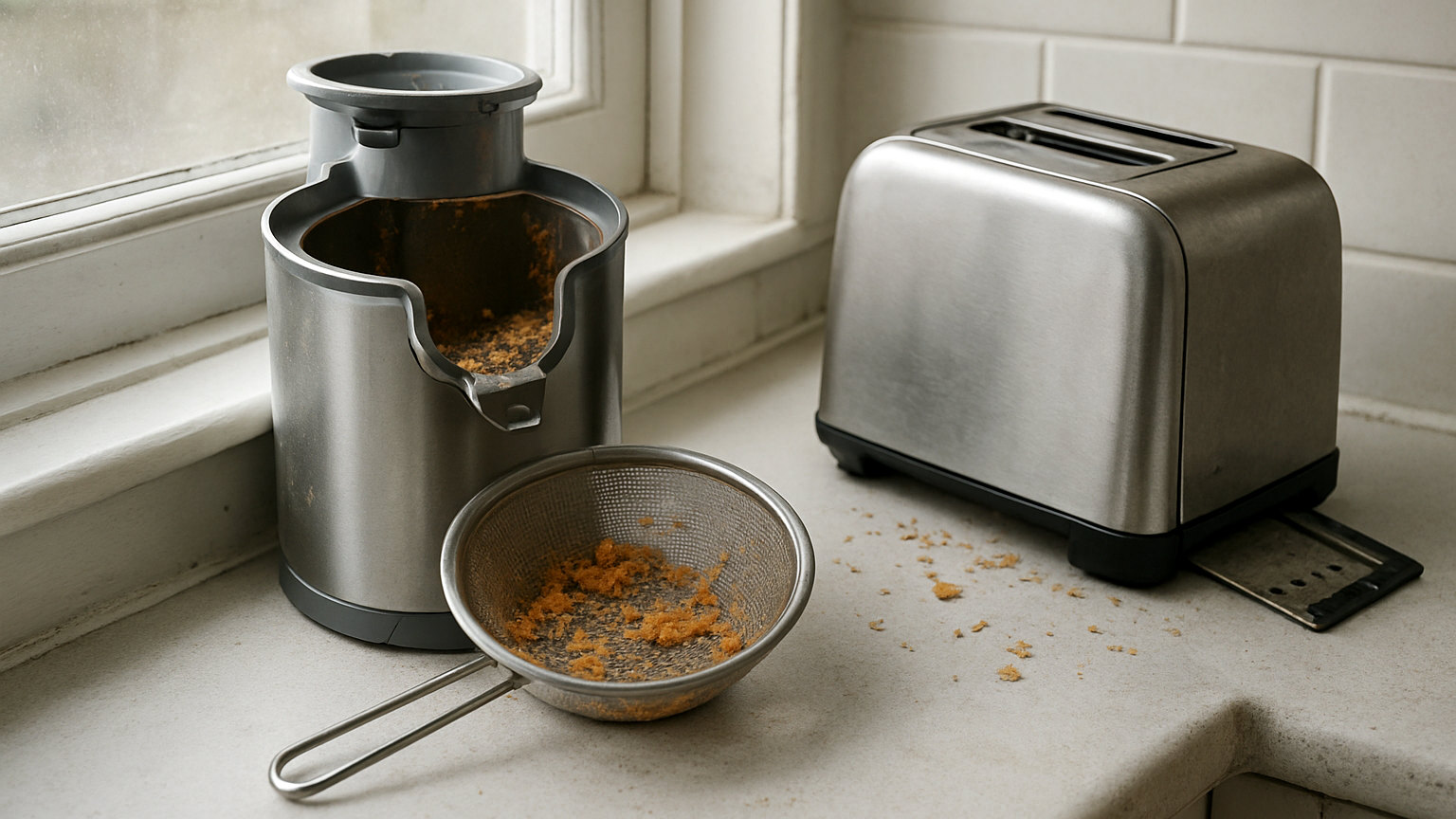
Juicers are the small appliance most often abandoned, and the reason is nearly always the cleaning. Pulp dries into a fine mesh filter within an hour and becomes extremely difficult to remove. Cleaned immediately, a juicer takes three or four minutes; left until later, it takes twenty and never comes fully clean.
What is the routine?
- Switch off and unplug as soon as you have finished.
- Take the machine apart completely.
- Tip the pulp out of the collector into a bin or compost.
- Rinse every part under running water immediately, before anything dries.
- Scrub the filter with the brush supplied, under running water.
- Wash the rest in hot soapy water.
- Stand everything on a rack to dry, and store the machine dismantled.
The rinse comes before the wash. Getting water onto the pulp within a minute or two is what makes the difference.
How do you clean the filter?
With the stiff nylon brush that came with the machine, working from the inside outwards under running water. Hold it up to the light afterwards: you should see light through every hole.
If the brush has been lost, a washing up brush or a nail brush works, and replacement brushes are sold cheaply.
For a filter that has dried with pulp in it, soak it in hot water with a little washing up liquid for half an hour first, then brush. A soak in a solution of citric acid or white vinegar helps with staining and mineral deposit.
What about a centrifugal juicer?
The mesh basket with the grating plate in the base is the critical part and it has the finest mesh, so it needs the most attention. Brush it immediately every time.
The blade plate at the bottom of the basket is sharp. Brush rather than rubbing with fingers.
The lid, the chute and the pulp container all rinse easily and most are dishwasher safe on the top rack, though the filter should always be brushed by hand first.
What about a slow or masticating juicer?
More parts and a coarser screen, which is easier to clear. The auger, the screen, the bowl and the two spouts all come apart.
Pay attention to the silicone wiper blades and the rubber plug in the juice spout, both of which trap pulp and are easy to miss. The screen still needs brushing immediately.
Running a jug of water through the machine while it is still assembled loosens most of the pulp before dismantling, which is worth doing first.
How do you deal with staining?
Carrot, beetroot and turmeric stain plastic readily. A soak in a solution of bicarbonate of soda lifts some of it, and a day in sunlight fades the rest considerably.
The staining is cosmetic and does not affect performance, though it is worth dealing with before it becomes permanent.
Can parts go in the dishwasher?
Many can, on the top rack, and the filter should still be brushed by hand first since a dishwasher will not clear the mesh. Check the manual, as some plastics craze at dishwasher temperatures.
The motor base never goes in and is never immersed. Wipe it with a damp cloth.
What about the smell?
A juicer that smells has pulp residue left in the filter, a spout or a seal. Take it fully apart, including any rubber components, and soak everything in a bicarbonate solution. Dry completely and store dismantled rather than assembled.
Does the type of produce change anything?
It does. Leafy greens and ginger wrap around the auger and clog a screen faster than apples or carrots do. Citrus leaves an oily residue on plastic that needs detergent rather than a rinse. Beetroot and turmeric stain everything they touch. Knowing what you have just juiced tells you how thorough the clean needs to be, and greens in particular justify taking the machine fully apart.
How long does it actually take?
Three to five minutes if done immediately, which is worth knowing because the perceived effort is what stops people using a juicer. Setting the parts out on a draining rack as you dismantle, rather than stacking them in a sink, makes the whole thing quicker and means everything dries properly.