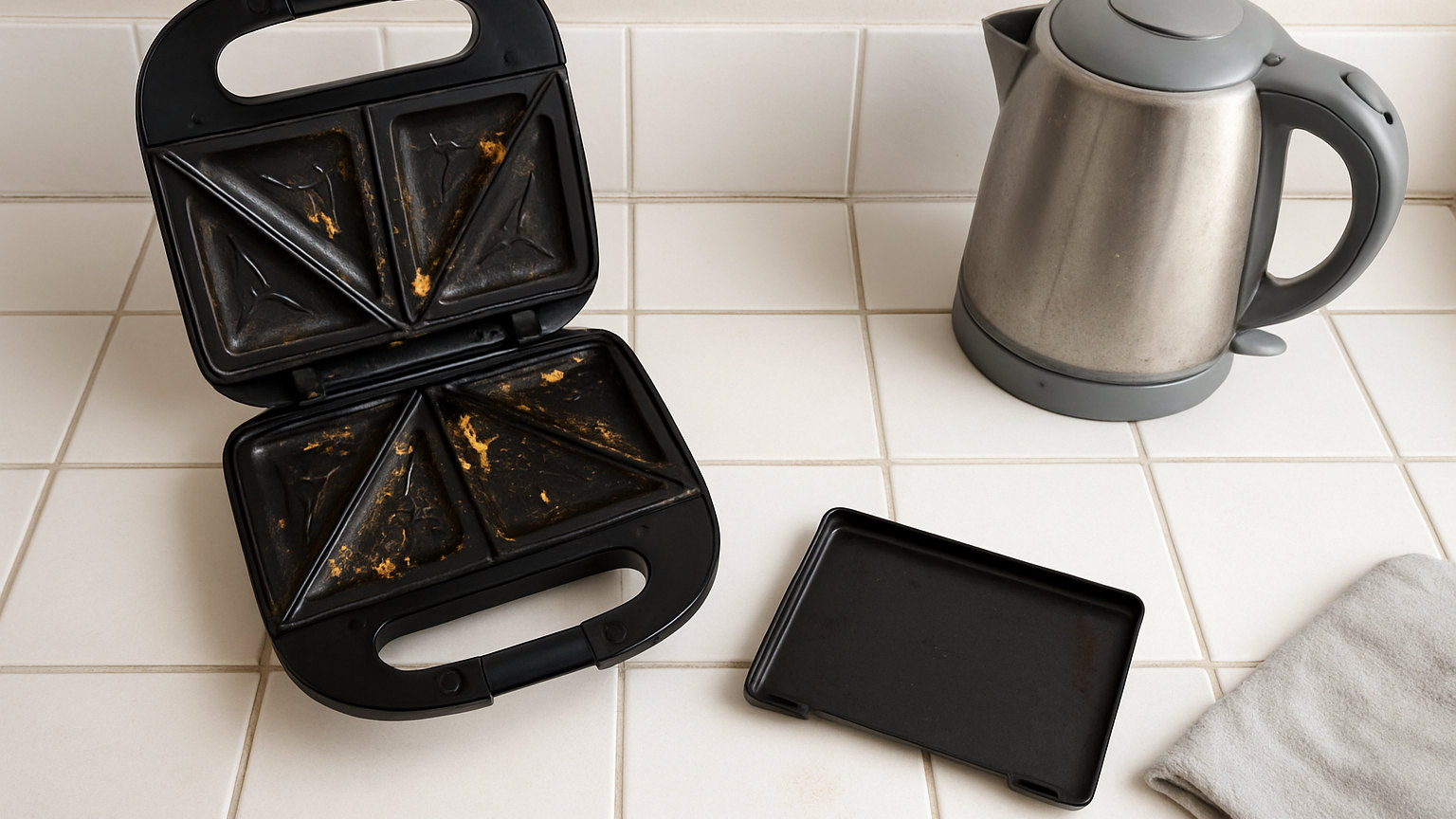
A sandwich toaster or panini press is easy to clean at the right moment and difficult at any other. Melted cheese and fillings that have escaped the bread set hard as they cool and bond to the plates. Ten seconds while it is still warm saves twenty minutes later.
What is the warm method?
- Unplug the appliance as soon as you have finished.
- Wait two or three minutes until it is warm rather than hot.
- Lay a few sheets of damp kitchen paper across the plates and close the lid.
- Leave for a few minutes so the steam softens the residue.
- Open and wipe with the damp paper, then with a cloth.
- Dry with kitchen paper and leave the lid open.
This is the whole technique. Cleaning warm rather than cold is the difference between wiping and scraping.
What if it has gone cold?
Lay a damp cloth over the plates and close the lid for fifteen to twenty minutes, which rehydrates the residue. Do not plug the appliance in with a wet cloth on it.
Then work it loose with a wooden or plastic spatula, or a soft brush. Repeat rather than forcing it, and never use anything metal.
What about burnt on cheese?
Soften it first with the damp cloth method, then work it with a plastic scraper or an old toothbrush. A little bicarbonate of soda paste helps if the coating is in good condition, applied gently.
Stubborn deposits sometimes come away after a second warming cycle: run the appliance for a minute, unplug, and treat it warm.
Can the plates come out?
Many panini presses and health grills have removable plates, which transforms the job. They release with a catch or a button at the side and go straight into the sink or, on most models, the dishwasher.
Check the manual for whether they are dishwasher safe, and be aware that repeated dishwasher cycles dull non-stick coatings faster than hand washing.
What protects the non-stick?
- No metal utensils, ever, including for removing sandwiches.
- No abrasive pads or powders.
- No aerosol cooking spray, which builds a sticky varnish that is very difficult to remove.
- Clean it every time, since burnt residue on the coating damages it further at the next use.
- Store with the lid slightly open rather than clamped shut.
A damaged non-stick surface sticks permanently, and on a fixed plate appliance that effectively ends its useful life.
What about the hinge and the outside?
Filling escapes down the sides and collects at the hinge, where it bakes on. Wipe it with a damp cloth while warm and use a cotton bud in the joint.
The exterior takes a cloth dampened in warm soapy water. Keep liquid away from the vents, the cord and the indicator lights, and never immerse any part of the unit.
How do you reduce the mess?
Do not overfill sandwiches, which is the main cause. Leave a border of bread around the filling. Cut a sheet of baking parchment to sit between the bread and the plates, which works well for cheese and makes the clean up almost nothing.
Some people use silicone toastie bags, which do the same job and are washable.
What if it has been neglected?
Repeated damp cloth treatments over an evening remove more than one aggressive attempt. Where the coating has been scraped and food now bonds to it at every use, the appliance is past saving, and these are inexpensive enough that replacement is the sensible answer.
Should it be stored closed?
No. Storing a sandwich toaster clamped shut traps any remaining moisture between the plates and keeps the coated surfaces pressed together, which marks them over time. Leave the lid slightly open, or store it upright on its end where the design allows and the lock is not engaged.
How often does it need doing?
Every single use, which is the honest answer and the reason so many of these appliances end up in a cupboard. It is genuinely a two minute job done warm and a twenty minute one done cold, so the habit is worth establishing from the first use rather than after the first disappointment.