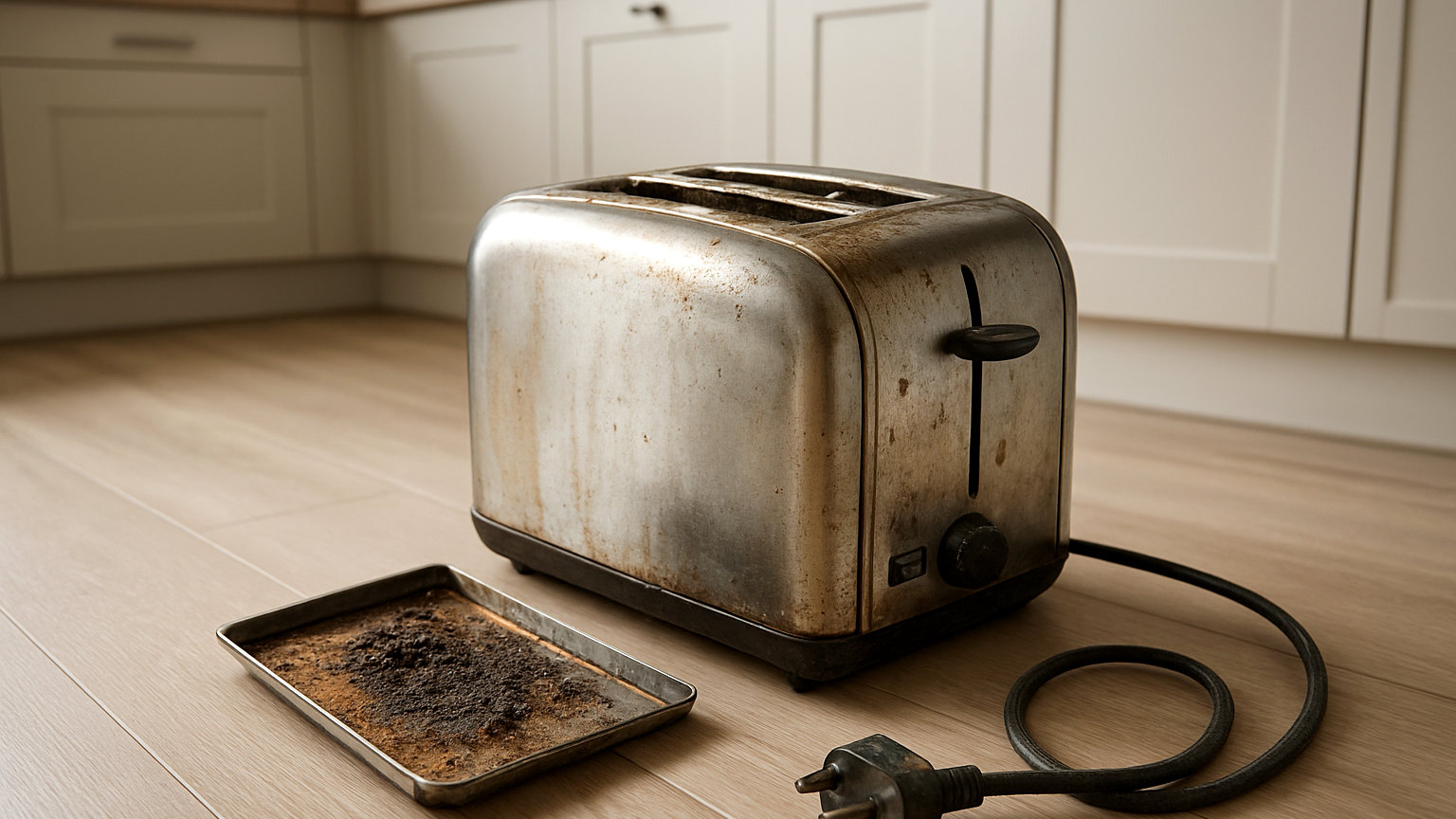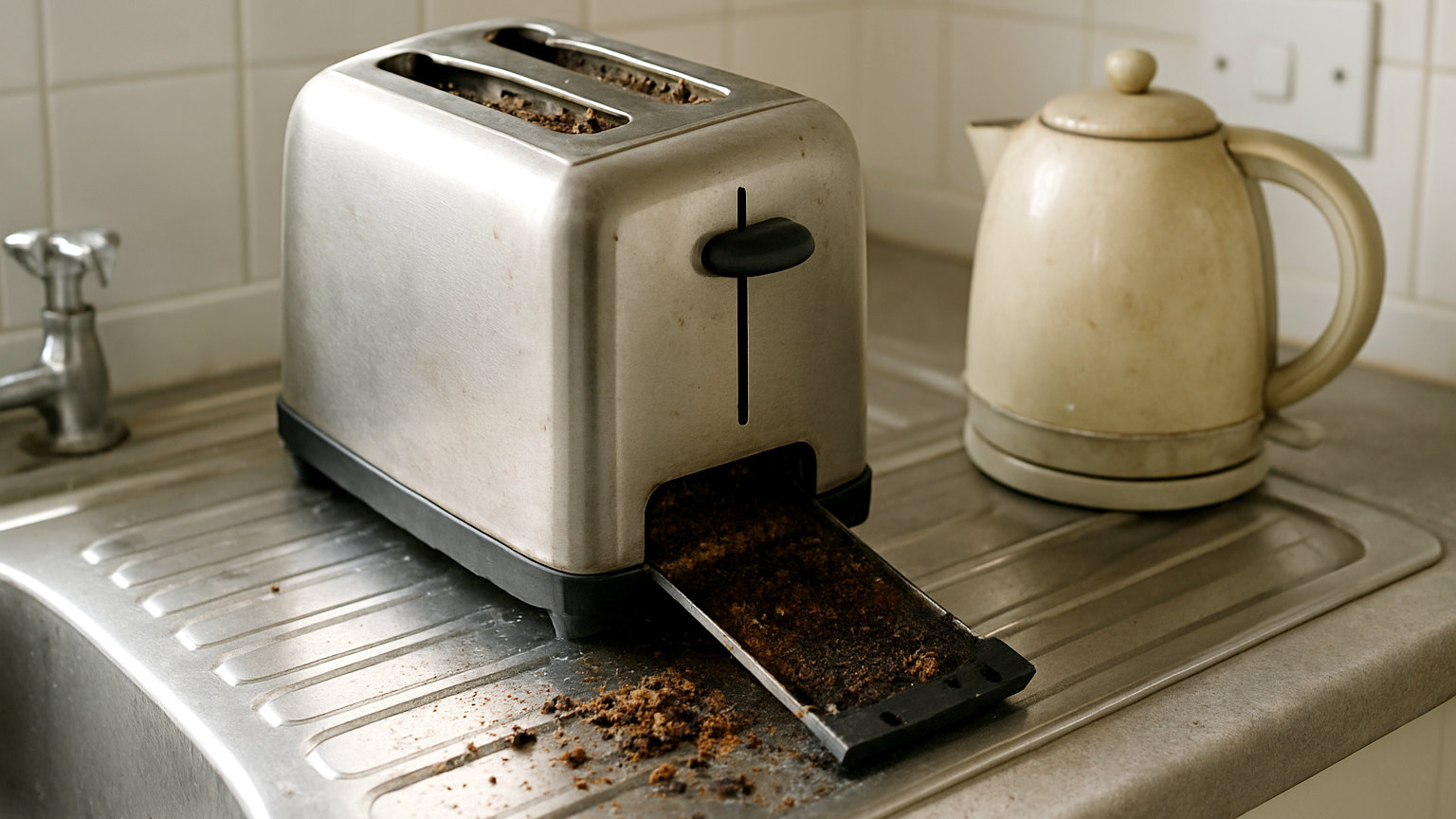
A toaster accumulates crumbs in the base, and those crumbs sit directly beneath heating elements that reach several hundred degrees. It is a real fire risk rather than a theoretical one, and toaster fires are a recognised cause of kitchen fires. The crumb tray exists specifically to let you deal with it.
What is the routine?
- Unplug the toaster and let it cool completely.
- Slide out the crumb tray at the base and tip it into the bin.
- Wash the tray in hot soapy water, dry it thoroughly and refit.
- Turn the toaster upside down over a bin or a sink and shake it gently.
- Wipe the outside with a damp cloth and dry it.
Weekly for a toaster in daily use, or monthly for lighter use. It takes two minutes.
What if there is no crumb tray?
Older and cheaper toasters sometimes have a hinged base plate instead, or nothing at all. In that case turning it upside down and shaking it is the only option, and it should be done more often.
Check the underside for a removable panel before assuming there is nothing.
How do you deal with stuck crumbs?
A soft pastry brush or a clean paintbrush, with the toaster unplugged and upside down, works into the slots and dislodges what shaking does not. A can of compressed air also works and should be used outdoors or over a bin.
Do not use anything metal, and do not push anything down into the slots while it is plugged in under any circumstances.
What should never go in a toaster?
- A knife or fork, even when unplugged, since it damages the elements and is lethal if the toaster is live.
- Water, in any quantity. A toaster is never immersed or rinsed.
- Buttered bread, which drips and burns onto the elements.
- Anything with a coating or filling that can melt, unless the toaster has a bagel or pastry setting designed for it.
- Cleaning sprays, which should be applied to a cloth for the exterior only.
What about sticky residue inside?
Melted cheese, chocolate or jam on the element grid is difficult and the safest response is limited. Unplug, let it cool, and lift out what you can with a wooden or plastic implement working gently.
Residue burnt onto an element will smoke and smell for a few uses and generally burns off. Anything that has damaged the element or the wire mesh means the toaster should be replaced rather than persevered with.
How do you clean the outside?
A cloth dampened in warm soapy water, then dried. Stainless steel benefits from wiping in the direction of the grain and buffing with a dry microfibre cloth.
For fingerprints on a polished finish, a little white vinegar on a cloth works well. Keep all liquid away from the slots, the lever and the plug.
How often does it actually need doing?
The crumb tray weekly. The exterior whenever it looks marked. A full shake out monthly. Households that toast a lot, particularly seeded bread, need it more often.
What are the warning signs?
Smoke on a normal setting, a burning smell, crumbs glowing red through the slots, a lever that will not stay down, or a toaster that does not pop up on its own. Any of these means unplugging it, and the last two mean replacing it.
A toaster is an inexpensive appliance and there is no sensible case for repairing a faulty one.
Does a toaster ever need replacing for cleanliness?
Occasionally. A toaster whose element grid has accumulated a hard baked layer that cannot be removed will keep smoking and tainting bread, and there is no safe way to clean it properly. Given the price of a toaster against the fire risk of a heavily contaminated one, replacement is the reasonable answer.
Where should it sit?
Away from the wall, away from curtains, and not underneath a wall cupboard, since the heat and the crumbs both go upwards. Keeping it clear also means the sides can be wiped and the crumb tray reached without moving anything, which makes the routine more likely to happen.