Cement grout is porous. Everything that touches it soaks in rather than sitting on top, which is why it discolours and why wiping it achieves so little. Cleaning it properly comes down to two things: a product that gets into the pores, and long enough in contact to work.
What is the basic method?
- Clean the tiles first so you are not pushing dirt into the grout.
- Apply the cleaner along the grout lines rather than over the whole surface.
- Leave it for ten to fifteen minutes, longer for heavy discolouration.
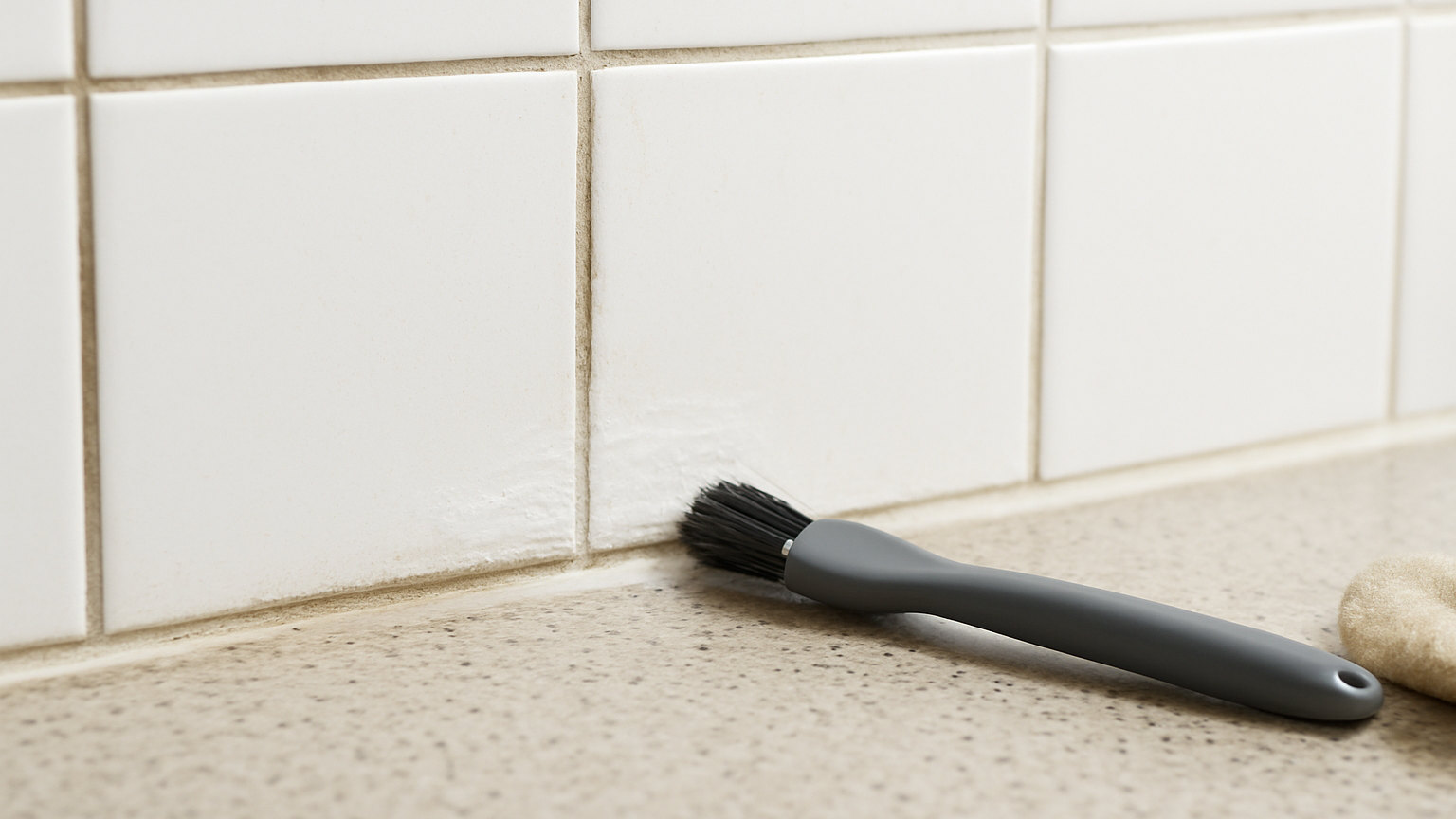
- Scrub each line with a stiff narrow brush, along the line rather than across it.
- Wipe away the residue with a damp cloth.
- Rinse thoroughly and dry.
- Repeat on any area that has improved but not cleared.
What should you use?
- Oxygen bleach dissolved in warm water, which is colour safe, effective on organic staining and safe on stone. The best general choice.
- Bicarbonate of soda paste, mildly abrasive and alkaline, good for everyday cleaning.
- A proprietary grout cleaner, formulated to penetrate and usually the strongest option.
- Dilute bleach, effective on white grout in a bathroom and harsh on the grout itself with repeated use.
- Steam, which loosens dirt without chemicals and needs care on older grout.
What is the right brush?
Narrow and stiff. A grout brush with a V-shaped or narrow head reaches into the recess, which a flat brush or a cloth does not. An old toothbrush works and is slow over a large area.
For floors, a stiff deck brush or a long handled grout brush saves kneeling. Electric brushes and drill brush attachments are effective over a whole floor and need care not to erode the grout.
Why does contact time matter so much?
Because the staining is inside the grout rather than on it. A cleaner applied and scrubbed immediately only touches the surface. Left for ten or fifteen minutes it penetrates and lifts the discolouration from within.
Ten minutes of waiting removes more than ten minutes of scrubbing.
What should you avoid?
Acidic cleaners, including vinegar and lemon, used regularly. Cement grout is alkaline and acid slowly dissolves it, weakening the joint and making it more porous, so it stains faster afterwards.
Also avoid wire brushes and metal tools, which gouge the grout, and any mixing of bleach with an acidic product.
Does vinegar work?
It removes limescale from grout and it damages the grout itself over repeated use. For a one off treatment of a heavily scaled shower it is reasonable; as a routine cleaner it shortens the life of the joint.
Oxygen bleach achieves more on general discolouration without the damage.
What about floor grout?
Floors need more force and more patience, since grout lines sit below the tile surface and collect everything. Apply the cleaner, leave it, then use a brush and finally rinse with clean water and a mop, changing the water frequently.
Dirty rinse water dragged across a floor deposits straight back into the grout, which is why the water needs changing more often than seems necessary.
How long should it take?
Longer than people expect for a first proper clean. A bathroom wall might take an hour, a tiled floor an afternoon. Once it is clean and sealed, maintenance is a few minutes a month.
What if it does not come clean?
Grout that resists a proper clean has either been sealed with the stain inside it, has absorbed colour permanently, or has deteriorated. At that point the options are a grout pen, a colour sealer or regrouting, which are covered separately.
What about coloured and dark grout?
Dark grout hides general staining well and shows limescale and soap scum instead, as a pale white film across the lines. It also fades patchily if chlorine bleach is used on it. Stick to oxygen bleach or a neutral grout cleaner, and keep chlorine bleach entirely for white grout where uneven fading will not show.