Limescale on tiles is calcium carbonate left behind as water evaporates. It builds in showers, around taps and along the bottom of shower screens. Acid dissolves it readily, and the same acid damages natural stone and erodes cement grout, so the technique is about targeting the deposit.
What works on glazed tiles?
- Soak a cloth or kitchen paper in white vinegar or a citric acid solution.
- Lay it over the scaled area and press it into contact.
- Leave for thirty minutes to an hour, re-wetting if it dries.
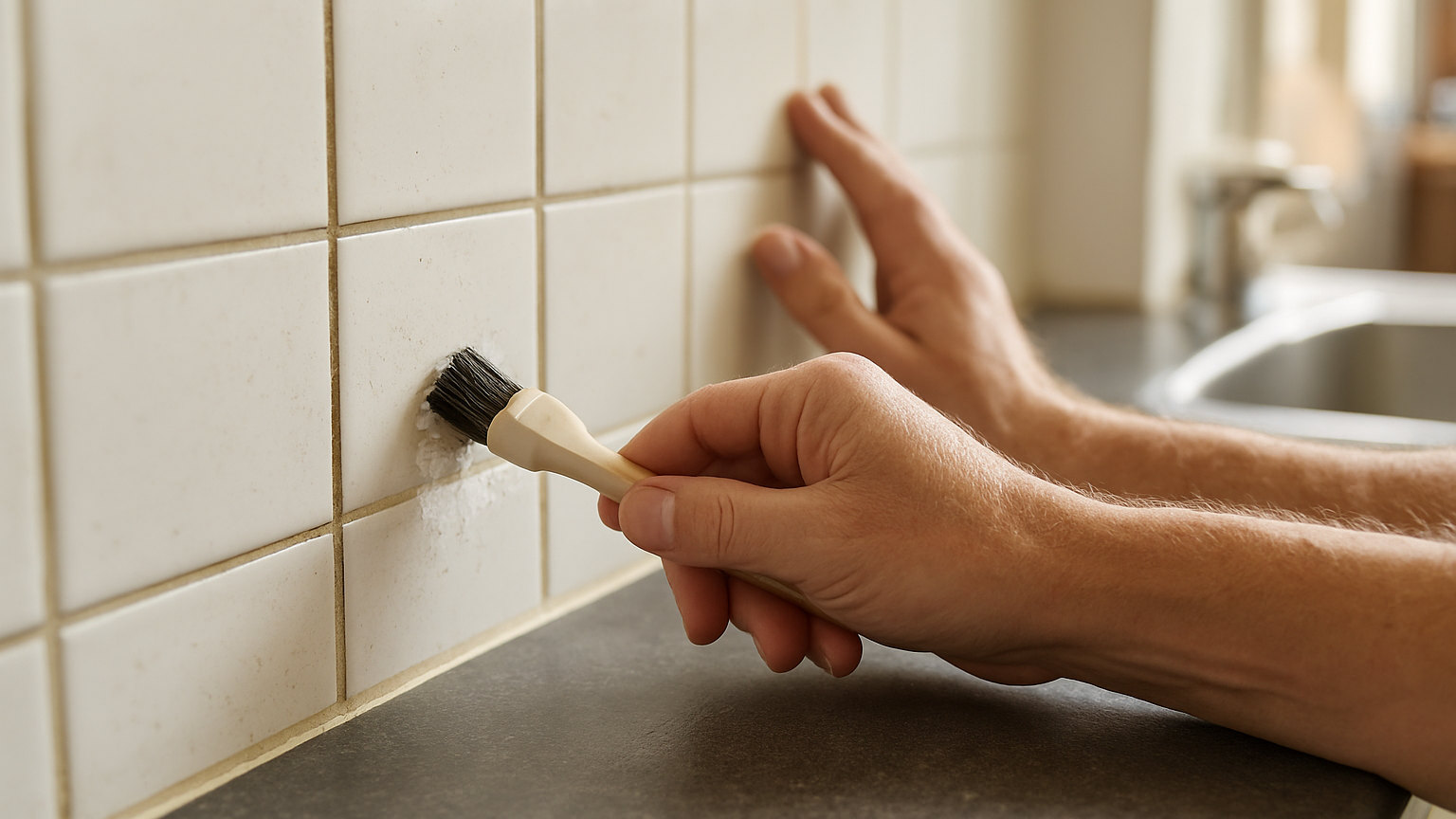
- Remove and work the softened deposit with a non-scratch pad or a soft brush.
- Rinse thoroughly with clean water.
- Dry and buff.
Contact time is what does the work. Spraying and wiping immediately achieves almost nothing on established scale.
Which acid should you use?
- White vinegar – cheap, effective, and it smells.
- Citric acid – equally effective, almost no smell, sold as a powder.
- A proprietary limescale remover – stronger, formulated with surfactants and usually faster.
- Lemon juice – weaker, and useful for light deposits.
All of them must be kept off natural stone entirely.
Why does the grout matter?
Because cement grout is alkaline and acid dissolves it. A one off treatment does little harm; using an acidic cleaner weekly across a whole shower erodes the grout, makes it more porous and shortens its life considerably.
Apply the treatment to the tile faces and the screen rather than flooding the whole wall, and rinse well afterwards.
What about natural stone?
No acid at all. Marble, limestone and travertine etch permanently, and granite can be affected too. Use a pH neutral stone cleaner or a limescale remover specifically stated as safe for natural stone.
Prevention matters far more with stone, since the options for removal are limited.
How do you deal with a shower screen?
Glass takes acid well. Lay vinegar soaked kitchen paper against it, leave it an hour, then work it with a non-scratch pad and rinse.
For heavy scale, a proprietary glass descaler or a barkeeper style cream cleaner works. Once clear, a water repellent glass treatment applied to the screen makes water sheet off and dramatically slows the return.
What is the white film that is not limescale?
Soap scum, a reaction between bar soap and hard water. It looks similar and it responds to the same acidic treatment, and switching to a liquid body wash removes the cause entirely.
In a hard water area a shower usually has both, which is why they get treated together.
What should never be mixed?
Any acidic descaler with bleach or any bleach containing product, which releases chlorine gas. That includes using one after the other without thorough rinsing in between, which is an easy mistake in a bathroom.
Ventilate throughout and use one product at a time.
How do you prevent it?
A squeegee, used every time. Thirty seconds spent pulling the water off the screen and the tiles after a shower prevents almost all limescale and soap scum from forming at all, because both are deposited only as the water dries in place. No water left standing means no deposit.
It is the single most effective habit in a bathroom and it removes most of the cleaning that would otherwise follow.
What about a water softener?
In a very hard water area it addresses the cause throughout the house, and it removes limescale from tiles, taps, showers, kettles and appliances at once. It is a significant investment and the appliance life savings are part of the case for it.
What about the shower head?
Worth doing at the same time, since a scaled head sprays unevenly and throws more water onto the surrounding tiles than it should. Fill a freezer bag with vinegar, tie it over the head so the face is submerged, and leave it for an hour before rinsing thoroughly. Rub any rubber nozzles with a thumb afterwards to clear them.