Natural stone tiles are the one surface where the product matters more than the method. Marble, limestone and travertine are calcium based and react with acid, which dissolves the polished surface and leaves a dull patch. That damage is physical and cannot be cleaned away.
What is the safe routine?
- Sweep or dust mop first to remove grit, which scratches.
- Wash with warm water and a pH neutral stone cleaner.
- Use a soft cloth or a well wrung mop, not a soaking one.
- Rinse with clean water.
- Dry with a soft cloth or a microfibre mop.
- Deal with spills immediately rather than at the end of the day.
What must be avoided?
- Vinegar, lemon juice and citric acid.
- Most bathroom and limescale sprays, which are acidic.
- Bleach, which damages sealers and can discolour some stone.
- Abrasive powders and pads, which dull a polished surface.
- Generic multi surface cleaners, many of which are acidic without saying so.
- Steam cleaners on some stone and on any sealed surface.
If a product does not state that it is safe for natural stone, assume it is not.
Which stones are most vulnerable?
Marble, limestone and travertine are all calcium carbonate and etch almost instantly from anything acidic, including a splash of shampoo or a toothpaste containing citric acid.
Granite is more resistant to acid but porous and needs sealing. Slate is relatively tolerant and flakes if scrubbed hard. Sandstone is very porous and stains readily.
What is etching, and can it be fixed?
Etching is a chemical burn where the acid has dissolved the surface, leaving a dull mark that often looks like a water stain. It is not a stain and no cleaner will remove it.
On polished marble, a marble polishing powder can restore a small etched area. Anything larger needs professional refinishing, where the surface is honed and repolished.
How do you remove stains?
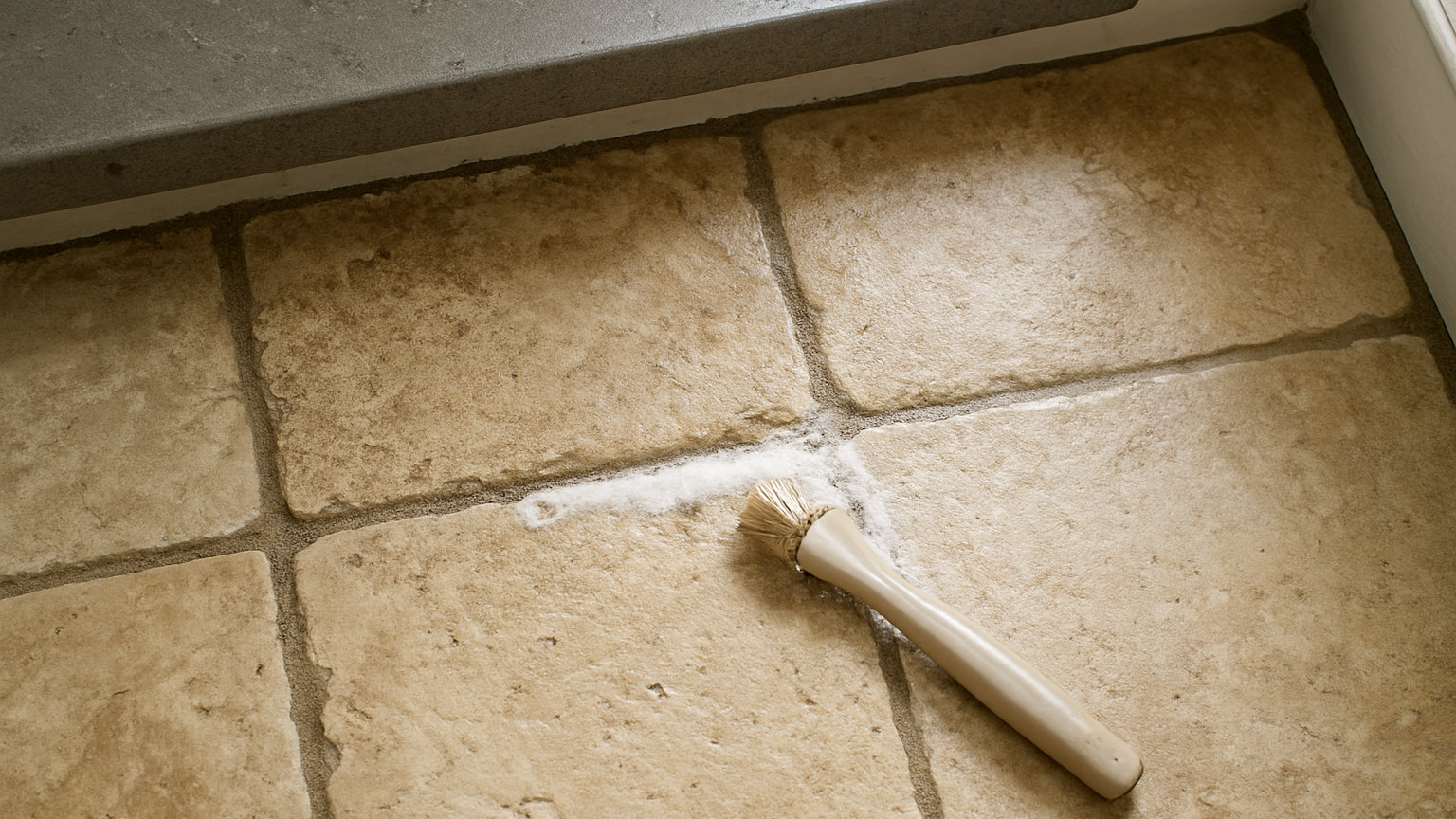
With a poultice, which draws the stain out rather than lifting it off. Mix bicarbonate of soda with water into a thick paste for organic stains, spread it over the mark, cover with cling film taped at the edges and leave for twenty four hours.
For greasy stains, use a paste made with a little washing up liquid instead. Rinse, dry and reseal the area afterwards, and repeat if it has faded rather than gone.
How do you know if it needs sealing?
The water test. Leave a few drops of water on the surface for fifteen minutes. If the stone darkens where the water sat, it is absorbing and needs sealing.
Most stone needs sealing every one to three years, and more often in a shower or on a busy floor.
How do you seal it?
Clean thoroughly and let it dry for a full day. Apply an impregnating stone sealer with a cloth or a pad, let it penetrate for the stated time, then buff off all excess before it dries on the surface.
Ventilate the room. Test in a corner first, since some sealers slightly darken certain stones, which may or may not be desirable.
What about the grout with stone tiles?
Cement grout alongside stone should be cleaned with oxygen bleach rather than acid, and sealed at the same time as the stone. A combined stone and grout sealer covers both in one application.
What about stone in a shower?
The hardest environment for it. Squeegee after every use, use a pH neutral shower cleaner, avoid bar soap which leaves scum needing acidic removal, and reseal annually. Stone in a wet area needs a genuine routine rather than occasional attention.
How do you identify what you have?
Marble and travertine have visible veining or a pitted surface; limestone is uniform and matt; slate is layered and riven; granite is speckled. If in doubt, put a drop of vinegar somewhere hidden and watch: calcium based stone will fizz faintly and dull at that spot, which identifies it and is why the test must be done out of sight.