Tiles themselves are one of the easiest surfaces in a house: glazed, non-porous and tolerant of almost everything. The grout between them is the opposite, and a tiled wall that looks dirty despite regular wiping is almost always a grout problem rather than a tile one.
What is the basic method?
- Dust or sweep first to remove loose debris.
- Wash with warm water and a mild detergent, or a cleaner suitable for the tile type.
- Work from the top down so drips run onto uncleaned areas.
- Rinse with a cloth wrung out in clean water.
- Dry and buff with a microfibre cloth.
- Treat the grout separately where it needs it.
Why does the rinse matter?
Because detergent left on tiles dries into a dull film that attracts dirt, and each subsequent clean adds another layer. A wall that looks cloudy after cleaning has residue on it rather than dirt in it.
Rinsing with clean water and buffing dry is what produces a clear finish, and it is the step most often skipped.
What is the white film in a bathroom?
Soap scum, which is a reaction between soap and the minerals in hard water. It is neither dirt nor limescale exactly, and it resists ordinary detergent because it is not water soluble.
An acidic cleaner dissolves it, which is why bathroom sprays are usually acidic. On natural stone, where acid cannot be used, a dedicated stone safe soap scum remover is needed instead.
Switching from bar soap to a liquid body wash reduces the problem considerably, since the scum comes from the soap rather than the water.
Which cleaner suits which tile?
- Glazed ceramic and porcelain – almost anything, including acidic bathroom cleaners.
- Unglazed porcelain and quarry tiles – neutral cleaners, since they are porous.
- Natural stone – pH neutral only. No acid, no vinegar, no lemon.
- Glass and mirrored tiles – glass cleaner or a vinegar solution, buffed dry.
- Metal and mosaic tiles – mild detergent, since the backing and the grout vary.
If you do not know what the tiles are, treat them as natural stone until you have tested in a hidden corner.
What should be avoided?
Abrasive powders and pads, which scratch glaze and dull polished stone. Bleach used routinely, which degrades grout over time. Wire wool. And any combination of bleach with an acidic cleaner, which releases chlorine gas.
Never mix two bathroom products, and rinse thoroughly between them if you use more than one.
How do you deal with the grout lines?
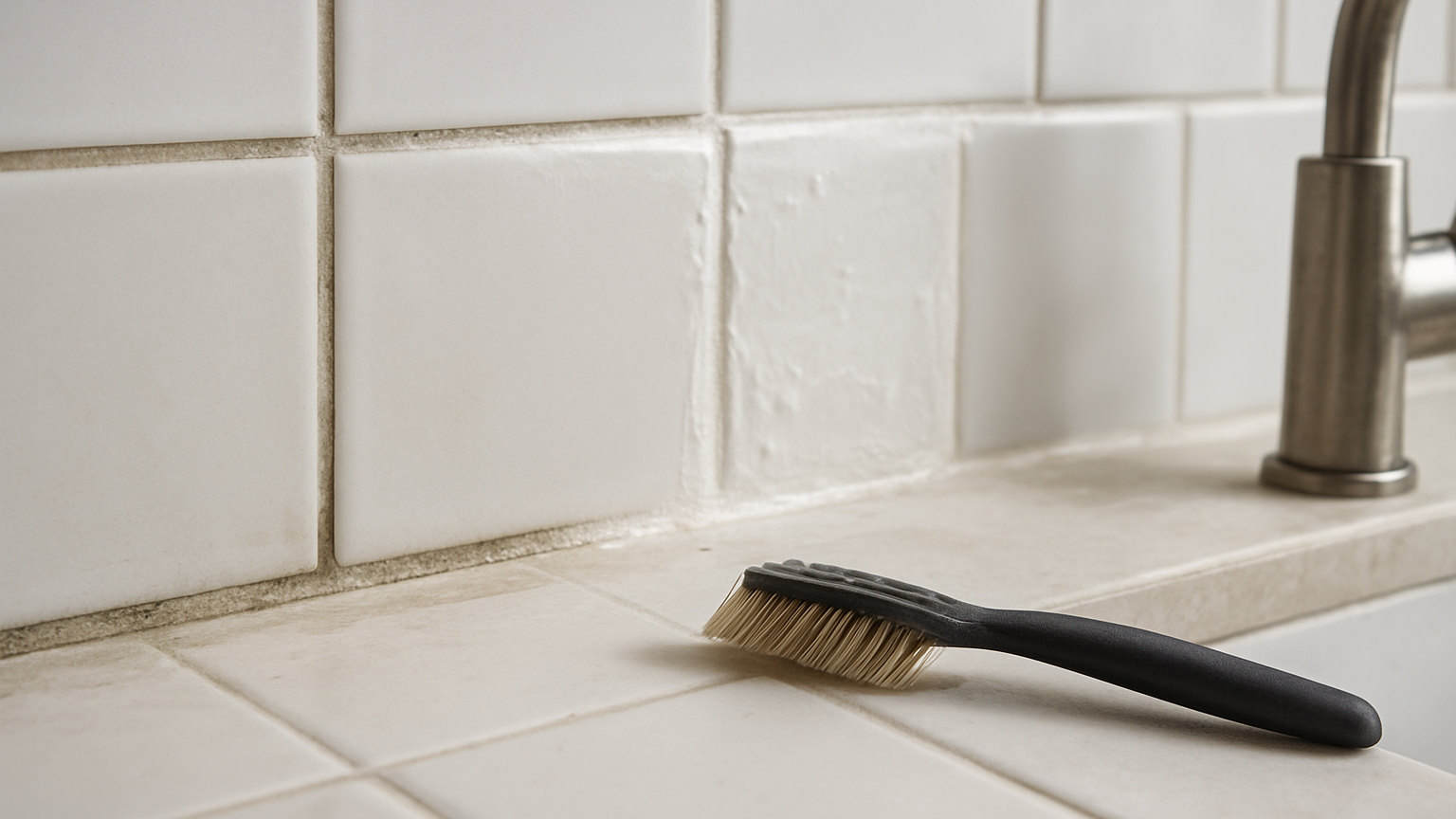
Separately and with a brush. An old toothbrush or a narrow grout brush, a paste of bicarbonate of soda or an oxygen bleach solution, worked along each line and left for ten minutes before scrubbing.
Doing the grout is what changes the appearance of a tiled wall, and doing the tiles alone rarely does.
What about tile edges and corners?
The internal corners, the joint with the bath or worktop, and the line where tiling meets a ceiling all collect residue and are usually sealed with silicone rather than grout. Those need their own treatment and are the first place mould appears.
How often?
Wipe shower tiles after use with a squeegee or a cloth, which prevents almost all soap scum and limescale. Clean properly weekly. Do the grout every month or two, and seal it annually if it is unsealed cement grout.
What makes the biggest difference?
Drying. A tiled surface that is dried after use develops neither limescale nor soap scum, because both are deposited as water evaporates. Thirty seconds with a squeegee after a shower saves most of the cleaning that follows.
Does the order of work matter?
It does. Clean the tiles before the grout, since scrubbing the grout lines pushes dirty solution back onto the tile faces. Work from top to bottom on a wall so that any drips land on areas you have not cleaned yet. And do the floor last of all, since everything that comes off the walls ends up down there.