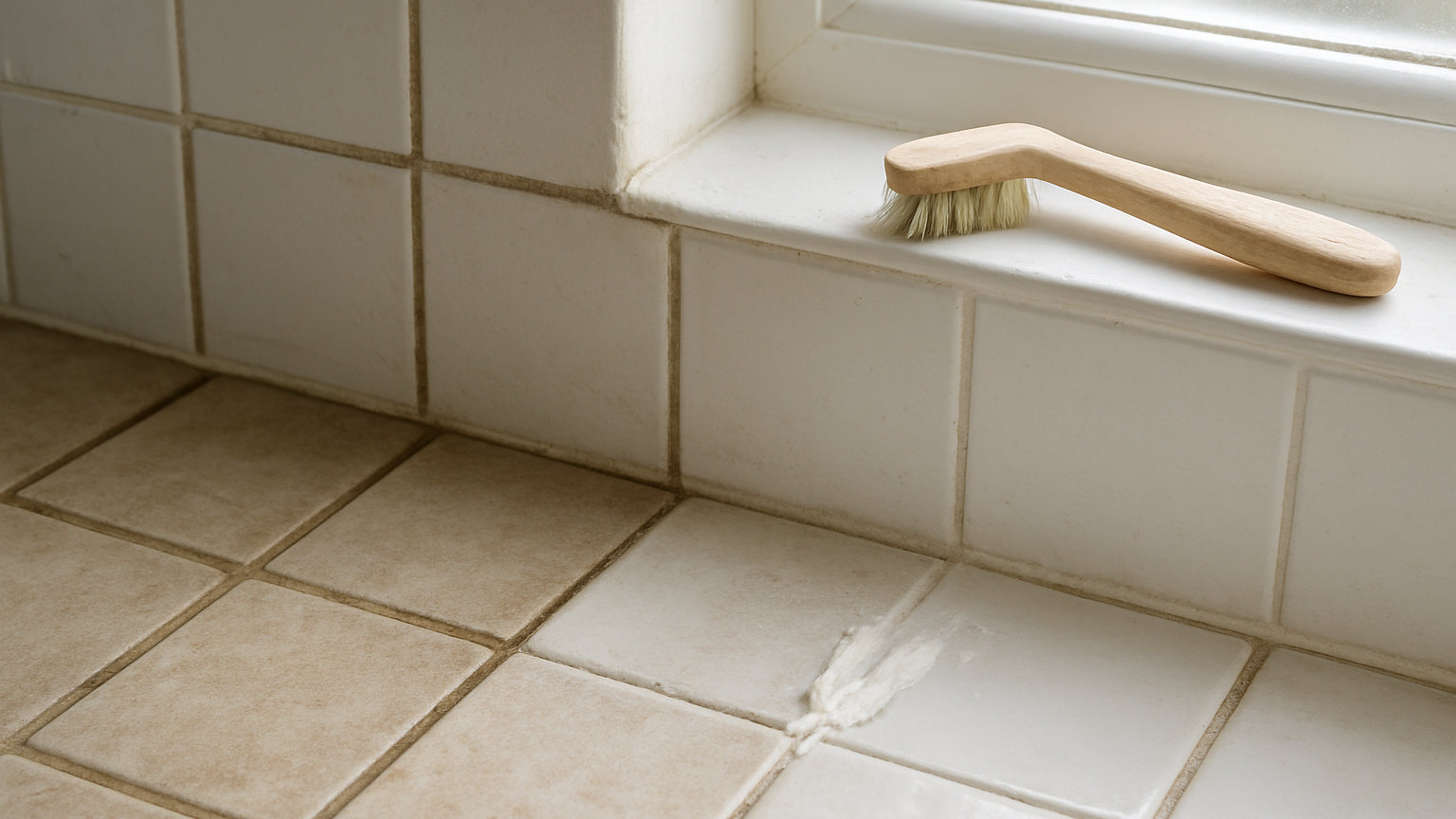
Grout discolours because it is porous cement with an open structure that absorbs whatever lands on it. What it has absorbed determines the colour, and the colour tells you what will remove it.
What does black mean?
Mould, almost always, and it appears where the grout stays wet: shower walls, around a bath, along the bottom of a splashback. It is growth rather than dirt, and it needs an antifungal treatment rather than a detergent.
Oxygen bleach, a dilute chlorine bleach solution or a proprietary mould cleaner, applied and left in contact for fifteen minutes, deals with surface growth. Black that returns within weeks has penetrated and the grout needs replacing.
What does grey or brown mean?
General soil: dirt, skin cells, body oils and soap residue absorbed into the pores. On floors it is walked in dirt combined with mop water that has been pushed into the grout rather than lifted out.
Oxygen bleach with a proper contact time and a stiff brush handles it, and it usually needs two treatments on a floor that has never been done.
What does orange or pink mean?
Usually a bacterial film, common in showers, which forms a pink or orange slime rather than a stain. It wipes off easily and returns quickly if the area stays damp.
It can also be iron in the water supply or rust from a metal item left standing, which needs a rust specific treatment rather than a detergent.
What does white or chalky mean?
Either limescale from hard water or efflorescence, which is mineral salts migrating out of the grout as it dries. Efflorescence is common on new tiling and on floors over a damp substrate.
Limescale responds to a mild acid used once rather than routinely. Efflorescence usually brushes off dry and returns until the underlying moisture stops, which on a floor may mean a damp problem below.
Why is grout so vulnerable?
Because standard cement grout is a porous material with a rough open surface sitting in a recess below the tile. Liquid runs into it, dirt settles in it, and it holds moisture. Everything about its position and its structure works against it.
Epoxy grout is non-porous and largely avoids these problems, and it is harder to install and considerably more expensive.
What makes it worse?
- Not sealing it after installation or after cleaning.
- Acidic cleaners used routinely, which erode the surface and increase porosity.
- Dirty mop water on floors, which deposits directly into the lines.
- Poor ventilation in a bathroom, which keeps it permanently damp.
- Bar soap, which produces the scum that feeds mould.
- Abrasive cleaning, which roughens the surface.
How do you stop it recurring?
Clean it properly once, let it dry thoroughly for at least twenty four hours, then seal it with a penetrating grout sealer. Sealed grout resists absorption and cleans with a wipe rather than a brush.
Reseal annually in a shower and every two to three years elsewhere. Ventilate the bathroom properly, and squeegee the walls after showering.
Can discoloured grout be recoloured?
Yes. A grout pen covers the surface with a coloured sealer and is a quick cosmetic fix that lasts a year or two. A proper grout colourant seals and recolours in one and lasts considerably longer.
Both need the grout cleaned and dry first, and neither will hold over active mould or crumbling grout.
When is it beyond cleaning?
When it is crumbling, cracked, missing in places, or when black growth returns within a fortnight of a thorough clean. At that point the material has failed and raking it out and regrouting is the answer.
Does new grout discolour faster?
It can, if it was never sealed. Fresh grout is at its most absorbent in the first months, and a shower used daily will mark it quickly. Seal it once it has fully cured, which is usually two to three weeks after installation, and it starts from a far better position.