Behind a small flap at the bottom front of almost every front loading washing machine is the pump filter. It catches coins, hair grips, tissue, buttons and lint before they reach the pump, and it holds standing water. A great many machines have never had it opened, and it is one of the most common causes of both smells and drainage faults.
Where is it?
Bottom front, behind a small hinged flap or a removable panel, usually at one corner. Some machines have it behind the kickboard panel instead. Beside it there is often a short drain hose with a cap, which is there specifically to let you empty the water first.
How do you avoid flooding the floor?
- Switch the machine off at the wall.
- Lay old towels down in front of it.
- Have a shallow tray, a roasting tin or a baking tray ready, since there is no room for a bucket.
- If there is a small drain hose, pull it out, uncap it into the tray and let it empty, replacing the cap to swap trays.
- If there is no hose, unscrew the filter slowly, a quarter turn at a time, letting the water out gradually.
- Expect a litre or more, sometimes considerably more if the machine has not drained.
Tilting the machine backwards slightly, with someone holding it, gets the last of it out.
How do you clean it?
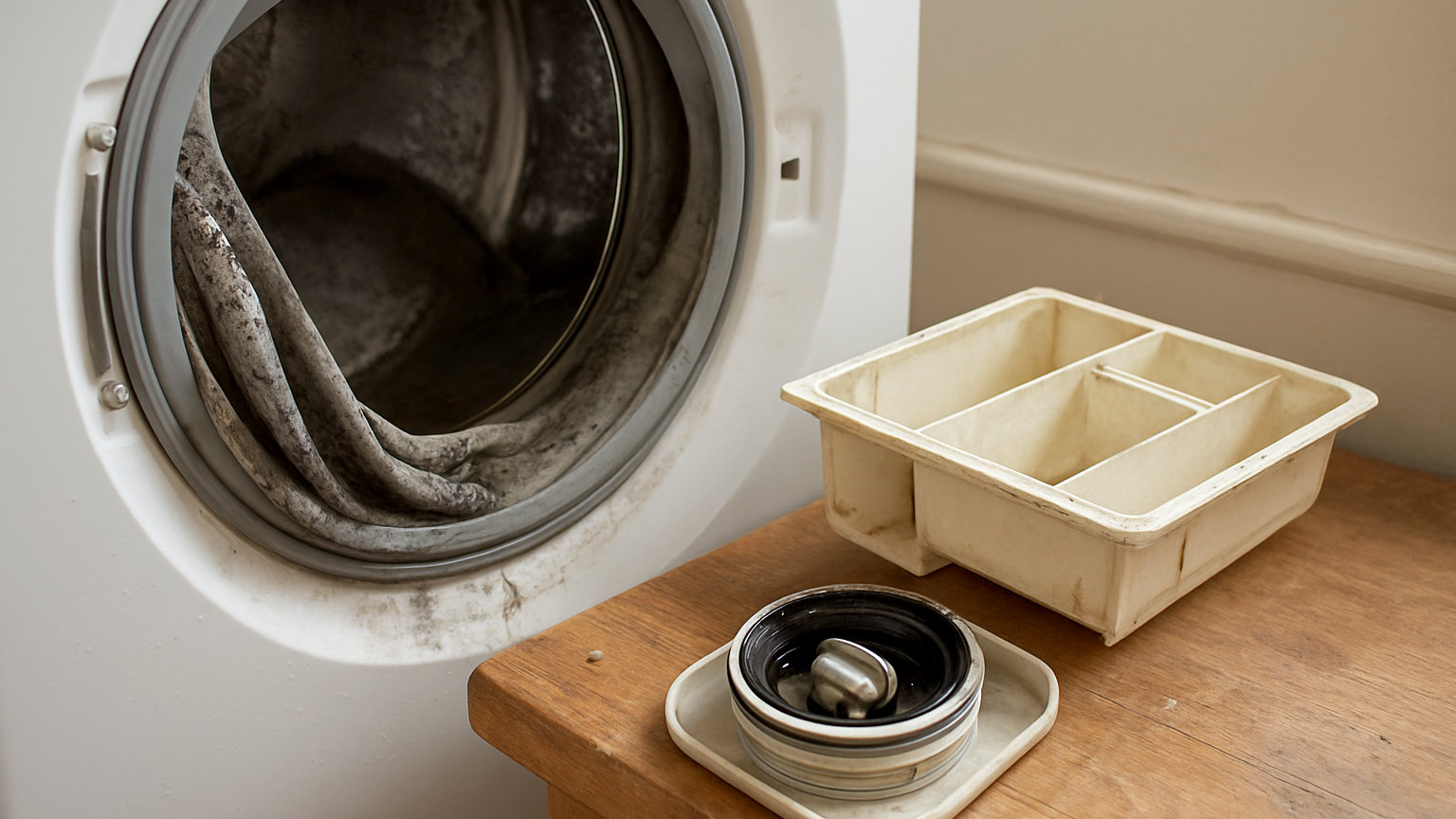
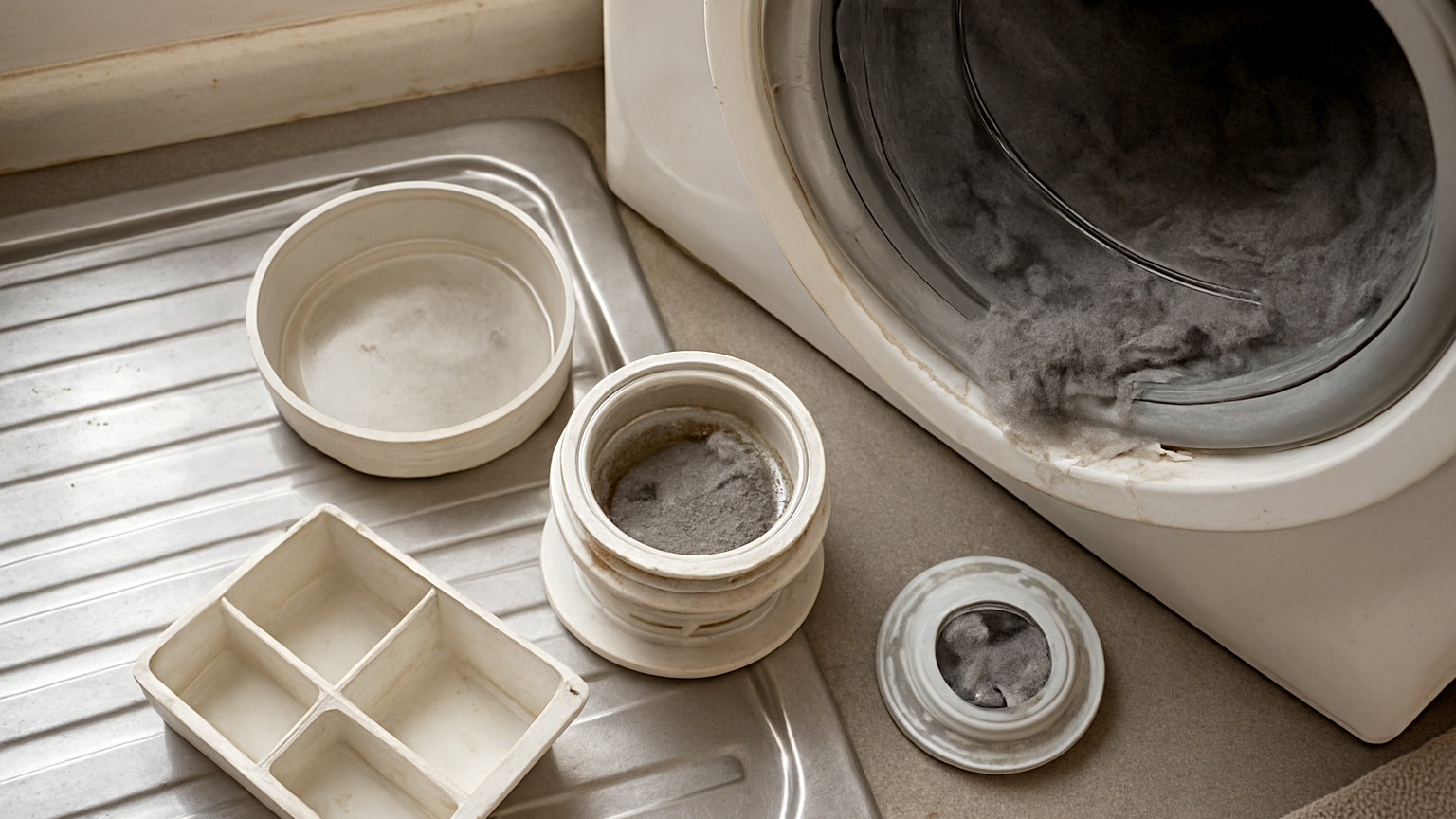
Unscrew the filter completely, usually anticlockwise. Pull out whatever is caught in it by hand, then rinse it under a hot tap and scrub the mesh with an old toothbrush.
Reach into the housing with a finger or a cloth and clear any debris in there as well, and check the impeller behind it turns freely. Remove anything wrapped around it.
Check the filter seal or O-ring for damage before refitting, since a perished seal causes a leak.
How tight should it go back?
Firmly by hand, until it seats, and no tighter. Cross threading it is easy and expensive. Make sure it is fully home and that the seal is seated, then run a short rinse cycle and check underneath for leaks before putting the towels away.
What will you find in there?
Coins, hair grips, buttons, bra underwires, screws, tissue pulp, hair, lint and a quantity of grey slime. The slime is biofilm, and it smells.
A bra underwire is worth mentioning separately, since it is the item most likely to get past the filter and jam the pump or puncture the drum.
How often should it be done?
Every two to three months for an average household, and more often if you wash a lot of towels, pet bedding or anything that sheds. Immediately if the machine is draining slowly, stopping mid cycle, leaving water in the drum, or making a grinding noise during the spin.
Do all machines have one?
Most front loaders do. Many top loaders have a lint filter inside the drum instead, and some integrated and newer machines have self cleaning pump systems with no accessible filter. Check the manual rather than dismantling anything.
If there is no flap at the front, do not remove the front panel to find it.
What if something is stuck?
An object jammed in the pump impeller, visible through the filter housing, can sometimes be worked free with fingers or long nosed pliers with the power off. Anything beyond reach, and any machine still not draining after the filter is clear, needs an engineer rather than further dismantling.
What about the smell from the filter?
Standing water in the filter housing between cleans goes stagnant, and the slime that builds up there is one of the more overlooked sources of a washing machine smell. Cleaning the filter regularly deals with it. A machine that smells worst when you open the filter flap is telling you something.
Should the machine be run afterwards?
Run a short rinse or spin cycle once the filter is back in and watch the floor in front of the machine. A filter that has not seated properly, or a perished O-ring, produces a leak that only shows once water is moving, and it is far better to find it with the towels still down.