A washing machine that smells has a layer of biofilm somewhere in it: a greasy grey deposit of detergent residue, fabric conditioner, body oils and lint, with bacteria living in it. The reason it has become so common is that modern washing habits create almost perfect conditions for it.
What causes it?
- Washing at 30 degrees, which is not warm enough to clear the residue or the bacteria.
- Liquid detergent, which contains no oxygen bleach, unlike powder.
- Fabric conditioner, a waxy product that coats surfaces and feeds growth.
- Too much detergent, which leaves residue rather than rinsing away.
- The door shut between washes, keeping the interior damp.
- Wet washing left in the drum after a cycle.
All six are entirely normal modern habits, which is why the problem is so widespread.
Where is the smell coming from?
In order of likelihood: the door seal fold, the filter, the detergent drawer housing, the drum outlet and internal pipework, and the drain hose.
Work through them in that order rather than running cleaning cycles and hoping, since a maintenance wash does nothing for a filter full of slime.
What is the sequence to clear it?
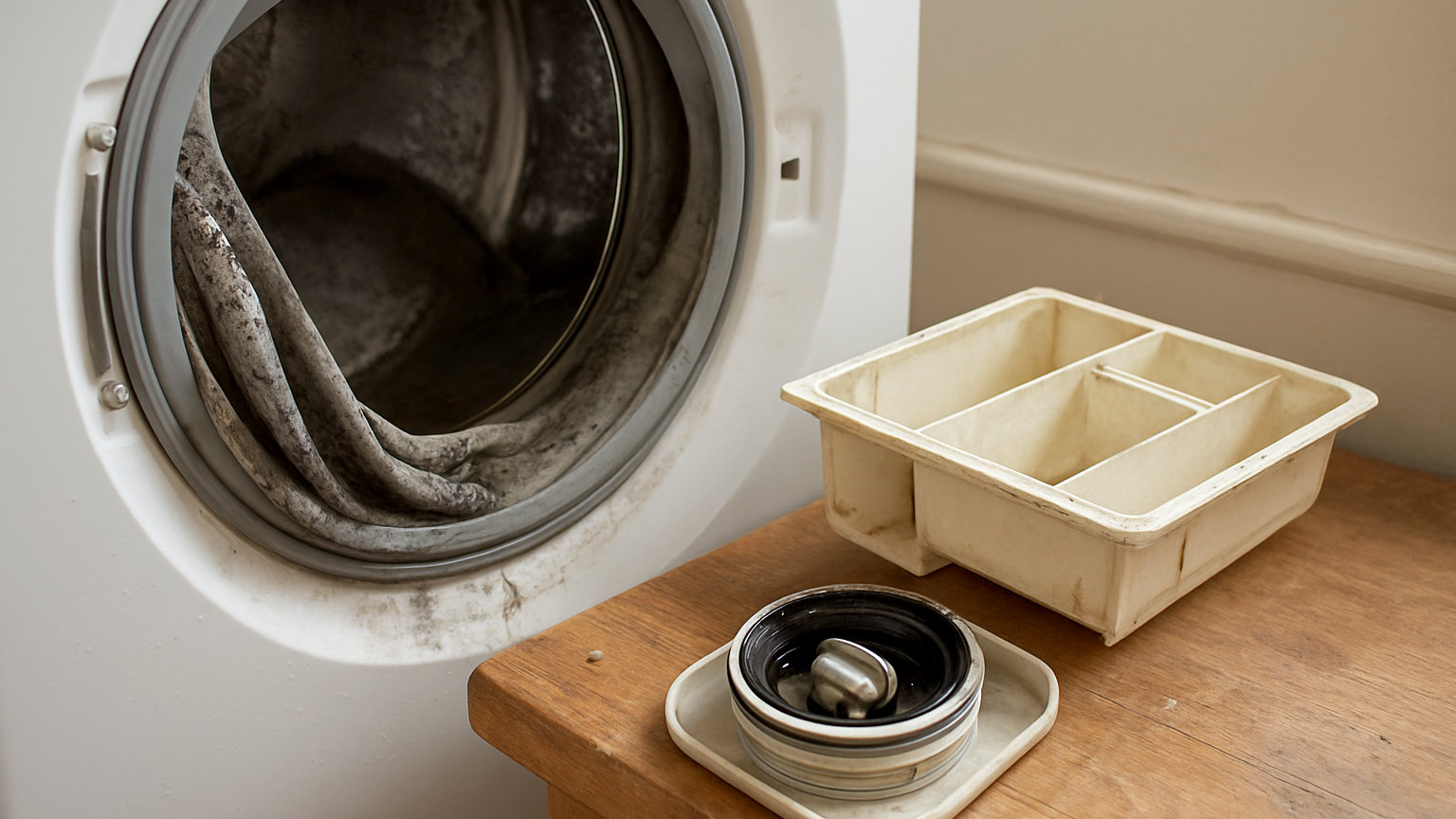
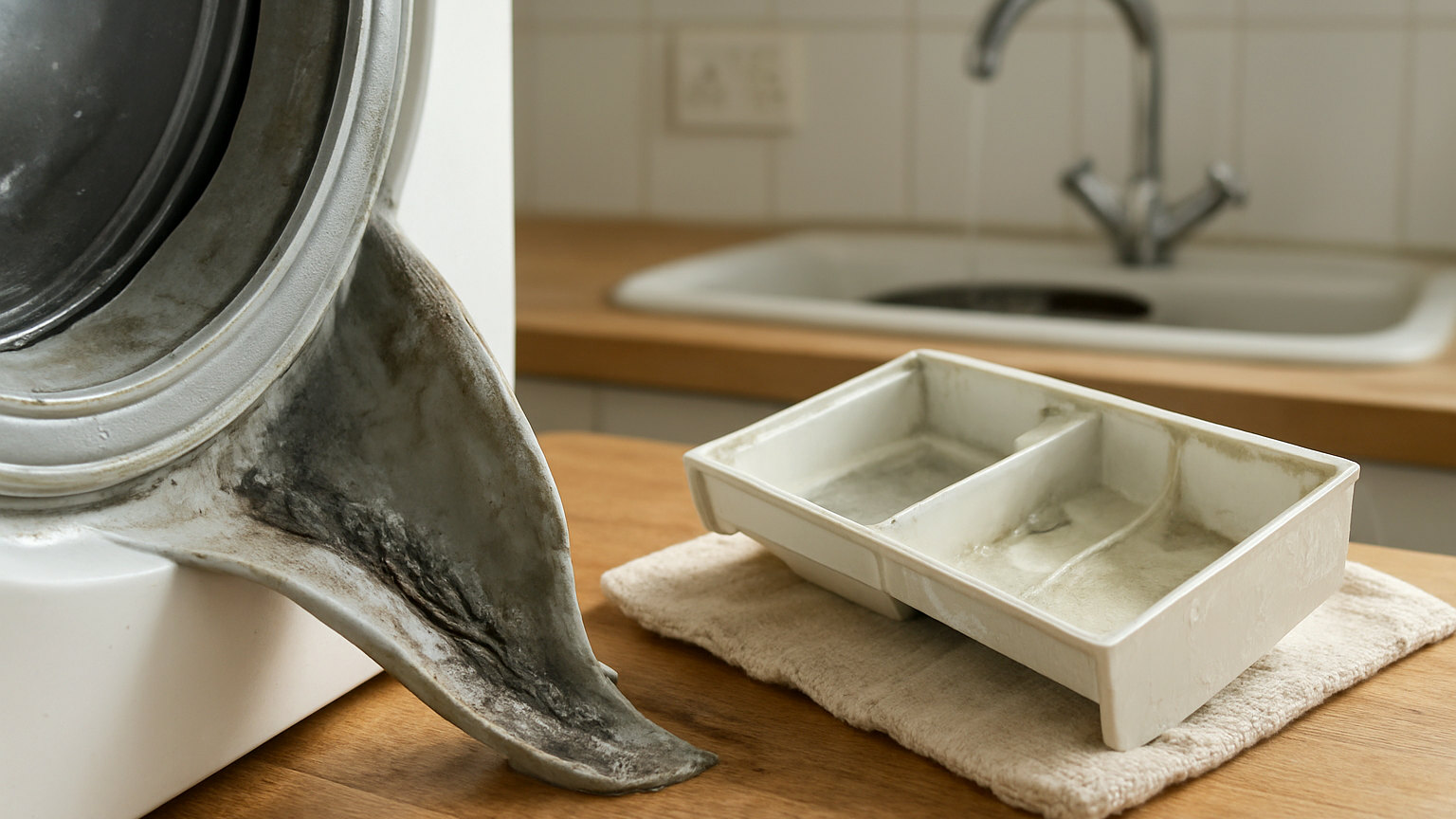
- Pull back the door seal, remove the debris and clean into the fold, then dry it.
- Open the filter, drain it into a tray, clean the filter and the housing.
- Remove the detergent drawer and clean it and the cavity behind it.
- Run an empty cycle at 90 degrees with a large dose of powder detergent or a machine cleaner.
- Run a second hot cycle with two cups of white vinegar if the smell persists.
- Leave the door and drawer open to dry.
Why does a hot cycle work when normal washing does not?
Because 30 and 40 degree washes leave the biofilm intact, and it accumulates week by week. A cycle at 60 degrees or above, with an oxygen bleach containing detergent, breaks it down and kills the bacteria in it.
The washes that clean your clothes are not cleaning the machine, which is the core of the problem.
What if it still smells?
Check the drain hose. A hose that is kinked, sagging into a loop that holds water, or pushed too far into a standpipe will hold stagnant water and smell. So will a blocked sink trap if the machine drains into one.
Also check under the machine and behind it, since a slow leak produces a damp smell that is easily blamed on the machine itself.
Why do clothes smell after washing?
Usually the same biofilm transferring onto the load, and it shows most on towels and sportswear. The characteristic sign is washing that smells fine when it comes out and develops a damp smell within hours of drying.
Clearing the machine fixes it. Running the affected items through a hot wash with powder detergent afterwards deals with what is already in the fabric.
How do you prevent it returning?
Run one wash a month at 60 degrees or above. Use powder detergent at least some of the time. Stop using fabric conditioner, or halve the dose. Use the correct amount of detergent rather than more. Leave the door and drawer ajar between washes. Take washing out promptly.
Does it matter beyond the smell?
Biofilm holds bacteria, it can transfer onto clothing, and a heavy build up eventually restricts the drain and the pump. It is worth clearing on those grounds rather than only because of the smell, and the routine that prevents it takes almost no time.
How long does it take to clear?
A thorough hand clean plus one hot cycle usually makes a noticeable difference on the same day. An established build up in a machine that has never been cleaned may need two or three hot cycles over a fortnight, with the seal and the filter checked again between each one, since the deposits loosen gradually rather than all at once. Judge progress by smelling the seal fold rather than the drum.