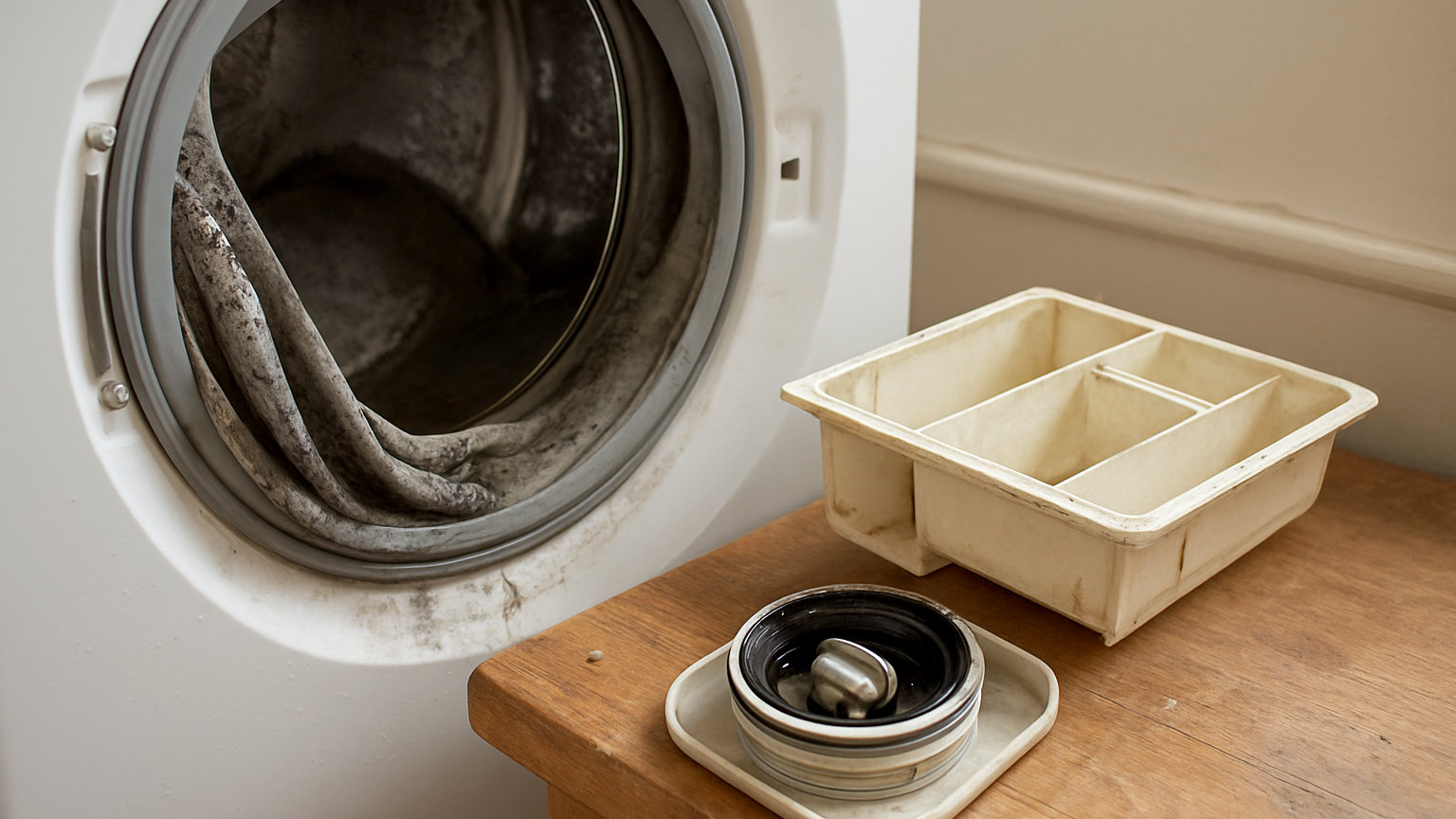
A front loading washing machine that is closed after a cycle stays damp inside. Water remains in the door seal fold, in the drum outlet and in the pipework, and with the door shut there is no airflow to dry any of it. That is the condition mould and biofilm need, and leaving the door ajar is the simplest thing that prevents it.
How far open?
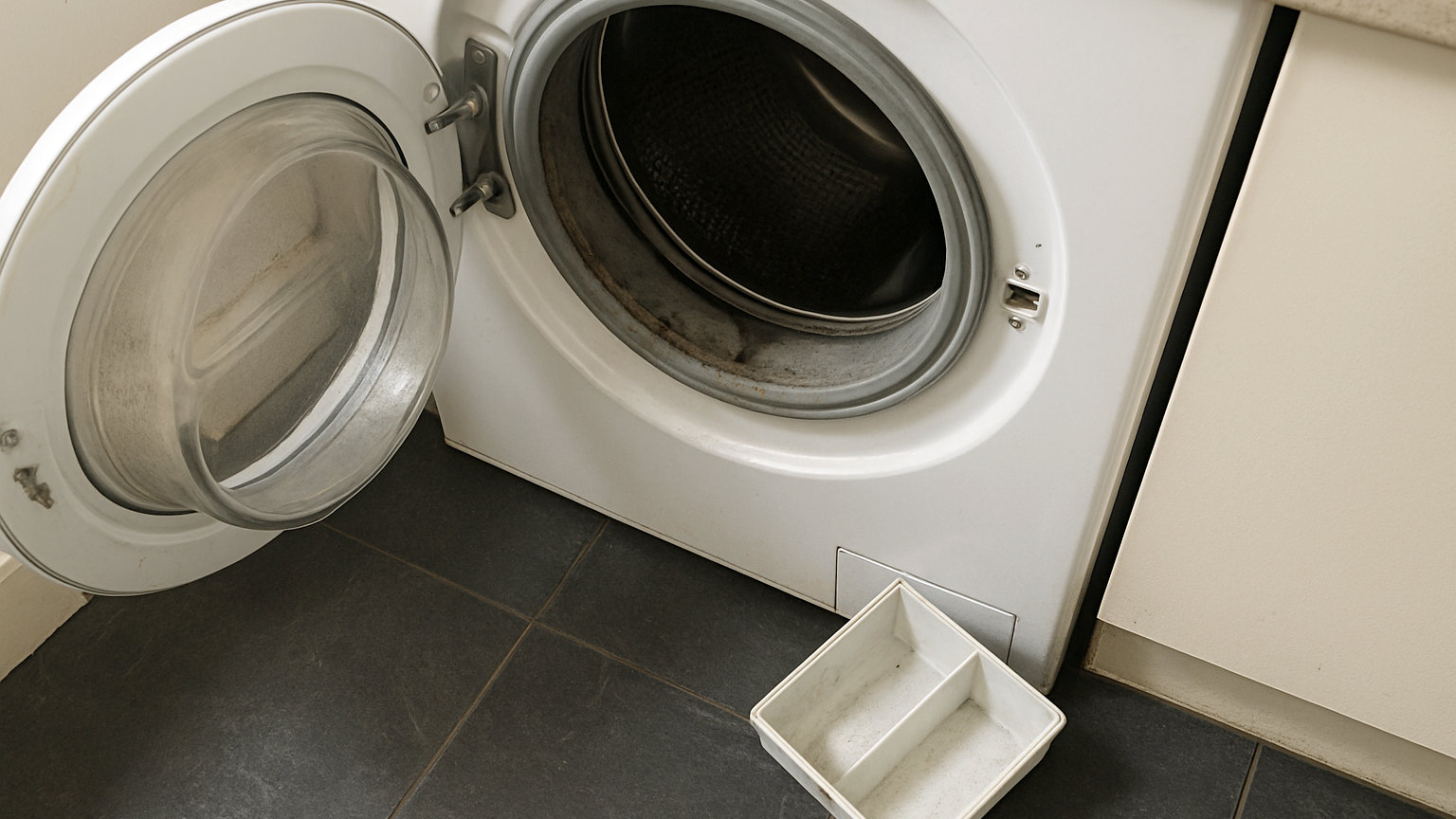
Not far. A few centimetres is enough to let air circulate. The door does not need to be swung wide, which is impractical in most utility rooms and a hazard in a kitchen walkway.
The detergent drawer should be left slightly open too, for the same reason, since the cavity behind it is where a great deal of residue forms.
Is there a downside?
Two practical ones. A door sticking out into a walkway is something to walk into, particularly in a narrow kitchen. And an open door and drum is accessible to small children and pets.
Both are real considerations and neither means the door should be closed tight.
What about child and pet safety?
This matters and should be taken seriously. A washing machine drum is an enclosed space a small child or a cat can climb into, and there have been serious incidents. Where there are young children or pets in the house, the safe approach is to leave the door ajar only while the room is supervised, and to close it otherwise.
Many machines have a child lock. Some have a catch that holds the door slightly ajar without leaving it openable.
What if you cannot leave it open?
Do three things instead. Wipe the seal fold dry with a towel after the last wash of the day. Take the washing out promptly rather than leaving it in the drum. And run a hot maintenance wash monthly rather than occasionally.
The towel wipe is the important one, since the seal fold is where the water actually sits.
Does it help with the smell?
Considerably, and it is the cheapest measure available. A machine left to dry between washes develops biofilm far more slowly than one kept closed, and households that adopt the habit usually notice the difference within a few weeks.
It will not clear an existing build up, which needs the seal, drawer and filter cleaning and a hot cycle.
Does it harm the seal?
No, and it helps. A seal that is permanently compressed against the door stays wet and degrades faster. Leaving the door ajar relieves the compression and lets the rubber dry.
A door left fully open for long periods can strain the hinge on some machines, which is another argument for a few centimetres rather than wide open.
What about top loaders?
The same principle. The lid should be left open after a cycle so the drum dries. Top loaders are generally less prone to the seal problem, since they have no front door gasket, and the drum still benefits from airflow.
What else should be left open?
The detergent drawer, always. A dishwasher benefits from the same treatment. And in a small utility room, leaving the room door open or running the extractor for a while after a wash helps, since the humidity from a machine cycle has to go somewhere.
What is the whole habit?
After the last wash of the day: take the washing out, wipe the seal fold with a towel, leave the door and drawer ajar. It takes fifteen seconds and it prevents the most common washing machine problem there is.
How long does washing keep in the drum?
A couple of hours at most before it starts to smell, and less in a warm room. Damp fabric packed together is exactly the condition bacteria need, and washing left overnight in the drum will usually need running again. Setting a delay start so a cycle finishes when you are home to unload is a better arrangement than washing overnight.