Chopping boards are the kitchen item most directly involved in cross contamination, and the two common materials need completely different care. Wood should never be soaked or put in a dishwasher; plastic benefits from both.
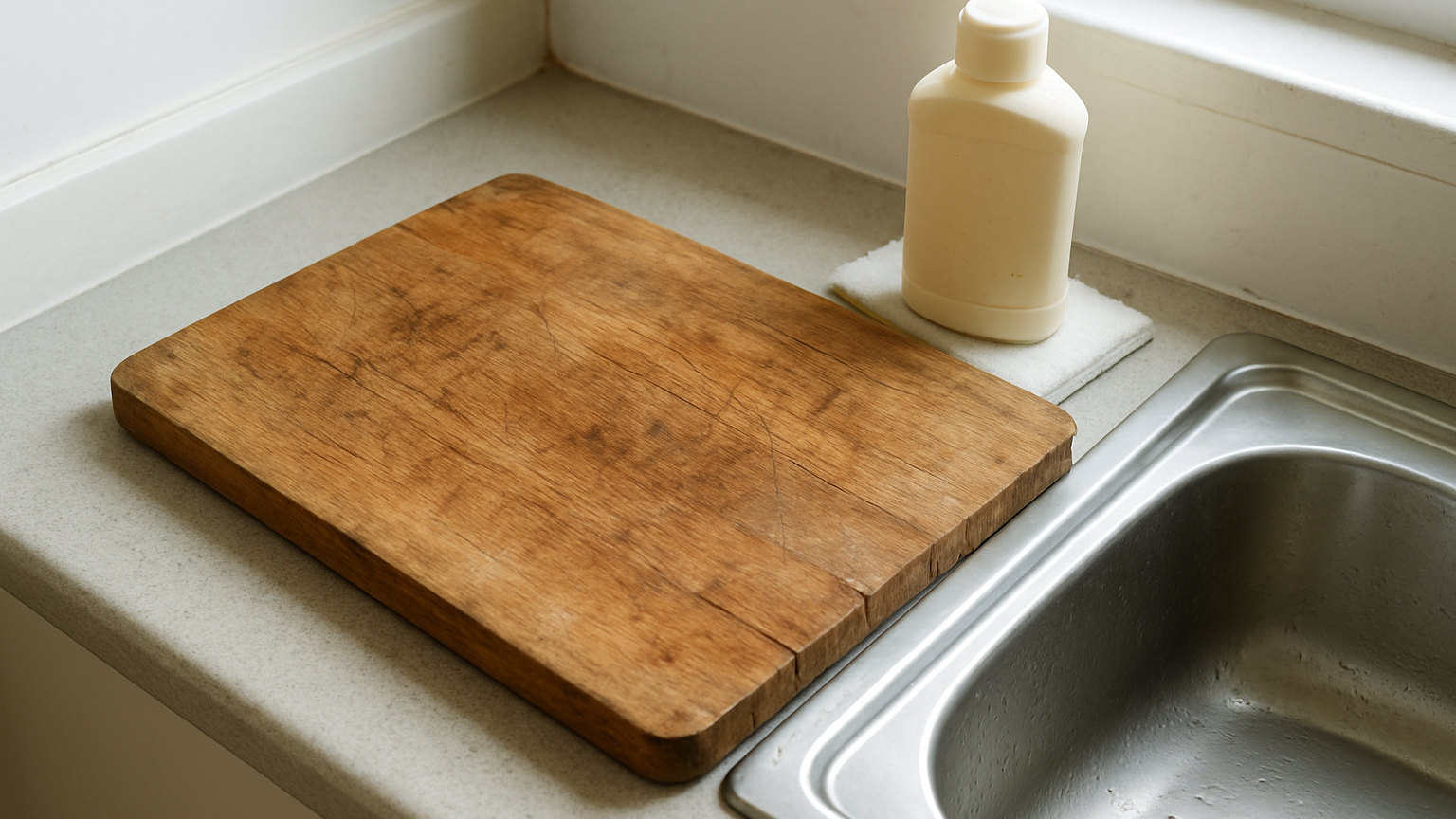
How do you clean a wooden board?
- Scrape off debris and rinse under hot running water.
- Wash with hot soapy water and a brush, working with the grain.
- Rinse and dry immediately with a cloth.
- Stand it on edge to finish drying, never flat on a worktop.
- Oil it periodically with food safe mineral oil or a board oil.
Never soak a wooden board, never put it in a dishwasher, and never leave it lying flat while wet. All three cause warping, splitting and the joints opening up.
How do you clean a plastic board?
Hot soapy water, or the dishwasher, which is the easier and more thorough option. A dishwasher cycle at 60 degrees or above deals with bacteria effectively.
For stains and smells, make a paste of bicarbonate of soda, scrub it in and leave it for fifteen minutes, then rinse. A dilute bleach solution can be used on plastic, rinsed very thoroughly afterwards.
Which is more hygienic?
Not the answer most people expect. Research has repeatedly found that wooden boards perform at least as well as plastic, and often better. Bacteria drawn into the wood fibres do not survive well and do not transfer back readily, whereas a scored plastic board holds bacteria in the knife grooves where they persist.
What matters far more than the material is the condition. A deeply scored board of either type is difficult to clean properly and should be replaced.
What about knife grooves?
They are the real problem on any board. Deep cuts hold residue that a brush cannot reach and that a dishwasher cycle will not always clear.
A wooden board can be sanded flat and re-oiled, which restores it completely. A plastic board cannot and should be replaced when it becomes heavily scored.
How do you avoid cross contamination?
- Use separate boards for raw meat and for ready to eat food, colour coded if possible.
- Wash between uses, not just at the end.
- Do raw meat last where you only have one board, or prepare vegetables first.
- Never put cooked food back onto a board that has held raw meat.
- Wash the worktop underneath as well, since boards slide.
How do you deal with stains?
Bicarbonate of soda paste, scrubbed in and left, deals with most. For beetroot, turmeric and berry marks, a scrub with half a lemon dipped in coarse salt works well on wood and adds a mild bleaching effect.
Sunlight fades remaining stains on both materials, and a day outside does a surprising amount.
How do you deal with smells?
Onion, garlic and fish are the usual culprits. Scrub with coarse salt and half a lemon, rinse and dry. A bicarbonate paste left for half an hour also works.
A smell that persists on a wooden board usually means it needs sanding and re-oiling, since the residue is in the surface layer.
How do you oil a wooden board?
Use food safe mineral oil or a proprietary board oil. Apply generously with a cloth, leave it for a few hours or overnight to soak in, then wipe off the excess.
Never use vegetable or olive oil, which go rancid. Oil monthly for a board in regular use, or whenever the wood looks dry and pale.
When should a board be replaced?
When plastic is deeply scored or warped so it no longer sits flat. When a wooden board has splits, open joints or persistent black staining. Or when either has a crack, which cannot be cleaned.
What about glass and bamboo boards?
Glass is easy to clean and hygienic, and it destroys knife edges quickly and is unpleasant to work on. Bamboo is harder than most timber and blunts knives faster than wood, though it resists scoring well. Both are washable, and neither is a good surface for a knife you care about.