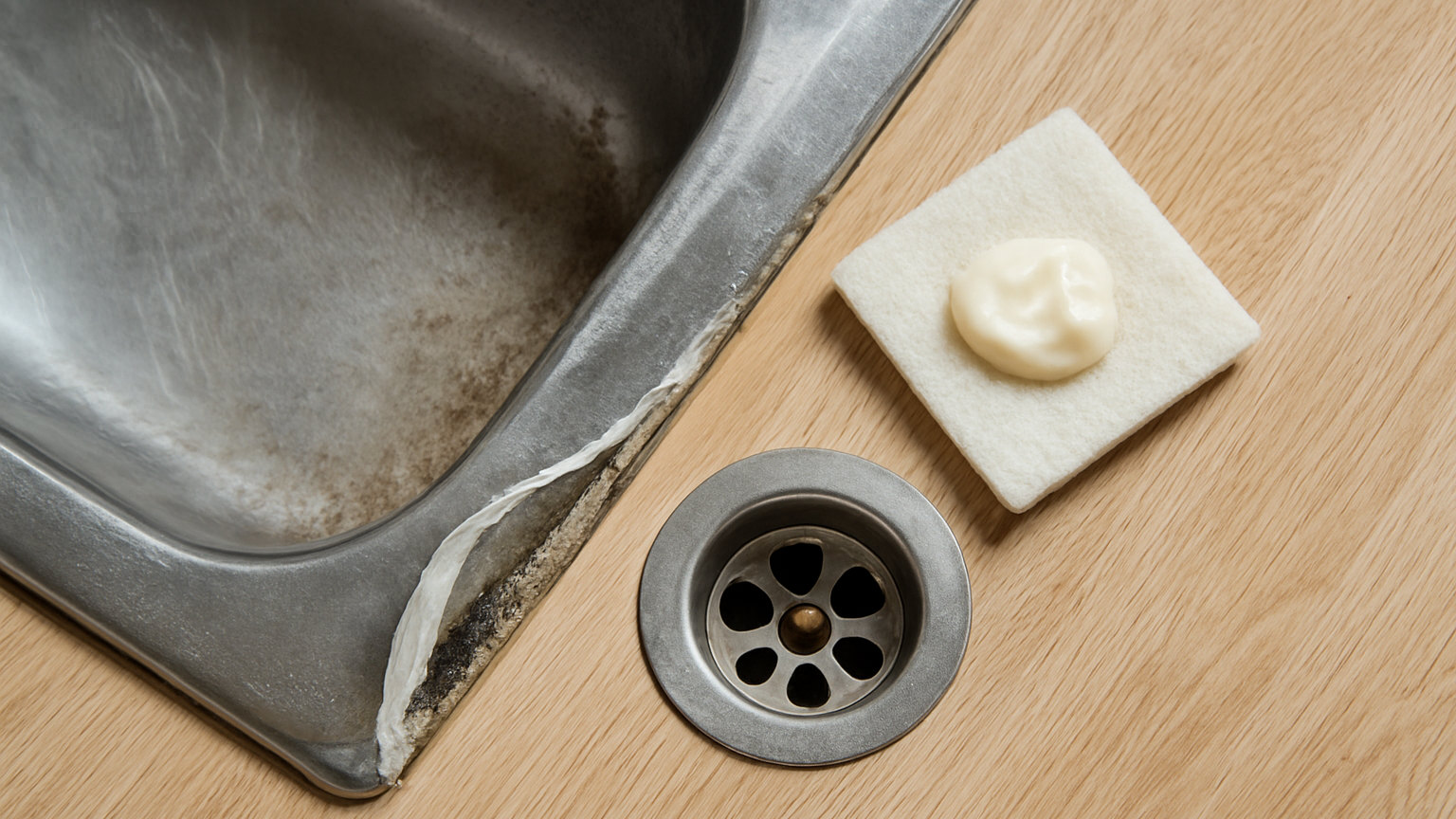
The bead of silicone where a sink meets a worktop is not decorative. It is the only thing stopping water reaching the cut edge of the worktop underneath, and on a laminate worktop that means the difference between a sound surface and one that swells and has to be replaced.
Why does it get mouldy?
Because it is permanently wet. Water pools along the joint after every use, soap residue and food debris collect there, and the silicone provides a surface that mould establishes on readily.
The bottom edge of a sink and the corners are worst, since water runs there and stays.
What is the cleaning method?
- Clean the area with hot soapy water and an old toothbrush first.
- Soak strips of kitchen paper in a bleach based cleaner or a dilute bleach solution.
- Lay the strips along the sealant line and press them into contact.
- Leave for a few hours, re-wetting if they dry out.
- Remove, scrub gently, and rinse thoroughly with clean water.
- Dry the whole line with a cloth.
The contact time is what does the work. Spraying and wiping after a minute achieves very little on established growth.
Ventilate the room, and never use a bleach product alongside any acidic limescale cleaner.
Will the black come out?
Surface growth will. Growth that has penetrated the silicone will lighten to grey and come back within a few weeks, because it is inside the material and nothing applied to the outside can reach it.
That is the signal that the sealant needs replacing rather than cleaning again.
When should it be replaced?
- When black returns within a few weeks of a thorough clean.
- When the silicone is lifting, splitting or peeling away at an edge.
- When there is any gap you can see daylight or push a fingernail into.
- When the worktop beneath shows any darkening or swelling.
- When it has gone hard, yellow and brittle.
How do you replace it?
- Cut along both edges of the old bead with a sharp blade and pull it away.
- Remove every trace with a silicone removal tool and a solvent remover.
- Clean the joint with a fungicidal wash.
- Let it dry completely, which matters more than any other step.
- Mask both sides with tape for a clean line.
- Apply a mould resistant sanitary silicone in one continuous bead.
- Smooth it, remove the tape immediately, and leave it to cure before using the sink.
What about the worktop edge underneath?
Worth inspecting whenever the sealant is replaced. Open the cupboard and look at the underside of the cut edge around the sink for staining, darkening or swelling.
Early swelling on a laminate worktop cannot be reversed, and catching it means resealing properly before it spreads. Left, it eventually lifts the laminate.
What about the sink clips?
An inset sink is held by clips underneath that can loosen over time, letting the sink rise slightly and breaking the seal. Check and tighten them while you are under there, since a loose sink will pull any new sealant apart.
How do you keep it clean?
Wipe the sealant line dry after washing up, which takes seconds and prevents almost all growth. Clean it properly once a month, before anything is visible rather than after.
Sealant that is wiped dry regularly lasts years longer than sealant that is rescued twice a year with bleach.
What about the tap base and the upstand?
Both collect the same water and need the same treatment. The joint behind a sink where the worktop meets the wall is another route for water into the core, and it should be sealed and checked on the same schedule.
What about a sink that sits on top?
Belfast and butler sinks have a different arrangement, where the worktop meets the sink at a cut edge that is often more exposed. Those edges need sealing thoroughly and checking regularly, particularly on wood, where the constant splashing at that joint is the area most likely to fail first.