Worktop stain removal depends almost entirely on the material. On a non-porous surface the stain is sitting on top and can be lifted. On a porous one it has gone in, and the treatment has to draw it back out. Using the wrong approach, particularly an acid on stone, turns a stain into permanent damage.
What works on laminate?
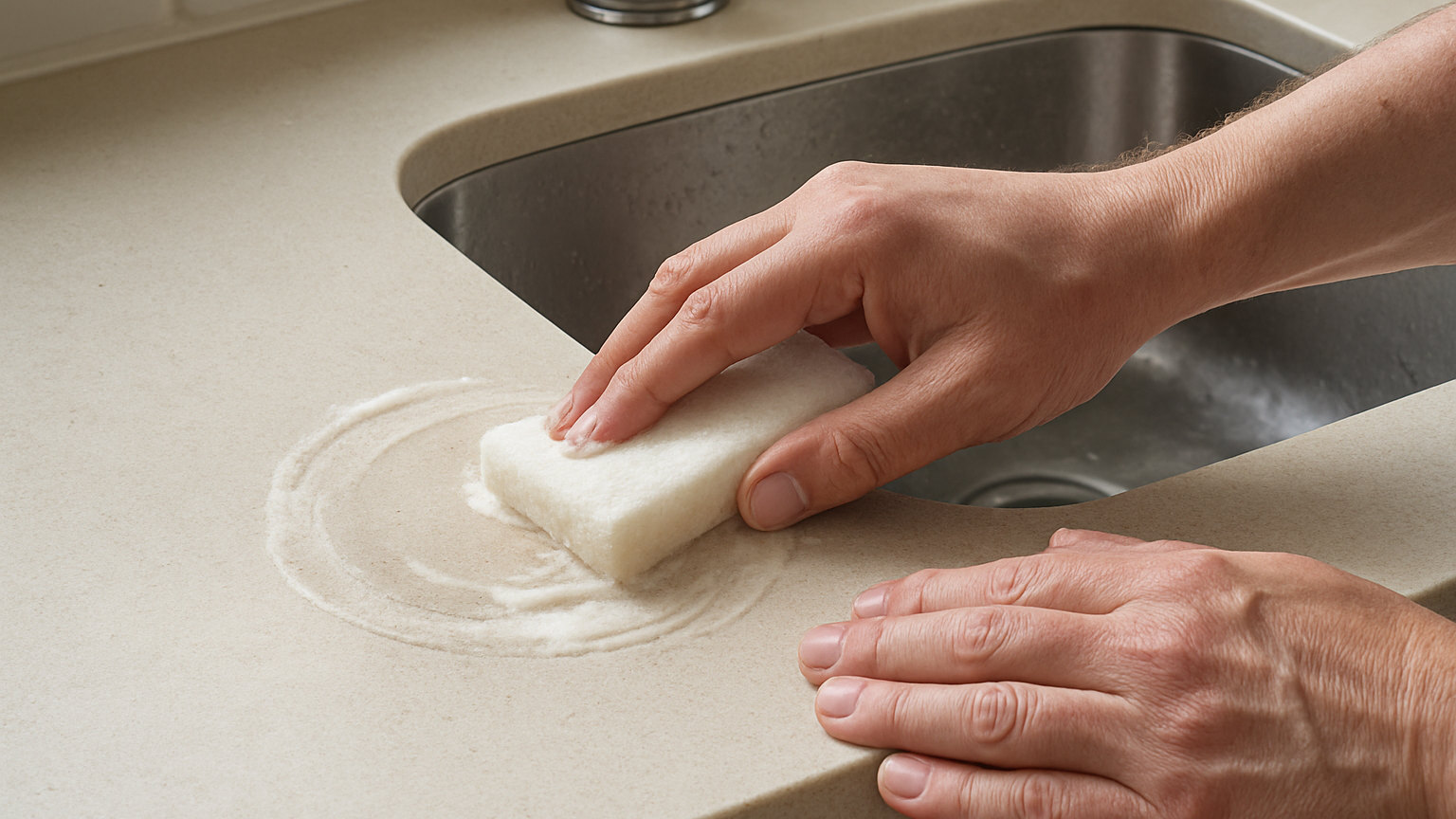
Non-porous, so most marks come off with washing up liquid and a soft cloth. For anything stubborn, a cream cleaner or a paste of bicarbonate of soda left for fifteen minutes.
A melamine sponge used lightly clears scuffs and can dull a gloss finish, so test in a corner first. Avoid bleach on coloured laminate, which fades it.
What works on quartz?
Also non-porous. Washing up liquid first, then a paste of bicarbonate of soda for organic stains, left for thirty minutes and wiped away with a soft cloth.
Never use vinegar, lemon or any acidic cleaner, which damages the resin. Never use bleach, which discolours it. A proprietary quartz cleaner handles anything the above does not.
What works on granite and natural stone?
A poultice, which draws the stain out rather than lifting it off.
- Mix bicarbonate of soda with water into a thick paste for an organic stain such as tea, wine or fruit.
- For a greasy stain, use a paste made with a little washing up liquid instead.
- Spread it over the mark about a centimetre thick, extending beyond the edges.
- Cover with cling film and tape the edges down.
- Leave for twenty four hours.
- Remove, rinse, dry and reseal that area.
- Repeat if the stain has faded but not gone.
What works on wood?
Sanding, which is the great advantage of a wooden worktop. Fine paper, working with the grain, feathered into the surrounding area, then re-oiled.
Black marks on oak are a tannin and iron reaction and respond to oxalic acid wood bleach, followed by sanding and oiling.
What causes the common stains?
- Turmeric and curry – a genuine dye. Bicarbonate paste, then sunlight, which breaks curcumin down.
- Tea and coffee – tannin. Bicarbonate paste, or a poultice on stone.
- Red wine and fruit – pigment. Same treatment, and act quickly on anything porous.
- Oil and grease – needs a degreasing paste rather than a water based one.
- Rust – from a tin or a pan left standing. Needs a rust specific product on most surfaces.
- Hard water marks – mineral deposit, which needs acid and therefore care on stone.
What is not a stain?
Three things get mistaken for stains and are actually damage. Etching on stone, which is a dull patch where acid has dissolved the polished surface. Heat marks on laminate and quartz, which are scorching. And fine scratching, which shows as a general dullness.
None of these responds to cleaning, and continuing to scrub at them makes matters worse.
Does sunlight help?
On removable items, considerably, particularly for turmeric and other plant pigments. It is not usable on a fitted worktop, which is why the poultice method matters for stone.
What is the first rule?
Deal with spills immediately, particularly on anything porous. A wine spill wiped in thirty seconds leaves nothing on granite; the same spill left overnight may need a poultice and a reseal. Speed does more than any product.
Should you test first?
Always, in an inconspicuous corner or under an overhang. Bicarbonate paste is mildly abrasive and can dull a gloss finish. Hydrogen peroxide can lighten some stone and some laminate colours. Ten minutes spent testing prevents turning a small stain into a large pale patch.
How long should a treatment be left?
Longer than feels reasonable in every case. A poultice needs a full day to draw a stain out of stone, and a bicarbonate paste on laminate needs at least fifteen minutes before it is wiped away. The most common reason these treatments disappoint people is impatience rather than the wrong product being chosen.