A kitchen sink that smells has a source, and it is usually closer to the surface than people assume. The three common causes are a film of decomposing grease in the waste, a neglected overflow, and a trap that has dried out. All three are dealt with without tools.
Where is the smell actually coming from?
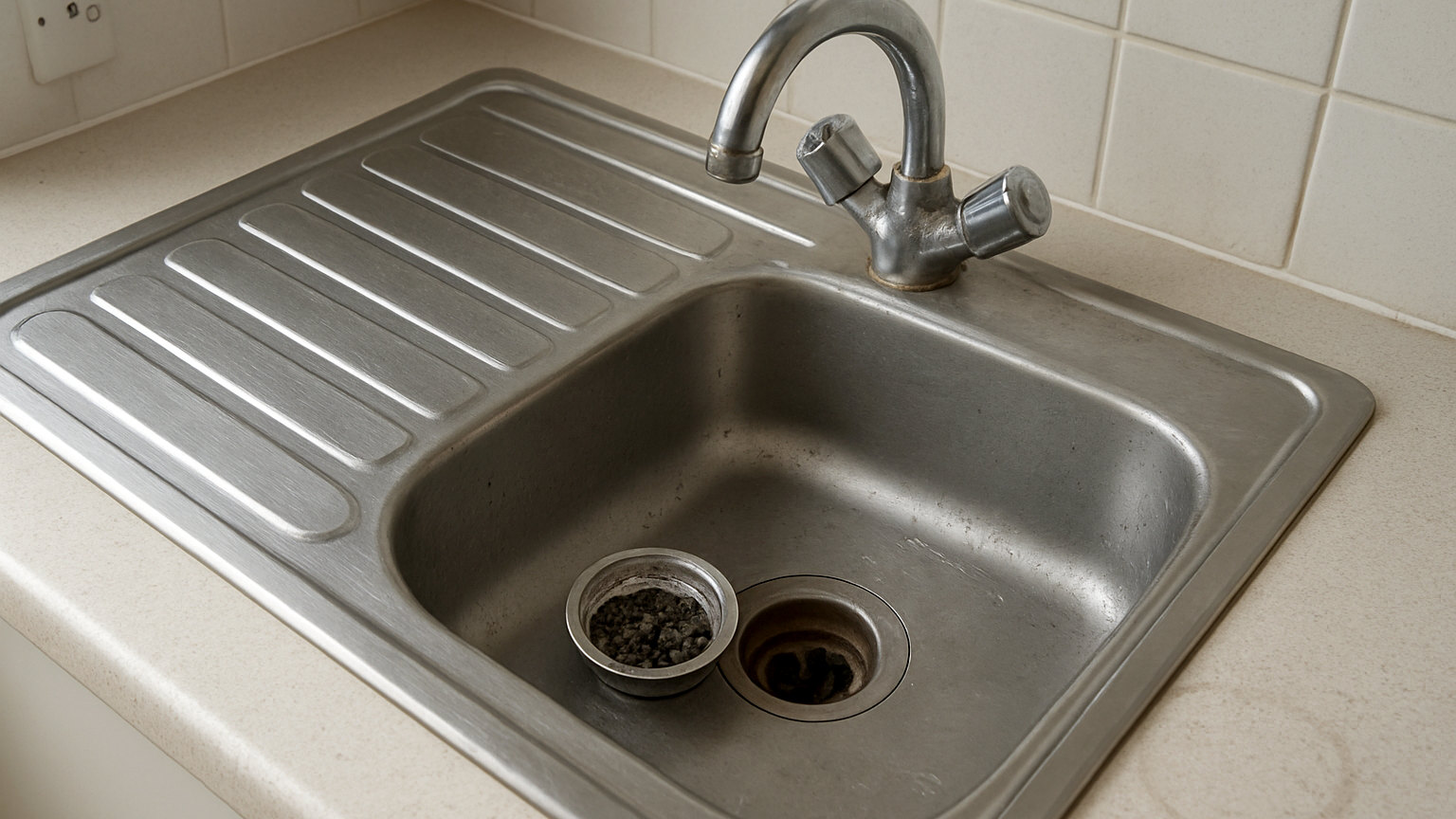
- The waste and strainer, where a greasy biofilm builds on the underside.
- The overflow, which is never cleaned and holds stagnant residue.
- The trap, if it has dried out and is letting drain gases through.
- The plughole seal, underneath the basket, which traps debris.
- A dishwasher or washing machine draining into the same waste.
- Food debris in a waste disposal unit.
How do you clean the waste properly?
- Lift out the strainer or plug and wash it in hot soapy water.
- Reach into the plughole with an old toothbrush and scrub the underside of the rim and the sides.
- Pour a handful of soda crystals down, followed by a kettle of very hot water.
- Leave for thirty minutes, then flush with more hot water.
- Repeat weekly as maintenance.
The scrubbing matters. The greasy film that causes the smell is on surfaces that pouring anything down will not reach.
How do you clean the overflow?
This is the commonly missed one. The overflow is a chamber running from the hole near the top of the bowl down to the waste, and it collects grease, food particles and standing water.
Use a small bottle brush or a flexible overflow brush pushed into the hole, working it round. Then pour a solution of soda crystals and hot water into it, using a funnel or a small jug.
Follow with a rinse. Doing this monthly prevents a surprising amount of trouble.
What is a dry trap?
The U-bend holds a plug of water that stops gases from the drain reaching the room. If a sink is not used for a few weeks, that water evaporates and the seal is lost.
The smell is distinctive, sewage like rather than food like, and the fix is simply running the tap for thirty seconds. In a sink used rarely, run the tap weekly.
A trap can also lose its seal through siphoning, which needs a plumber if it recurs.
What about the dishwasher connection?
Most dishwashers drain into the sink waste. If that connection or the trap is blocked with grease, the smell travels both ways, and a dishwasher that smells often has a sink drain problem behind it.
Clean the trap by hand and check the spigot where the dishwasher hose connects, which blocks with a grease plug.
Does bleach help?
It kills bacteria and does nothing to the grease film feeding them, so the smell returns within days. Soda crystals and hot water address the cause.
If you do use bleach, never combine it with any acidic cleaner in the same drain, since the combination releases chlorine gas.
What about a waste disposal unit?
These smell readily, since food residue clings under the splash guard and around the grinding chamber. Clean the underside of the rubber splash guard by hand with a brush, which is where most of it is.
Grinding ice cubes and a handful of coarse salt scours the chamber, and citrus peel afterwards deals with the smell.
What is the weekly routine?
Scrub the strainer and the plughole rim, pour soda crystals and hot water down, and flush the overflow monthly. Five minutes, and it prevents almost every kitchen sink smell there is.
What if the smell is only occasional?
A smell that comes and goes, particularly one that appears when an appliance drains or when the weather changes, usually points to the trap rather than to residue. Either the seal is being pulled by siphoning elsewhere in the system, or a vent is blocked. That is a plumbing matter rather than a cleaning one and worth mentioning if it recurs.