Drying is the slow, expensive part of laundry, and the biggest gains come before it starts. Water removed mechanically by the spin cycle costs almost nothing; water removed by evaporation costs time, heat or both. Getting the first stage right makes everything afterwards quicker.
What makes the biggest difference?
The spin speed. A load spun at 1400rpm comes out substantially drier than the same load at 800, and the difference in drying time is considerable. The spin lasts a few minutes and uses a tiny fraction of the energy that the equivalent evaporation would.
Use the highest spin the fabric allows, and if a load has come out wetter than expected, run a spin only cycle again rather than putting it out wet.
Does airflow matter more than heat?
Usually, yes. Evaporation depends on moving air away from the wet surface once it has picked up moisture. Still warm air quickly becomes saturated next to the fabric and then stops absorbing anything, which is why a room with the heating on but no ventilation dries clothes surprisingly slowly.
A small fan pointed at an airer makes a dramatic difference for very little electricity, often more than turning the heating up. It is the cheapest single improvement available to anyone drying indoors.
What is the towel trick?
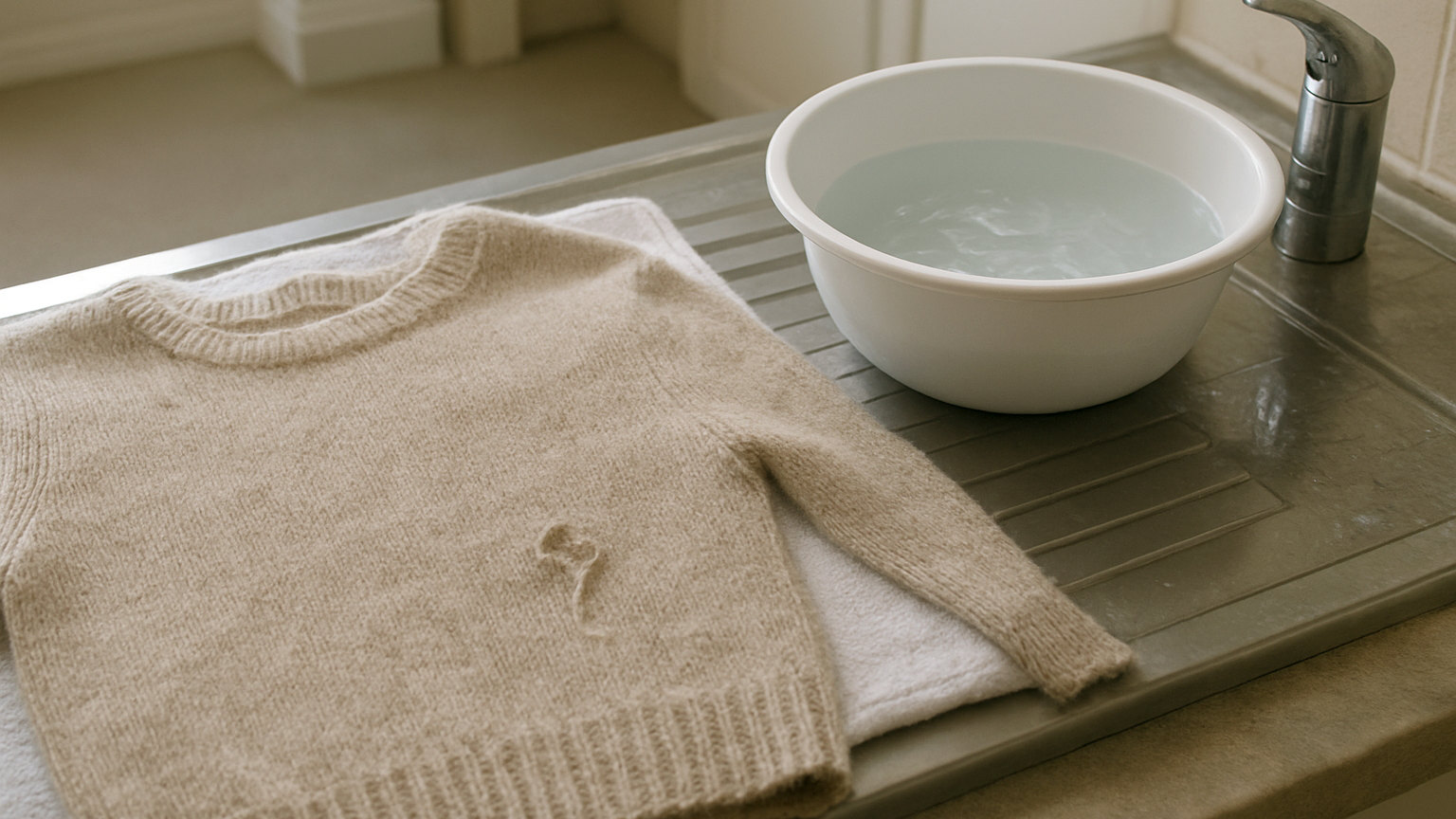
For an individual item that is needed quickly, lay it flat on a large dry towel, roll the towel up with the garment inside, and press firmly along the whole roll or stand on it. The towel absorbs a surprising amount of water in a few seconds.
Unroll, move the item to a dry part of the towel or a second towel, and repeat. A shirt treated this way can go from dripping to nearly dry to the touch, and then finishes in a fraction of the usual time.
How should clothes be spaced on an airer?
Far more generously than most people manage. Items should not touch. Each garment needs air on both faces, and a crammed airer can take three times as long as a half full one, which means running two smaller loads over two days is often faster than one crammed load over three.
Hang shirts and dresses on hangers from a door frame or a rail rather than folding them over a bar, which doubles the fabric thickness at the fold and leaves a damp line that dries last.
Which items dry slowest?
Anything with a thick waistband, a double seam, a hood or a pocket. Jeans are the classic case, with a waistband several layers thick that is still damp long after the legs are dry. Turning jeans inside out exposes the pockets, and hanging them from the waistband by the belt loops opens the heaviest part to the air.
Hoodies benefit from being hung so the hood is spread out rather than lying against the back.
Does a dehumidifier speed things up?
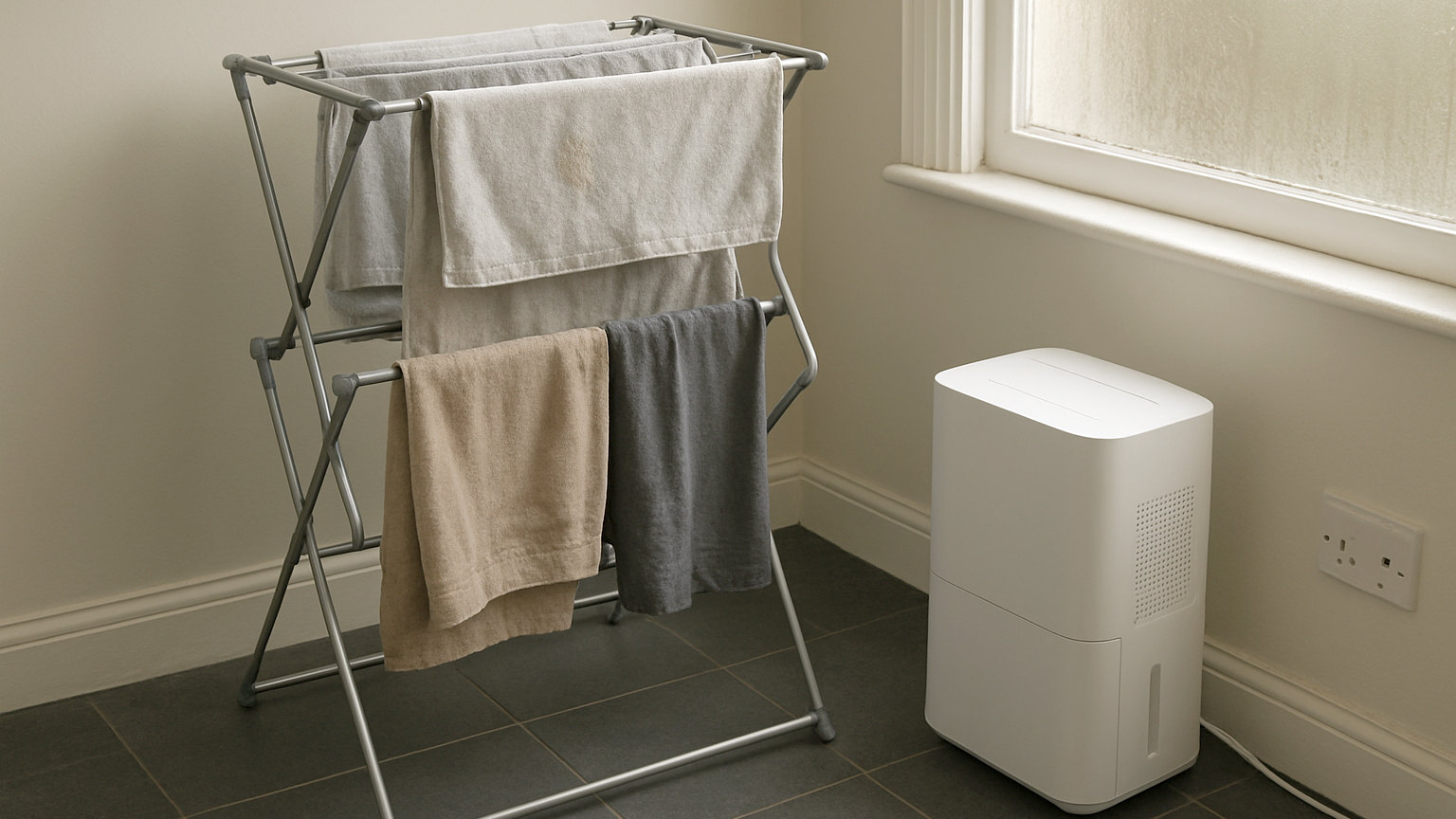
Considerably, in a closed room. It removes moisture from the air continuously, which keeps the air around the clothes able to absorb more. Many models have a dedicated laundry mode that runs the fan harder.
Used with the door shut and an airer, a dehumidifier will often dry a load overnight and costs far less to run than a tumble dryer. It also collects the water in a tank rather than leaving it in the house, which solves the damp problem at the same time.
What about finishing in the dryer?
Line or air drying until almost dry and then giving the load fifteen minutes in a tumble dryer uses a fraction of the energy of a full cycle. It softens the fabric, lifts the pile on towels and removes most creases, which is the main thing people miss about air drying.
That combination gets most of the benefit of a dryer at a small part of the cost, and it is the approach most worth adopting if you have a dryer but resent what it costs to run.